Sunday, May 9, 2021

Complete Joy


Rev. Molly F. James, Ph.D.

St. Matthew’s, Wilton, CT

May 9, 2020

Acts 10:44-48; Psalm 98; 1 John 5:1-6; John 15:9-17

May God’s Word be spoken. May God’s Word be heard. May that point us to the living Word who is Jesus Christ our Lord. Amen. 

I was always that kid who needed to do their homework first before they could go out to play. And I like to work ahead. Always wanted to be sure I had an assignment done early and handed in on time. Procrastinating made me nervous. I wanted to have all my tasks completed, and then I could have fun. This strategy worked well until about middle school. Once there started being long term projects, where there was always something I could be working on, it became much more difficult. Once I hit college and grad school, where part of the learning was about discerning priorities - I was assigned more work than could be accomplished and needed to sort out what was essential - it really became impossible to try to finish work before I could play. This was a struggle. I really wanted to be able to have a completed to do list I could put down, relish my sense of accomplishment (yes, I am an achievement oriented Enneagram 3 for those of you are into that), and then celebrate with time outside with friends, a good book, a movie, a special meal, etc. 

I thought I could keep those things nicely separated. Work and tasks over here. Fun and celebrations over here. And I thought real fun and joy were only possible when I finished my work. “I have said these things to you so that my joy may be in you, and that your joy may be complete.” That your joy may be “complete.” I know that complete joy. It’s what would be possible if only I could have that magical fully completed to do list. It would be what is possible when all the tasks are done, and I have nothing left to worry about. 

That’s not how life goes. We do not live in some mythical universe where all the tasks can actually be accomplished. There will always be more to do, more that could be done. 

That realization, that truth could have been the source of great stress and anxiety (and some days it still is!). Instead I am learning (slowly), thanks to wonderful people in my life who are kind and patient teachers who care deeply about my well being, that joy is not contingent. 

Joy is not something I earn when I finish my tasks. It is not my reward. It is not dependent on my productivity. It just shows up. It shows up with the beauty of springtime blossoms. It shows up with the embrace of a loved one we have not hugged in far too long. It shows up in the laughter of children. In the first bite of a delicious meal. It shows up in the sound of a voice or a smile. A surprise phone call or text - just to say someone is thinking of us. A favorite piece of music. A card in the mail. A few extra minutes to put our feet up and breathe deeply. 

Except, how can we talk about joy being “complete” in this time? How do we talk about joy when our news headlines are so full of suffering? How do we talk about joy when we are all grieving all that has been lost in the past year? How do we talk about joy when we are this tired, or maybe weary or exhausted would be more accurate? How can we talk about joy when even some of the most joyous moments of our lives are tinged with sadness - for that loved one who is not there to celebrate with us, for the what ifs of the path not taken, for knowing it won’t be like this again? 

Here’s the thing though. If joy is not contingent on my completion of tasks, then it is also not contingent on how much energy we have or what the news headlines say or whether we have been able to fully compartmentalize our grief. The joy is not contingent on anything. And joy being “complete” is not about the absence of grief. Like so many things in our faith lives, when we would like clear lines and tidy boxes, God is inviting us into abundance. 

I think Eugene Peterson’s Message translation is helpful here. In this passage, he does not call joy “complete,” rather he calls it “fully mature.” Yes. Fully mature. Like a delicious cheese that allows for complexity and depth, for a fullness of texture and flavor. It’s okay for it to be complicated. Life is complicated. Our experiences, our feelings, do not fit in tidy little boxes. It is not as though we do grief on Mondays, so we can have joy on Tuesdays. 

Life is messy. Life is wonderful. God is inviting us into the fullness of it all. The joy is a gift - one that will just show up in our lives, if we are paying attention. It is not contingent on anything. And the thing is, if we can open our hearts to the joy, if we can let it in to sit alongside the grief we feel, something remarkable will happen. Our joy will deepen because our grief reminds us how precious, beautiful, and fragile life is. We can pay attention more fully to the joy because we know the realities of loss. And the grief will lessen because the joy has come - we have again been reminded that Easter is real - pain and suffering never have the last word. Love is stronger than death. Today and always. Amen. 


Wednesday, May 5, 2021

No Contingencies


Rev. Molly F. James, PhD

DFMS Noonday Prayer

Monica, May 4, 2021


May God’s Word be spoken. May God’s Word be heard. May that point us to the living Word, who is Jesus Christ our Lord. Amen.


Today we remember Monica, St. Augustine’s mother. And our readings are full of stories about mothers and children. Our psalm tells of how offspring shall increase. Our first reading from Samuel is all about Hannah’s prayer for a son being answered. Our Gospel is about the miraculous healing of a mother’s son. Dear God, dear lectionary committee, did we really need all these texts about mother’s prayers being answered just a few days before Mother’s Day. Life is complicated enough right now. Did we need to be reminded of our own complicated family lives or of the prayers we have fervently prayed that have not been answered in the way we might have hoped? Motherhood is complicated and fraught. There are complicated relationships with mothers. Complicated relationships with children. Those who desperately wanted to be mothers and that did not happen. Those who were not planning on it and suddenly found themselves to be mothers. 


I want to push back on things  a bit. Surprise, surprise. Monica is a remarkable faithful woman who is notable in her own right. Why do the texts for today make it all about her motherhood? Is that all we can mark of her significance, being Augustine’s mother? 


I will admit that it brings a smile to my face when a child comes up to me and calls me “Halsted’s mom” or “Katherine’s mom.” It is a source of pride and joy to be connected to those two remarkable human beings. Aaaaand, it is not the sum total of my existence. I hope I am known, I hope all of us, are known and honored for the multiple roles we inhabit - for the myriad relationships that give our lives meaning and texture, for the impact we have in the world, and ultimately just for the kind of person we are. 


What is so notable to me in Monica’s story is her statement to Augustine at the end of her life that it does not matter where she is buried, because proximity to God does not depend on geographic location. Ah there it is. There is the profound, significant truth that I would guess is a valuable reminder for all of us. Our connection to God is not contingent on where we are. Perhaps Psalm 139 (v. 6-9) would have been fitting for today? 


Where can I go then from your Spirit? *

    where can I flee from your presence?


If I climb up to heaven, you are there; *

    if I make the grave my bed, you are there also.


If I take the wings of the morning *

    and dwell in the uttermost parts of the sea,


Even there your hand will lead me *

    and your right hand hold me fast.


We can see the light at the end of the tunnel. Things are opening up. More and more of us are being vaccinated. And there is still so much uncertainty. Will things stay safe and open? How do we not follow India’s path? What will the future look like? When will we feel safe in a large group of people again? 


It is a gift today to be reminded that God’s presence with us, God’s abiding love is not contingent on anything. It is not contingent on our behavior. It is not contingent on our location. It is not contingent on whether we have all the right answers. It is not contingent on whether or not we feel overjoyed or overwhelmed or just a little off. God is there. God is with us. Always. So in the midst of our week, whether things are going great or terrible or we just feel blah - and if this week is like so many other weeks, it will probably be all of those things at various points. In the midst of that let us remember to pause, to take a deep breath, to pray, to listen to music, to go outside, to call a friend, to read a book, whatever it is that provides us with a tangible reminder that God is indeed with us. No matter what. Amen. 


Sunday, May 2, 2021

Pruning to bear good fruit


Rev. Molly F. James, PhD

St. Alban’s, Simsbury, CT  

May 2, 2021, Fifth Easter

Acts 8:26-40; 1 John 4:7-21; John 15:1-8; Psalm 22:24-30


May God’s Word be spoken. May God’s Word be heard. May that point us to the living Word, who is Jesus Christ our Lord. Amen. 


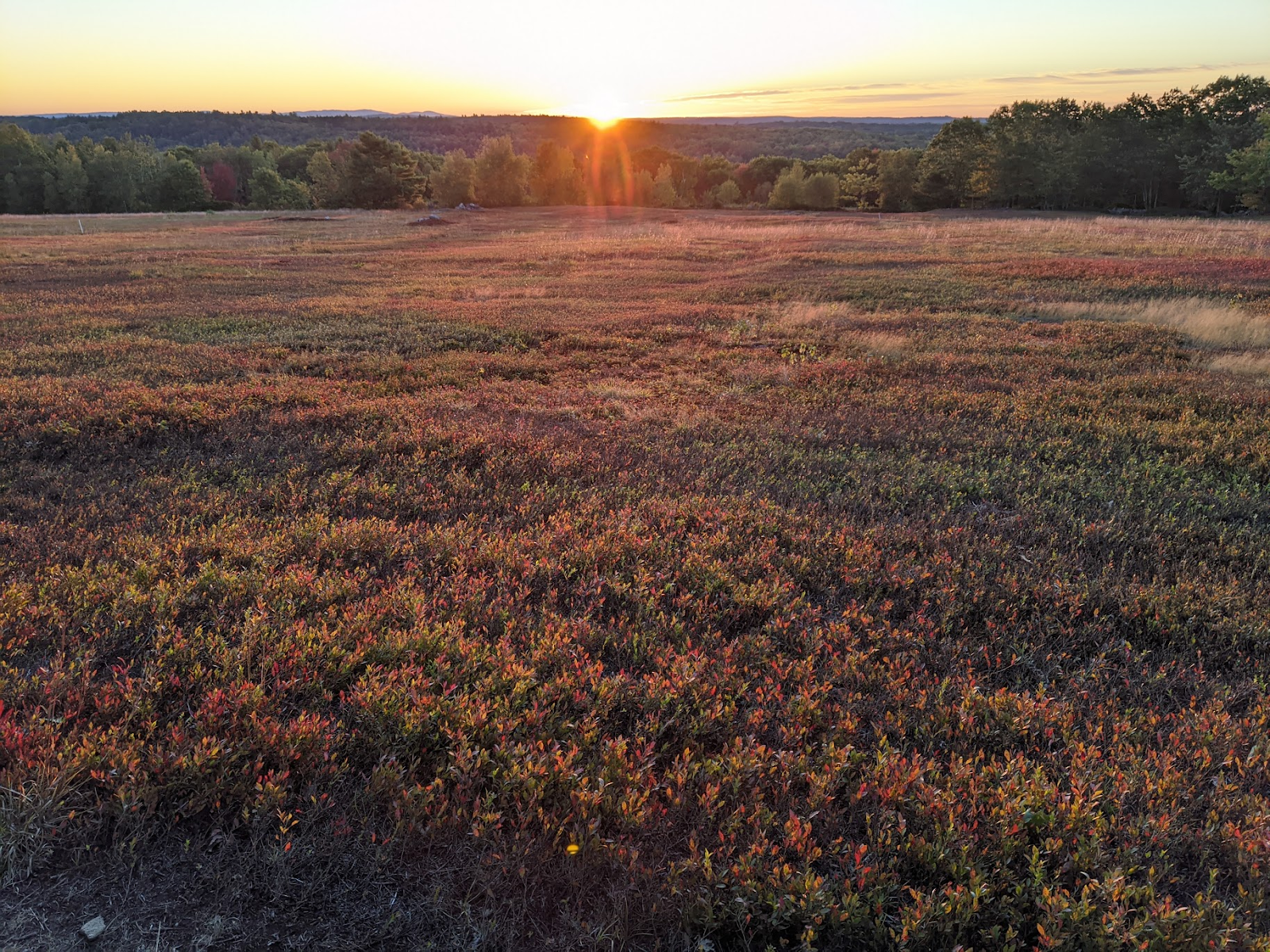
The house in which I grew up sat amidst an ancient apple orchard.  And behind the house, next to the vegetable garden there were two grape vines.  And then across the hayfield and the break in the trees, you come to nine acres of (Maine wild) blueberries.  The delicious, sweet, small ones that grow on carpet of small vines, only inches above the rocky soil.  Given that I spent my childhood surrounded by all these vines and branches, you can imagine my mind went straight there when I read the Gospel lesson for today.  Jesus said, "I am the true vine, and my Father is the vinegrower.  He removes every branch in me that bears no fruit.  Every branch that bears fruit he prunes to make it bear more fruit.”  Ahh, the pruning. 

I remember one early spring when my Dad went out with his pruning shears to cut the grape vines back.  He peacefully went about his work, and when he was finished, we were in a bit of shock and concerned that he might have done irreparable harm to the vine.  There seemed to be hardly anything left of it.  We were convinced that might be the end of our grapes.  But no.  The vine grew in, lusher than ever, and was weighed down with fruit by the end of the summer. Pruning truly does bear more fruit. 

And then there are the blueberry plants. They are pruned by mowing and burning.  After they are harvested the whole field is mowed and then, when weather permits, it is burned. Then it lies fallow for a year, growing back the vine, setting buds, but producing no blossoms and no fruit.  Then the following year, it produces more of the delicious fruit.  If the field is not mowed and burned, the plants would produce more and more leaves, and fewer and fewer berries.  Mowing and burning are actually key to a bountiful harvest of beautiful berries. 

One can see why Jesus chose these images from the natural world to make his point - they are so fitting, and so true!  

The trouble is, most of us don’t like to think of pruning.  And we particularly don’t like to think of God going around with pruning shears sniping away at bits of our lives.  We might not mind so much if God would like to do some pruning in some OTHER people’s lives - as a matter of fact I would bet that most of us have days when we would like to tell God exactly who and what needs pruning!

But we know that is not what Jesus is inviting us to consider.  Jesus is inviting us trust in the possibility that good, bountiful fruit will come, even when we are in the times where it looks like the vines have been pared back far too much. I would guess that most of us feel like there has been far more pruning in the past year than anyone of us would have liked or have desired. So many things have been taken away. In many ways our lives have been stripped bare. 

This is hard and painful. There is grieving to do. Much grieving to do. Over lives and opportunities lost. Over the loss of what we thought we could count on, of what we might even say we took for granted. I hope that you are finding time and space to grieve. That you are gentle with yourself when you find yourself overwhelmed with emotion or wanting to cry at unexpected times. This has been a hard year. 

And I hope that we do not miss the opportunity, the invitation that is there in the midst of these challenges. There is an invitation to clarity. An invitation to reorient our priorities. An invitation to be thoughtful and considerate about what fruit we would like to bear going forward. 

What might it mean, what might it look like for us to live lives that are more fulfilling, more meaningful. How might we be more deeply connected to God and each other? How might our actions be a part of realizing God’s dream, of contributing to the transformation of the world? The world needs transformation. The tragedies of this past year have laid bare realities of systemic injustice and oppression that too many of us have been able to ignore for far too long.

I think it is important to remember that pruning is natural.  Sometimes it just happens.  Lightening storms happen.  Wild animals do their share of damage. Pruning happens. It can look and feel like a real loss.  It can even be a pruning that threatens the survival of the whole plant.  But what does nature show us again and again?  It can also come back stronger.  It can overcome adversity and bear beautiful, nutritious fruit. 

So, what can we take away from this? This has been a year of pruning. Some of it the kind of pruning that clears away the detritus that has kept us from seeing the realities of injustice in our society. Other pruning has been loss on a scale few of us could even imagine. The losses have been harsh and painful, and they seem to make NO SENSE.  There is real pain and grief. And there is also an invitation to clarity. An invitation to remember that our roots run deep.  We are grounded in the love of God, and no matter what, we can trust that we are being given the strength to bear good fruit.  If we allow God to work through us, our bare branches and fragile stems can be transformed into a gift that helps feed the world.

AMEN. 


Wednesday, April 28, 2021

Choosing Grace and Mercy


Rev. Molly F. James, PhD

DFMS Noonday Prayer via Zoom

April 28, 2021

Psalm 53; Col. 1:24-2:7; Luke 6:27-38


May God’s Word be spoken. May God’s Word be heard. May that point us to the living Word who is Jesus Christ our Lord. Amen. 


I think many of you know that when I was on chemotherapy as a teenager, I was granted a wish by the Make-A-Wish foundation. That wish involved traveling to NYC to see Broadway shows. Two shows in particular - The Phantom of the Opera and Les Miserables. I am not sure it is an accident that a teenager who was struggling with questions of meaning, life, mortality and how to have hope in the midst of struggle wanted to see these two shows. In fact their soundtracks had brought me comfort in the midst of many a difficult day. The tape of Les Miserables was what I brought with me every time I had to have an MRI. The sheer vigor and force of its music able to drown out the tapping of the machine. 


It wasn’t just the music that drew me in these shows. It was the story. One of the elements of the story of Les Miserables that has stayed with me is the interaction between Jean Valjean and the bishop. Just in case you are not familiar with it, here’s a brief synopsis. Valjean had escaped from prison and the bishop was kind enough to offer him food and lodging for the night. In the middle of the night, he steals the bishop’s silver and runs off. He is caught. He tells the police that the bishop gave it to him. They bring him back and confront the bishop with this story. The bishop says that he did give it to him, and makes Valjean promise that he will use the proceeds of the silver to become a better man. He does, and of course the rest of the story tells of all the fruits of that moment of grace and generosity. 


I couldn’t help but think of that story with our passage from Luke today. Turn the other cheek. Give your shirt also. Show mercy. To everyone - not just those you like or agree with today. Embody the self-giving love and generosity of Jesus. Choose grace and compassion over personal gain. After all, it isn’t really about us. 


Now, we are not likely to have an escaped convict in our houses try to steal whatever is most valuable to us, so we cannot draw a direct parallel to Valjean and the bishop. But we can see the principle in it. We can see the choice to choose hope and possibility over vengeance and self-righteousness. 


Of course it could be argued that the bishop is being too lenient and giving Valjean a free pass. He broke the law. He stole. He needs to be held accountable. That is all true. And I think it can be argued that the bishop is holding him accountable. There will not be a day in Valjean’s life when he does not remember that he is alive and free and has all that he has because of that bishop’s mercy. The bishop offered a second chance, an opportunity for redemption, an opportunity to be defined by what he could be rather than what he had done. 


There is an invitation here for us to do that same. To respond with grace and compassion. I do think it is worth noting here that I do not believe that either Jesus nor the bishop are inviting us to be complicit in oppression. We are not being asked to surrender our dignity or self-worth. We are being invited to turn the world’s power dynamics on their head by responding with grace rather than aggression. We are being invited to be, and to inspire others to be, our best selves.


This is hard work. It is holy work. I struggle with it. And I know I can best do it when I am connected to and grounded in my relationship with God. So, I hope that we will take this invitation to be more deeply connected and to choose grace and mercy first. Amen. 


Wednesday, April 21, 2021

Carrying (and Sharing) our Burdens


Rev. Molly F. James, PhD

DFMS Noonday Prayer via Zoom

Anselm of Canterbury, April 21, 2021


May God’s Word be spoken. May God’s Word be heard. May that point us to the living Word who is Jesus Christ our Lord. Amen. 


“‘Come to me, all you that are weary and are carrying heavy burdens, and I will give you rest.” 

Anyone else breathing a little more deeply after hearing those lines from Matthew? I am weary. We are all carrying heavy burdens. Sometimes I think more than we even realize. I was reflecting a bit on this past year, and the image came to mind of walking with a heavy backpack. I certainly feel like I am. And in some ways I feel like I have only begun to realize what it is that I am carrying. So much grief over all that we have lost in the last year - lost lives, lost opportunities. The fear and anxiety of rising case numbers. Another mass shooting in a grocery store. What will the aftermath be of the guilty verdict in the Chauvin case? And the knowledge that no matter what happens in the days ahead we still have so much work ahead of us to undo the systemic realities of oppression in our nation and our society. 


And while we may share many of these burdens, we each have our own. Burdens particular to our circumstances, our family or community. Burdens we carry because of race, gender, sexual orientation, or another category society has placed upon us. Those burdens may weigh on us in different ways at different times. Even though I think Atticus and Scout Finch in To Kill a Mockingbird were on to something, we cannot fully know what it is like to walk a mile in someone else’s shoes. We cannot fully know each other’s burdens. 


But here’s what we can know. We ALL have them. We are ALL carrying them. No matter how peaceful someone may seem on the outside. No matter how “all figured out” or “put together” they may seem, the burdens are there. So there is our first invitation of the day, an invitation to compassion, for ourselves and for others. We don’t need to beat ourselves up about the burdens. We don’t need to get trapped in a cycle of comparison about who has more or whose are heavier. Let’s just stipulate that everyone’s got them, and we are all weary.


So, I think oh good, thank you Jesus, we are going to get to rest. But then we keep reading in Matthew, and out comes my argumentative self. What? Jesus, you just promised rest, but now you are talking about yokes, and learning, and more burdens. Did you miss the part about how we are weary? And by weary, we mean bone tired, exhausted, sacred, anxious, worried, and all the rest of it. 


Then I pause. I breathe. I think. Would the Jesus I know really say, “Oh I see you are carrying a lot of burdens there. Here let me give you some more stuff to carry.” No. That doesn’t actually sound like Jesus. Could I imagine Jesus saying, “Oh, I see you are carrying a lot of burdens. How about we take that backpack off and look through them together and see what we can put down?” That I could imagine. 


So, my friends, there is our second invitation. An invitation to learning, an invitation to lay some burdens down or to ask for help carrying whatever it is that has to stay in the backpack. 


I hope that for many of us there has been a gift buried in all the challenges of the past year; it is the gift that comes with being confronted with the fragility of life. The gift of having our priorities clarified. The gift of being able to see and know with certainty what really matters in life. We can indeed lay some burdens down. We can let go of those things that no longer serve us. We can let go of those things that have been barriers to connection, barriers to a deeper relationship with God and with each other. If this year has shown us nothing else, it has shown us the primacy of community, of connection, of belonging. 


So, in this week, in this Easter season, I invite you to take some time in your prayers to unpack whatever it is you are carrying. To see if you might lay some of it down. And then to ask for help, from Jesus, from those who are beloved to you, to pick up whatever it is that you need to keep carrying. We may not be able to fully understand the particularities of each other’s burdens, but we can certainly bear them. We can carry them together. And I trust, my friends, that as we move forward together sharing the load and leaving some behind, we will no longer be quite so weary. We will be energized with hope and possibility for the future. Amen. 


Thursday, April 15, 2021

Healing and Wholeness


Rev. Molly F. James, PhD

DFMS Noonday Prayer

Thursday, April 15, 2021

Damien and Marianne of Molokai


May God’s Word be spoken. May God’s Word be heard. May that point us to the living Word who is Jesus Christ our Lord. Amen. 


So, friends, you get me two days in a row, and we have another set of texts on healing. Well, the good news is, that is a topic about which I have no shortage of things to say. It is something I have spent a lot of time thinking about! 


Although we could focus on the people. Like yesterday, we have another set of examples of wonderful, selfless individuals in Damien and Marianne who were willing to risk their own lives to care for people in need. In their case it was a leper colony in 19th century Hawaii. We also get something else in today’s texts - both in Isaiah and our Gospel. We get stories of healing. And that is where I would like to focus.


If we just had our Gospel story where “the blind receive their sight, the lame walk, the lepers are cleansed, the deaf hear, the dead are raised, and the poor have good news brought to them” we could have a very narrow definition of healing. We could think it is merely the absence or reversal of a disease. It certainly can be that. I hope we all have lots of stories of people who have full and complete recoveries - where it is as though they were never ill to begin with. And we all know, likely from personal, real life experience, that is not always how it goes. Disease is not always erased. Sometimes death still comes even when we have fervently wished for another outcome. Our lives do not always reflect that ideal world offered to us in the Gospel for today. 


And so, I think it is important to look at our other texts, and to think more broadly about our experiences. Our passage from Isaiah talks about healing. And healing does not only mean the absence of disease. Healing is about comfort. Healing is about being in right relationship with God and with each other. Healing is about wholeness. 


It took me a long time in my own journey to get to that understanding. For a long time I wanted healing, in my own life, in my own body to look like a complete restoration. I wanted someone to be able to replace the collarbone they surgically removed. I wanted a body that did not feel diminished. That was not physically possible. Collarbones move too much. They took too much out, and if they put a replacement in there there was a risk that my body would reject it. I really am better off with all my muscles sewn together even if that comes with its own set of challenges. 


So if that door of restoration was closed to me, if I could not go back to “before,” what might healing look like? For me, on a practical front, it has looked like building up the strength of my back and my shoulders to compensate. But more importantly, on a spiritual front, it has meant coming to an understanding of healing and wholeness that is much bigger than what my physical body can or cannot do. 

In many of the healing stories, Jesus tells the person who was healed, “Go. Your faith has made you well.” In many translations it is “Your faith has made you whole.” I like that better. Our faith makes us whole. It is not about what our bodies look like. It is about our faith. It is about our relationship with God and with each other. We are made whole when we are connected to God. When we are present to God, and we are open enough to allow God to be fully present with us. 


Wholeness then is about honoring and welcoming God’s presence in our hearts and lives. A fitting message for this Easter season where we hear again the stories of how the resurrected Christ (who still had his wounds) made himself known to the disciples. We can indeed be made whole, no matter the outcome of physical illness or trauma. That wholeness is a gift from God. We need only be open to receive it. Amen. 


Wednesday, April 14, 2021

Practicing the ministry of presence together


Rev. Molly F. James, PhD

DFMS Noonday Prayer

Wednesday, April 14, 2021

Commemoration of Zenaida, Philonella & Hermione

May God’s Word be spoken. May God’s Word be heard. May that point us to the living Word who is Jesus Christ our Lord. Amen. 


Today we remember three women physicians known for treating everyone who came to them regardless of their ability to pay. It is indeed a time for giving thanks to all those in the medical profession who have worked so tirelessly to care for so many people in the last year. They have given their expertise and brilliance. They have given their care and generosity. In some cases they have given their lives to help others. What a beautiful example of the power of love. That self giving love of Jesus has been evident in so many ways and places over the last year. 


Indeed let us honor physicians and all healthcare workers, as our reading from Sirach does. Let us praise their skills and wisdom. Their God given talents to care for those who are ill. Indeed in the midst of illness we should pray, and we should seek medical treatment. We need both. Prayer is always a good idea. So is doing everything we can to take care of our physical bodies. 


Of course, it would be selling them short to say that the gifts of a physician are merely in applying the principles of science. There is more to it than that. It is not just about making the right diagnosis or having the right medicine. There is an art to healing. An art that requires wisdom and understanding. 


I think most of you know by now that I have a long and complicated medical history. Born twelve weeks prematurely, a cancer patient at 13, and then two high risk pregnancies that blessedly resulted in wonderful healthy children brought into this world by c-sections. I have also worked as a hospital chaplain. I have spent a lot of time receiving and observing medical care. It is just that, “care.”


It is care of the whole person. In fact, I learned a lot from doctors and medical professionals about the ministry of presence. About how much it matters how we show up. This is the kind of thing that applies to all of us in our professional and our personal lives. Are we able to be present when someone needs us? And I mean fully present. Looking people in the eye. Listening. Really listening. Open to learning. Open to hearing another point of view. Are we communicating with our body language, with our eyes, with our facial expressions, that the person we are with matters? Can we be the person today who affirms for them the truth that they are a beloved child of God?


Doing that, being that present takes work. Especially this year. We are all tired. Or maybe weary is a better word. It is easy to feel overwhelmed. We all need the space to grieve. Especially now. Things are beginning to feel hopeful and open again, so little by little our bodies are lightening up on their tight grip on everything. I think many of us have been in survival mode for the past year. We have been focused on just getting through it all. We have been coping. We have just been figuring out how to get to tomorrow. It is only now, and in the weeks and months ahead that we can begin to really grieve, to feel the magnitude of what this year has meant. To feel and begin to understand how we and the world have been irrevocably changed by what has happened. It is a time to be gentle with ourselves. To have compassion for ourselves and each other. 


And so it may seem like an impossible task that we are being asked today. To work at being more present. But here’s the thing. I think it might actually be the key to no longer feeling weary and anxious. Because being present has rewards that far outweigh the challenges. Being present enables us to build connections with each other. It reminds us that we are not alone. Remember it takes more muscles to frown than it does to smile. Remember that smiles (even behind a mask) are the good kind of contagious. When you see someone else smile, when you have helped make someone else smile, how can that not bring joy to our hearts? 


No doubt there are days when we feel empty and depleted. That’s okay. This has been a hard time. And we don’t have to stay that way. None of us has to do this alone. We are all in this together. If we can be more present to each other, we will build each other up. Together we can have what we need to move forward into the glorious future God has in store for us. Amen.