Showing posts with label mercy. Show all posts

Sunday, September 22, 2024

End of the Day Tantrums and the wisdom of James


Rev. Molly F. James, Ph.D.

St. James’s, West Hartford, CT

September 22, 2024, Proper 20B

Psalm 1; James 3:13-4:3, 7-8a; Mark 9:30-37


May God’s Word be spoken. May God’s Word be heard. May that point us to the living Word who is Jesus Christ our Lord. Amen. 

There was an article in the New York Times recently that caught my eye: “End-of-day meltdowns are not just for kids.” Hmm. Oh, you mean that thing where I pick my kids up and am short tempered with them for no particular reason and just wish dinner would magically appear on the table and the laundry would all do itself is not just a me thing? Oh. 

The article went on to describe some helpful suggestions for how those of us parents (and really any adults) might alter our routines to help us have calmer transitions and more patience. Because of course the end of the day (or middle of the day) meltdown is not unique to working parents with small children. All of us get stressed and snap at those we love. 

All of us fail to live up to the wisdom we have in the Letter of James today: “Show by your good life that your works are done with gentleness born of wisdom. But the wisdom from above is first pure, then peaceable, gentle, willing to yield, full of mercy and good fruits, without a trace of partiality or hypocrisy.” 

Peaceable, gentle, willing to yield? Does that sound like how any of us feel when we are stressed out or melting down or dealing with a sense of overwhelm? I doubt it. 

So, what can we do? How might we help ourselves and those around us do better? Because I have certainly found it to be true that if I meet someone else’s grumpy with more grumpy that doesn’t serve either of us. If one of us can be centered and full of mercy then the whole situation changes. 

Fortunately that article had some helpful suggestions of a lot of small things we can do. 

First off, is to be able to recognize when we are feeling stressed. Hopefully we can learn to do this on our own, and sometimes we need help. I know I often need a friend or one of my children to say something to me like: “Hey you seem out of sorts. Are you okay?” A nice, polite and gentle way to say, “I really don’t like how you're behaving right now, and it feels like you are taking stuff out on me.

And then we need to de-stress. This doesn’t have to be a complicated regime. It can be some simple acts that take a few minutes. Take some deep breaths. Go for a walk. Pray. Especially saying a prayer that is familiar and grounding - Our Father, 23rd Psalm, one of those beautiful prayers from Compline. Or keep a favorite verse or two of scripture handy. Or have a cross or beads or a rock or something tangible you can keep in your pocket or your bag to help you reconnect with God. 

I know for me there is something important and profound that happens in prayer and worship. My mind is more focused. I have found my priorities again, and I no longer feel stuck in the swirling anxiety and stress of my own head. This is why worship matters. Why prayer matters. It actually makes a substantive, tangible difference in our bodies and our lives. 

The other thing that matters is that we have routines. We need to have habits to help us transition from one part of your day to the other. What if we don’t work right up to the last possible moment before we transition home for the evening? What if we are more intentional about putting our phone aside? What if we change our clothes when we get home? Or take a few minutes to listen to a song that always lifts our spirits? The possibilities are endless. 

And we need to be able to tell those around us what we need. Do we want to jump right into conversation the moment we walk in the door? Or do we need a few minutes of quiet? Are we 100 times more able to engage if the first thing we do when we get home is have a snack and a glass of water? And what about our kids? Are we asking them what works best for them too and then living into that together? 

This may seem like a long list or sound like a lot, and I hope you can see that they are small actions - just a few minutes, a few small changes here and there that can have a profound impact. 

No doubt the world and our lives need more of the “wisdom from above” that is “pure, then peaceable, gentle, willing to yield, full of mercy and good fruits, without a trace of partiality or hypocrisy.” It is the life of humility and grace that Jesus describes in our Gospel today. When we act more like an innocent, joyful child than the squabbling disciples who are far too focused on who is the greatest. 

Imagine a world where there is more gentleness and mercy than envy and selfish ambition? Sounds beautiful right? Well, we may not be able to change the whole world this week, but if we can change our own hearts and habits it will make a difference in our lives. And who knows what the ripple effects of that could be? 

AMEN. 


Sunday, January 9, 2022

Reflections on Baptism, Judgment, and Hope


Rev. Molly F. James, PhD

Grace, Hartford, CT

Baptism of our Lord, January 9, 2022

Psalm 29; Isaiah 43:1-7; Acts 8:14-17; Luke 3:15-17, 21-22


May God’s Word be spoken. May God’s Word be heard, and may that point us to the Living Word who is Jesus Christ our Lord. Amen. 


“Do not fear, for I have redeemed you; I have called you by name, you are mine. When you pass through the waters, I will be with you; and through the rivers, they shall not overwhelm you; when you walk through fire you shall not be burned, and the flame shall not consume you.” These lines from our first reading from Isaiah are heartening and comforting in the midst of all the challenges we are facing - in our own lives, in our community, and in the world. Rising case numbers - practically everyone we know is ill, quarantining because of an exposure or recovering from COVID. There are real worries about whether essential services will continue to be available in the days ahead with so many people out sick. And then there are all the systemic issues that we were already facing as a world before this current surge - climate change, poverty, injustice, systemic racism . . . the list goes on. 


I would really like to just stop right there in that passage and hold on to those affirmations. The rivers will not overwhelm us. The flames will not consume us. I need those truths because there are moments, and there are days when it feels overwhelming. How can we possibly deal with one more thing, one more challenge, when we are already exhausted from the last two years?


I was doing okay, until I got to the Gospel. At first I am thinking, Feast Baptism of our Lord, that’s good. Always good to be reminded of our baptism. Always good to be reminded that just like Jesus, we are beloved of God. Goes well with our passage from Isaiah, an affirmation of God’s love and care for us. And then we get this line: “He will baptize you with the Holy Spirit and fire. His winnowing fork is in his hand, to clear his threshing floor and to gather the wheat into his granary; but the chaff he will burn with unquenchable fire.” And I want to start arguing with God with the author of Luke, with our Lectionary Committee, with whoever might listen.


Wait a minute! What is this bit about unquenchable fire and judgment in the midst of a happy story about Jesus baptism? Lines about fire and judgment make me nervous. As many of you know, I consider myself a recovering perfectionist. I take my mistakes, my errors, my sins very seriously - a bit too seriously most of the time. I don’t find passages like this helpful because they feed my perfectionist tendencies . . . after reading a passage like this my perfectionist self can say “See! It does matter how you behave! Watch out, you better be the wheat or else!” NOT HELPFUL! I am quite capable of giving myself a good guilt trip without adding on the fear of judgment and fire and punishment. 


I have often struggled with the theme of judgment and punishment in our Scriptures. Especially since the passages seem to show up right alongside times of joy and hope. Advent is quite a mix of joyful expectation and stories of judgment. It is tempting to just focus on the comforting parts, like those lines from Isiah, but the questions of judgment and punishment are right there in the Gospel, and I believe in facing my fears, so I can’t just let them slide by. 


Shortly after 9/11 I read a book of essays by Eugene Kennedy that helped me think about these passages of judgment differently. As you likely remember there was lots of talk of judgment in the days and weeks following 9/11 - who was to blame? who was now burning in hell for their sins? But Kennedy says that we have got it all wrong if we think that the wheat or the fruitful trees are one set of people and the chaff or the unfruitful trees are another. 


Kennedy writes of those who died on 9-11: “Their voices, taken from phone calls and emails and the recollections of friends, blend now into one message, one voice like a canyon echo coming back to us out of the ruins: ‘I love you,’ said in a thousand ways the true harvest of these good people’s lives. The good grain so overflowed that it covered over the patches of human stubble in their lives . . . They defined themselves and what life and faith are all about in the commitment to the relationships in their lives.”  When we look at all those people from all sorts of walks of life - a real cross section of humanity - who perished on that day, we should see the good - the overwhelming good in them, for as Kennedy goes on to say, that is what ultimately matters to God.  Kennedy writes, “What is good and bad in us grows together. On judgment day, God harvests only what is good in us, for that is what is eternal, and ignores the weeds that belong to time.” 


Reading these words lifts a weight from my shoulders. They comfort me because they remind me that God can see the big picture - and God pays much more attention to who we are and how we live a life of love - than to the times we messed up. They also give me a much more hopeful picture of Judgment Day. I have always struggled with the idea that God sends people to hell as a punishment. The image Kennedy offers fits more with the understanding of judgment that I have developed over the years, with thanks to theologians like Julian of Norwich, C.S. Lewis, and Rowan Williams. While there may be a moment of reckoning, a moment of cleansing when we come face to face with God at the end of our lives, we need not fear it. God is not some arbitrary judge. God is the God we know and love. God is loving and merciful - ALWAYS. Hell is not eternal damnation for our sins; hell is a choice we make. God is always reaching out to us, always offering mercy. Always willing to remind us that we are beloved - just as we are. We are beloved because we belong to God. And God has given us free will, so we have the option to accept that mercy or to reject it. If we choose to turn our back on God, then we will know hell, for hell is the only place where God is not. 


In the end, there actually is solace and hope for us in all our readings today. We can trust that the fire will not consume us, nor will the river overwhelm us. Rather they will merely take away that which does not serve us. That which does not serve God. That which is not eternal. We can indeed trust in the truths of our faith. The beautiful truth we celebrate this day is that we are beloved of God. God is with us. Always. May moments of struggle or challenge or tragedy never blind us to all the good there is in the world, and in each of us. May we always remember that the good, the light, the beauty will last, for our faith affirms again and again that nothing in this world is stronger than the love of God. 


AMEN.


Wednesday, April 28, 2021

Choosing Grace and Mercy


Rev. Molly F. James, PhD

DFMS Noonday Prayer via Zoom

April 28, 2021

Psalm 53; Col. 1:24-2:7; Luke 6:27-38


May God’s Word be spoken. May God’s Word be heard. May that point us to the living Word who is Jesus Christ our Lord. Amen. 


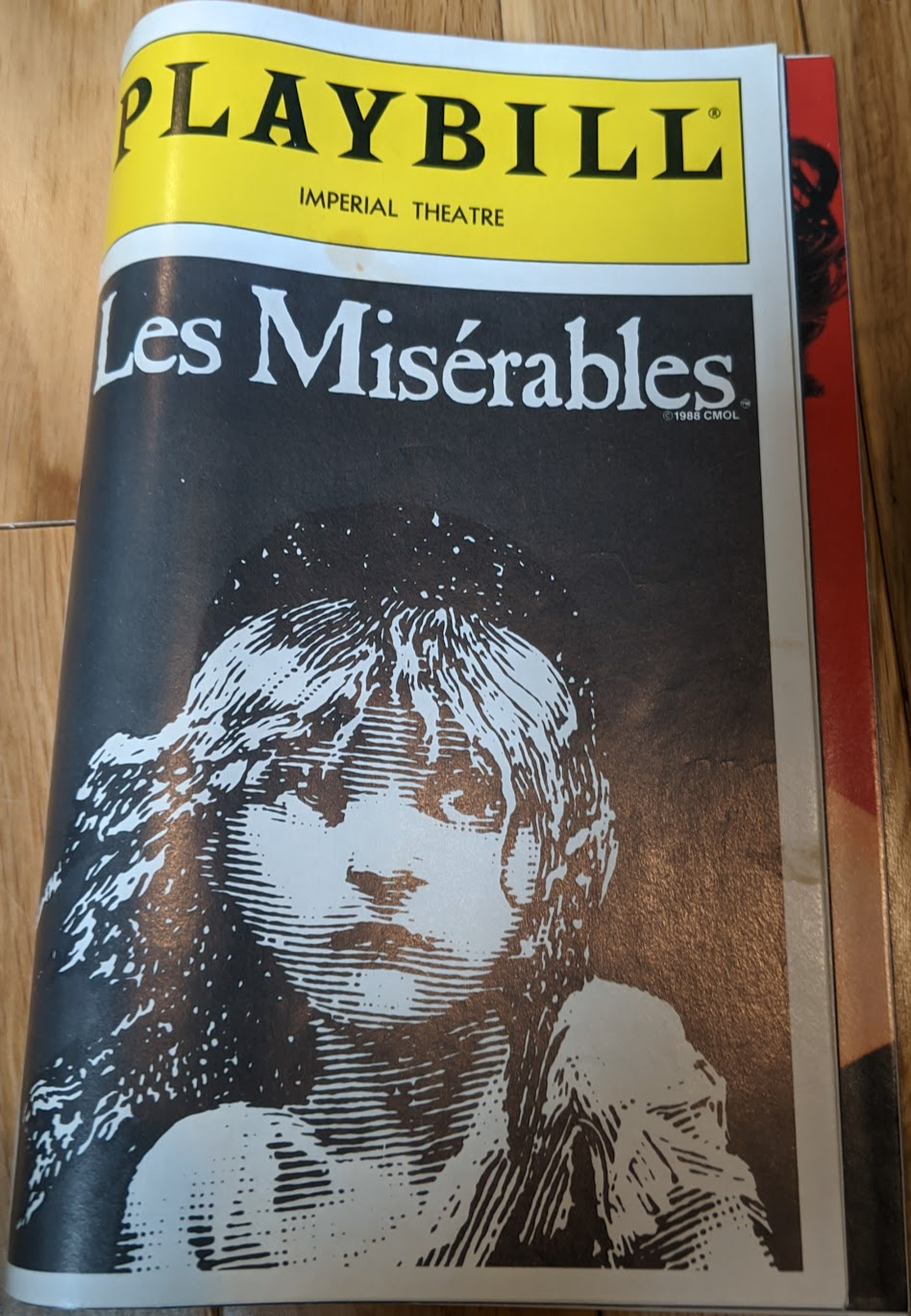
I think many of you know that when I was on chemotherapy as a teenager, I was granted a wish by the Make-A-Wish foundation. That wish involved traveling to NYC to see Broadway shows. Two shows in particular - The Phantom of the Opera and Les Miserables. I am not sure it is an accident that a teenager who was struggling with questions of meaning, life, mortality and how to have hope in the midst of struggle wanted to see these two shows. In fact their soundtracks had brought me comfort in the midst of many a difficult day. The tape of Les Miserables was what I brought with me every time I had to have an MRI. The sheer vigor and force of its music able to drown out the tapping of the machine. 


It wasn’t just the music that drew me in these shows. It was the story. One of the elements of the story of Les Miserables that has stayed with me is the interaction between Jean Valjean and the bishop. Just in case you are not familiar with it, here’s a brief synopsis. Valjean had escaped from prison and the bishop was kind enough to offer him food and lodging for the night. In the middle of the night, he steals the bishop’s silver and runs off. He is caught. He tells the police that the bishop gave it to him. They bring him back and confront the bishop with this story. The bishop says that he did give it to him, and makes Valjean promise that he will use the proceeds of the silver to become a better man. He does, and of course the rest of the story tells of all the fruits of that moment of grace and generosity. 


I couldn’t help but think of that story with our passage from Luke today. Turn the other cheek. Give your shirt also. Show mercy. To everyone - not just those you like or agree with today. Embody the self-giving love and generosity of Jesus. Choose grace and compassion over personal gain. After all, it isn’t really about us. 


Now, we are not likely to have an escaped convict in our houses try to steal whatever is most valuable to us, so we cannot draw a direct parallel to Valjean and the bishop. But we can see the principle in it. We can see the choice to choose hope and possibility over vengeance and self-righteousness. 


Of course it could be argued that the bishop is being too lenient and giving Valjean a free pass. He broke the law. He stole. He needs to be held accountable. That is all true. And I think it can be argued that the bishop is holding him accountable. There will not be a day in Valjean’s life when he does not remember that he is alive and free and has all that he has because of that bishop’s mercy. The bishop offered a second chance, an opportunity for redemption, an opportunity to be defined by what he could be rather than what he had done. 


There is an invitation here for us to do that same. To respond with grace and compassion. I do think it is worth noting here that I do not believe that either Jesus nor the bishop are inviting us to be complicit in oppression. We are not being asked to surrender our dignity or self-worth. We are being invited to turn the world’s power dynamics on their head by responding with grace rather than aggression. We are being invited to be, and to inspire others to be, our best selves.


This is hard work. It is holy work. I struggle with it. And I know I can best do it when I am connected to and grounded in my relationship with God. So, I hope that we will take this invitation to be more deeply connected and to choose grace and mercy first. Amen. 


Wednesday, March 25, 2020

Annunciation and Magnificat

Embed from Getty Images

Rev. Molly F. James, PhD
DFMS Noonday Prayer, via Zoom
Feast of the Annunciation, March 25, 2020

May God’s Word be spoken. May God’s Word be heard. May that point us to the living Word who is Jesus Christ our Lord. Amen.


Today is the Feast of the Annunciation. It is the day we celebrate Mary, the Mother of Jesus, and her willingness to say yes to God. Along with the story of the Annunciation in our Gospel, we get Canticle 15, also known as the Magnificat in place of our psalm today. The Magnificat is one of my favorite pieces of Scripture. It is the song that Mary sings when she meets up with Elizabeth. Elizabeth tells her that she is blessed among women, and Mary responds with a song about what God has done and will do. And this song is not only beautiful and inspiring, it is a song that has a significant place in our tradition. If you pray Evening Prayer or attend Evensong on a regular basis, you will notice that the Magnificat is always said or sung. That tells us that basically the Magnificat always has something to say to us, no matter what day it is. No doubt that is true for us today as we struggle in the midst of a global pandemic.

What is it about the Magnificat that is so important, so meaningful for us as followers of Jesus?

I think it tells us three important things about God and about ourselves. It tells us about MERCY, CHANGE, and PROMISE.

First, we are reminded that God is merciful. That God loves us. That God cares for us. With so much fear and uncertainty in our hearts and our communities in these days, we could lose sight of that very important truth. We need that truth, and we need to remember what it means for Mary to have spoken the truth about who God is and how God cares for us. Mary was woman ostracized and possibly even shamed by her community. She was on the margins. She was a woman at a time when women were regarded as property. She had no rights, no power, no authority. And yet here she is in the Gospel of Luke, doing what men do, what prophets do, speaking truths about God with authority and conviction. Such important truths that they are written down and preserved for generations to come.

The fact that Mary is the one speaking of God’s favor, God’s love, and God’s mercy reminds us that our God is not just the God of the powerful. God’s mercy, God’s love are for all people, everywhere. Especially for those on the margins. Especially for those who feel unworthy of God’s love. And that my friends is an important reminder for each of us in this time when no doubt more and more people are feeling marginalized each day, as they face illness or death, as the unemployment numbers rise, as more and more people face a personally or communally unstable future. We, the Church, have a call to minister with, to serve, to care for those on the margins. The needs are great throughout our communities, and are going to be increasing in the coming weeks and months. May we remember that our God is a God of compassion and mercy. May we be generous with ourselves and with all those around us. May we be agents of mercy wherever we go.

Second, Mary talks about change. Aren’t we all learning a lot about change in these days. So much of what has been the status quo is changing. Mary and Jesus knew something about changing the status quo in their time too. Jesus’ whole life and ministry were about inviting people into a new way of being that was a transformation of the status quo. And as his followers, we too are invited to join in that transformation. It is worth remembering what an act of faith it is for Mary to say all these things about what God is doing and then to live into the path that has been set before her. Can you imagine it? Imagine knowing that your child would have an amazing impact on the world, would change the course of history and bring hope and salvation. Imagine knowing that before you have even held the child. And imagine knowing that would also it come with enormous cost. Imagine knowing all that and still saying yes? Mary had deep faith and profound courage. I think it is important to note here that my favorite definition of courage is being afraid and doing it anyway. I don’t doubt Mary was afraid. How could she not be? And yet she says yes to God. Yes to being Jesus’ mother, even though the road would be so very rough. What an inspiration for us in a time when we know the road ahead will be rough and full of uncertainty.

Mary’s courage also brings us to the third element of the Magnificat and why it matters for us. It matters because the Magnificat is about promises. It is about God’s promises and our promises. Mary reminds us that God keeps promises. God does not forget them. God is faithful, and we are called to be faithful as well. This does not mean that God’s promises will always be fulfilled in the time or manner in which WE would like. It is important to note that God does not promise us an easy road. God certainly did not promise Mary an easy road. What God does promise is to be faithful. God promises to be faithful to who we know God to be. God promises to be Emmanuel, God with us. And God invites us to be faithful to our promises, to be faithful followers of Jesus. We are called to be faithful and courageous like Mary. We are called to trust in God’s abiding presence, even when we feel afraid. This means stepping out and stepping up to do the right thing, even when we are not sure how it is all going to turn out.

So, I invite you to carry the Magnificat through the days and weeks ahead as we continue to live into the ever changing realities of this global pandemic. Carry the Magnificat with you each day. Carry its truth. Carry its hope. Carry its conviction. Carry the bold and comforting knowledge that God is merciful, that God is bringing about change in the world, and that God is faithful. May those gifts and truths in turn inspire us to be merciful, to join with God’s reconciling love at work in the world, and to have the courage to keep our promises, even when we feel afraid.

AMEN.

Tuesday, January 28, 2020

Wisdom, Judgment, and Thomas Aquinas

Embed from Getty Images

Rev. Molly F. James, PhD
Chapel of our Lord, Episcopal Church Center
Feast of St. Thomas Aquinas, January 28, 2020

May God’s Word be spoken. May God’s Word be heard. May that point us to the living Word, who is Jesus Christ our Lord. Amen.

So, perhaps like me you are having trouble reconciling the combination of texts we have for today’s feast of St. Thomas Aquinas. The reading from Wisdom seems quite appropriate. It is one of my favorites, actually. Such a good reminder of what really matters in life. The most important things in life are not things. Learning, gaining wisdom, deepening our relationships with God and each other are what really matters. Then the psalm continues that trend by affirming the value of following God’s law and how growing in the understanding of God’s law helps us to gain wisdom and just to be better people. Understanding the rules God has set out for us does indeed help us to be better followers of Jesus. This all seems to fit quite well for the Feast of Aquinas, one of the most revered scholars in the Christian tradition who helped us to understand how the writings and teachings of Aristotle could further enlighten our own Christian faith. Aquinas certainly has helped us to grow in wisdom. 

But then we get the Gospel reading, which is all about Judgment. It feels a bit out of left field. It is a harsh text - with its talk of fiery furnaces and weeping and gnashing of teeth. Yikes! As I have discussed with you all before, texts like this make me nervous. They do not sit well with me. I do not hold to the image of an angry, vengeful God who seeks to punish us for all eternity for our misdeeds and shortcomings. I believe in a just, merciful God who desires abundant life for each and everyone of us. So, how do we reconcile these texts? How do we reconcile Justice and Mercy with a fiery furnace? 

The key for me in understanding here comes from how I have come to understand hell. As I think I have shared with you all, my favorite definition of “hell” comes from Rowan Williams’s book Tokens of Trust. In it he describes hell as God eternally knocking on a door we are struggling to hold shut. I like this definition for a number of reasons. It does not discount the reality of hell. It also emphasizes God’s mercy and desire for each of us to know the depths of God’s love for us. And it does not shy away from holding us accountable for our actions. The choices we make do indeed matter. 

If we experience “hell,” it is because we are choosing to ignore God’s persistent invitation to us to move deeper into relationship, to understand God and ourselves more fully. Now it may seem a silly thing to say that we “choose to ignore” God. I mean, why would you do that? Who could possibly choose to ignore God? It is GOD after all. But here’s the thing. Invitations from God do not always come on embossed stationery with clear descriptions and a reply card. They do not come in packages that clearly indicate they are from God. And indeed, the evil one, can be very cunning and very tricky. Sometimes we can be fooled into thinking that we are following God’s invitation, but really we are following our own self-interest. We can be fooled into thinking that achieving a goal or completing a task is more important than a relationship. We can be fooled into thinking that the “abundant life” must be the easier way, and so we choose the path of least resistance. But the abundant life can indeed be a challenging path, as is any path that invites us to grow in wisdom and to deepen our relationship with God. 

So, if the evil one is so cunning, how do we know which path to choose? I think we have some good answers in our Scriptures today - we seek the path that is in line with God’s laws, God’s commandments to us. We seek the path that will enable us to learn and grow. As our Presiding Bishop has so succinctly put it, “If it’s not about love, it’s not about God.” So, we see the path that is loving and life giving, even it is the harder path. Even if it requires confronting difficult truths. For, as out text from Wisdom reminds us, “All good things came to me along with her, and in her hands uncounted wealth.” 

I invite you to follow in Aquinas’s footsteps -  to seek out wisdom in unexpected places, and to never stop seeking to deepen your knowledge, your understanding, your connection to God. No doubt the gifts that will come from accepting God’s invitation are many. AMEN. 

Tuesday, October 29, 2019

Prodigal Son

Embed from Getty Images

Rev. Molly F. James, PhD
Chapel of our Lord, Episcopal Church Center
Maryan of Quidun


May God’s Word be spoken. May God’s Word be heard. May that point us to the Living Word who is Jesus Christ our Lord. Amen. 


Today we get the famous parable about the prodigal son. The son who takes his father’s money and squanders it in a foreign land and returns home in disgrace. Although we would expect him to be chastised and punished by his father for how irresponsible he has been, he is not. No, instead he is welcomed with open arms and a feast has been prepared. And that, of course, is the point. This is the parable about the wideness of God’s mercy. It is a parable about how immense God’s love is. And I think there is another important message in this parable that is often overlooked. 


It is often overlooked, because the character is often overlooked. Who do we focus on in this parable? We focus on the father and the wayward son, particularly on days like this when we remember the life of someone like Maryan of Quidun who fell into sin and then repented. And of course, we all have had times when we have gone astray in our own lives, and so we can identify with the prodigal son. And I would bet most (if not all) of us can identify with the father figure. We know the joy of being reunited with a loved one. We know the joy that comes when reconciliation happens and a broken relationship is healed! But we don’t often focus on the other son, the one who is left behind and who is so angry that a feast is prepared for the brother who returns!


It is quite understandable that we have a dislike for that brother, because identifying with him would likely mean owning up to a part of ourselves that we don’t like. It would mean owning up to the part of ourselves that gets jealous of other people’s success. It would mean owning up to the part of ourselves that desperately wants to be loved and appreciated by others. It would mean owning up to the part of ourselves that operates from a theology of scarcity - a conviction that there is not enough love to go around, and so we must be in competition with our siblings for our parents’ love and with every other person for the love of God. 


I will admit to having my brotherly moments. My moments when I have been too self-centered and unable to rejoice in another’s success, moments when I have been sure there isn’t enough love to go around. 


I think if we take a good, hard look at ourselves and our motives, we will realize we have all been there. As much as we would prefer not to admit it, we have behaved in selfish ways. As it says in the Morning Prayer Rite I confession, we have “followed too much the devices and desires of our own hearts.” We are guilty of operating from a theology of scarcity. 


Most of the time we focus on this parable as one of comfort, one that reminds us that we are loved by God even if we have gone terribly astray, even if we have squandered the gifts that we have been given. That is an important and valuable lesson. And I want to offer that there is another important and valuable lesson in this text. It is less about our own comfort and more about stretching us to be who God calls us to be. I believe the story of the prodigal son is an invitation for us to stretch ourselves and to be more graceful. It is a parable about grace, but it is not just about God’s grace - it is about how we can be grace-filled people too. 


It is an invitation to behave more like the father than the older brother. It is an invitation to operate from a theology of abundance. There is enough love, enough joy for everyone. We ARE NOT in competition for God’s love or each other’s love. There is plenty to go around. That is the thing about love, the more you give it away - the more you share it with others- the more there is to go around. 


So, the next time someone receives an accolade you thought you deserved or the next time you want to launch into an angry tirade about how undeserving someone is or the next time you feel your competitive spirit get the better of you, slow down. Take a deep breath and remember the story of the prodigal son. Try being gracious. Try seeing them through the father’s eyes, through God’s eyes. Try putting a smile on your face and reaching out in love. You might just be pleasantly surprised by the results!


AMEN. 

Wednesday, August 7, 2019

Reflections on Judgment

Embed from Getty Images

Rev. Molly F. James, PhD
Chapel of Our Lord, Episcopal Church Center 
August 7, 2018: John Mason Neale


May God’s Word be spoken. May God’s Word be heard, and may that point us to the Living Word who is Jesus Christ our Lord. Amen. 


“So it will be at the end of the age. The angels will come out and separate the evil from the righteous and throw them into the furnace of fire, where there will be weeping and gnashing of teeth.”


Lines like these make me nervous. On multiple fronts, first there is the global front. Particularly in the wake of the horrific events of the weekend, it is tempting to latch on to judgment texts like these as a vehicle for our pain and anger. We can use them to condemn the perpetrators. . . But if we do that we are joining in the cycle of hate and violence that is a part of why mass shootings seem to be such a regular occurrence.


Then there is the personal front, if I weren’t standing up here reading those lines, I’d be squirming in my seat. I consider myself a recovering perfectionist. I take my mistakes, my errors, my sins very seriously - a bit too seriously most of the time, and so passages like this make me nervous. And I don’t find them helpful because they feed my perfectionist tendencies . . . after reading a passage like this my perfectionist self can say “See! It does matter how you behave! Watch out, you better bear good fruit or else!” NOT HELPFUL! I am quite capable of giving myself a good guilt trip without adding on the fear of the eternal flames of hell.


I have often struggled with the theme of judgment and punishment that are present in our Scriptures. It is tempting to put our Gospel aside and focus on the mercy and steadfast love that are more prominent in our other readings today or to just focus on the life story of John Mason Neale whose life we remember today, and his example of good works in founding the order of St. Margaret. But the questions of judgment and punishment are right there in the Gospel, and I believe in facing my fears, so I can’t just let them slide by. 


Shortly after 9/11 I read a book of essays by Eugene Kennedy* that helped me think about these passages of judgment differently. As you likely remember there was lots of talk of judgment in the days and weeks following 9-11 - who was to blame? Who was now burning in hell for their sins? Not all that different than some of the rhetoric we are hearing today as well. But Kennedy says that we have got it all wrong if we think it is all a dichotomy, that there are simply good people and evil people, or as it says in some of our other texts on judgment, the wheat and the chaff or the fruitful and unfruitful trees. 


Kennedy writes of those who died on 9-11 (and I think this could apply equally to all those who have been victims of mass shootings in recent years): “Their voices, taken from phone calls and emails and the recollections of friends, blend now into one message, one voice like a canyon echo coming back to us out of the ruins: ‘I love you,’ said in a thousand ways is the true harvest of these good people’s lives. The good grain so overflowed that it covered over the patches of human stubble in their lives . . . They defined themselves and what life and faith are all about in the commitment to the relationships in their lives.”  When we look at all those people from all sorts of walks a life - a real cross section of humanity - who perished on 9/11 or in all the mass shootings, we should see the good - the overwhelming good in them, for as Kennedy goes on to say, that is what ultimately matters to God.  Kennedy writes, “What is good and bad in us grows together. On judgment day, God harvests only what is good in us, for that is what is eternal, and ignores the weeds that belong to time.” 


Reading these words lifts a weight from my shoulders. They comfort me because they reminded me that God can see the big picture - and God pays much more attention to the times we get it right - the times we lived a life of love - than to the times we messed up. They also give me a much more hopeful picture of Judgment Day. I have always struggled with the idea that God sends people to hell as a punishment. The image Kennedy offers fits more with the understanding of judgment that I have developed over the years, with thanks to theologians like Julian of Norwich, C.S. Lewis, and Rowan Williams. While there may be a moment of reckoning, a moment of cleansing when we come face to face to with God at the end of our lives, we need not fear it. God is not some arbitrary judge. God is the God we know and love. God is loving and merciful - ALWAYS. Hell is not eternal damnation for our sins; hell is a choice we make. God is always reaching out to us, always offering mercy and forgiveness. Always willing to pay more attention to the good that is in us. And God has given us free will, so we have the option to accept that mercy or to reject it. If we choose to turn our back on God, then we will know hell, for hell is the only place where God is not. 


So, today as we are invited to reflect on our lives, it can be tempting to start tallying up all the times we have done something harmful or foolish. But, perhaps, that is not how it is meant to be. What if, like John Mason Neale, we focus on how we can do good to help others? What if we try to see ourselves as God sees us: as beloved children who are capable of generous acts of love. What would it look like to have those be the defining acts of our lives?


AMEN.

*Eugene Kennedy. 9-11:Meditations at the Center of the World. (Maryknoll, NY: Orbis, 2002), 32-3. 

Wednesday, May 8, 2019

Julian of Norwich

Embed from Getty Images

Rev. Molly F. James, PhD
Chapel of our Lord, Episcopal Church Center
Feast of Julian of Norwich, May 8, 2019

May the words of my mouth and the meditations of our hearts be always acceptable in your sight O Lord, our Strength and our Redeemer.

It was a gift of the Holy Spirit that I have the privilege of preaching today, the feast day for Julian of Norwich. She is one of my favorite theologians. She is one of the five thinkers with whom I engaged for my doctoral dissertation, so I literally have spent years of my life with Julian and her writings. 

There are lots of reasons why Julian is remarkable. She was a 14th century woman who survived into old age. No small feat given the number of times the plague passed through Norwich in her lifetime. She was a 14th century woman who could read AND write. Amazing. She was blessed with visions and felt compelled to share those visions with everyday Christians. She devoted much of her adult life to reflection on the visions. And those reflections survived in two texts that were handed down through the centuries, through wars and persecution. Through the Reformation. There is no shortage of amazing, even miraculous things about the reality of Julian’s life and her writings. [For an excellent examination of the history of Julian and her manuscript see here.]

But for me, what makes her particularly notable and influential in my own life, is what is in her writings. In a word, there is hope. Julian is probably one of the better known spiritual writers of the Middle Ages. But often she is known just for a single sentence: “All shall be well.” This is, indeed, a good and accurate summary of her theology. If she is going to be known for one sentence that is the right sentence. And yet to often it is quoted all by itself, and if you don’t know the rest of Julian’s life story or much about her writings it can seem like a spiritual trope or some kind of Pollyanna statement that fails to account of the realities of sin and suffering in our lives and in the world. [For a great book on Julian that really unpacks this quote see here.]

Julian was no Pollyana. She took very seriously the reality of sin and suffering in the world. One of the things I value greatly about Julian, and why she was important in my own research, is that she is someone who writes theologically about the reality of suffering from profound personal experiences. When she was thirty years old she suffered a life-threatening illness (perhaps the plague) and everyone (including Julian herself) was sure she was going to die. In the midst of that illness she had a series of visions that taught her about Christ’s suffering and who God is. She spent the remaining decades of her life reflecting and expounding upon those visions. And what I would like to do today is to share three of those insights with you. I hope these insights will show you that Julian’s statement that all will be well is, in fact, a statement of deep faith and hope that can be a gift for our own faith journeys as well. 

Julian’s first insight is one of perspective. She has a vision of the world as a hazelnut, a tiny nut held in the palm of a hand. Talk about a wide perspective. Long before anyone had been to outer space and realized that earth was our “fragile island home” (Eucharistic Prayer C), Julian could see that God’s perspective was so very different than our own. She was able to acknowledge that there is far more to the reality of life than the immediacy of our experience. Quite a vision for someone who spent the majority of her life living in a single room and likely never left the town in which she was born. 

This perspective is not just about astrophysics or our place in time and space, Julian invites us to have a wider perspective on our own lives and the realities of the human experience as well. This is perspective in regards to sin. Julian says that sin is necessary. And by sin she really means all that is wrong with the world not just short list of cardinal sins. This is not to say that God causes evil. Julian is really just being matter of fact. She has witnessed the ravages of war and disease with her own eyes. She personally knows the fragility of human life. Sin is a just a part of life. Julian does not dwell on the why. She accepts the reality of it, and then tries to see it with a wide perspective. 

When she looks at sin from a wider perspective it is not an all consuming reality. This is because one of Julian’s most profound insights is about the breadth of God’s mercy and love. At a time when the Church was so often focused on the wrath and judgment of God, Julian is notable for her message of hope and love. Over and over again in her visions, she sees God as loving and merciful. She likens Jesus to a mother hen who broods over her chicks. God is full of compassion and mercy. Even in the face of the evil humanity can do to each other and the terrible tragedies that can befall us, we are loved by God. God is ever seeking us, desiring to be with us, and desiring to bring us to bliss. 

We can get frustrated with Julian. Just as we can get frustrated with God. We can rail and kick and scream and put all our energy and frustration into asking “why?” Why is there evil? Why is there suffering? Why do terrible things happen? But Julian would caution us that to do so will not serve us. She knows. She too asked “Why.” And she came to understand that is not something we will know or understand this side of heaven. She invites us instead to focus on what is true and sure in the here and now. 

What can we be sure of? We can be sure of who God is. We can be sure that we are beloved of God. We can be sure that God desires to bring us to bliss. God desires for us, as Jesus said, to have life, abundant life. And what Julian’s life experience taught her was that we actually experience the reality of bliss, the true abundance, more fully because we also know the terrible pain of suffering. That does not mean suffering is in and of itself good or that it needs to be sought out. It just means that if we are paying attention, if we are open to God’s presence at work in the world and our own lives, we will find joy and comfort, even in the face of profound suffering, just as Julian did. 


I do believe that with Julian we can proclaim that “All shall be well.” It may not be “well” yet, but as our reading from Hebrews reminds us, God is faithful and so we have hope. We have hope, because the truth at the heart of the Christian story is that God is always at work, bringing light into the darkness and bring new life out of death. So yes, indeed, there is a truth that we can hold on to no matter what comes our way: “All shall be well.” AMEN.