Showing posts with label learning. Show all posts

Wednesday, April 28, 2021

Choosing Grace and Mercy


Rev. Molly F. James, PhD

DFMS Noonday Prayer via Zoom

April 28, 2021

Psalm 53; Col. 1:24-2:7; Luke 6:27-38


May God’s Word be spoken. May God’s Word be heard. May that point us to the living Word who is Jesus Christ our Lord. Amen. 


I think many of you know that when I was on chemotherapy as a teenager, I was granted a wish by the Make-A-Wish foundation. That wish involved traveling to NYC to see Broadway shows. Two shows in particular - The Phantom of the Opera and Les Miserables. I am not sure it is an accident that a teenager who was struggling with questions of meaning, life, mortality and how to have hope in the midst of struggle wanted to see these two shows. In fact their soundtracks had brought me comfort in the midst of many a difficult day. The tape of Les Miserables was what I brought with me every time I had to have an MRI. The sheer vigor and force of its music able to drown out the tapping of the machine. 


It wasn’t just the music that drew me in these shows. It was the story. One of the elements of the story of Les Miserables that has stayed with me is the interaction between Jean Valjean and the bishop. Just in case you are not familiar with it, here’s a brief synopsis. Valjean had escaped from prison and the bishop was kind enough to offer him food and lodging for the night. In the middle of the night, he steals the bishop’s silver and runs off. He is caught. He tells the police that the bishop gave it to him. They bring him back and confront the bishop with this story. The bishop says that he did give it to him, and makes Valjean promise that he will use the proceeds of the silver to become a better man. He does, and of course the rest of the story tells of all the fruits of that moment of grace and generosity. 


I couldn’t help but think of that story with our passage from Luke today. Turn the other cheek. Give your shirt also. Show mercy. To everyone - not just those you like or agree with today. Embody the self-giving love and generosity of Jesus. Choose grace and compassion over personal gain. After all, it isn’t really about us. 


Now, we are not likely to have an escaped convict in our houses try to steal whatever is most valuable to us, so we cannot draw a direct parallel to Valjean and the bishop. But we can see the principle in it. We can see the choice to choose hope and possibility over vengeance and self-righteousness. 


Of course it could be argued that the bishop is being too lenient and giving Valjean a free pass. He broke the law. He stole. He needs to be held accountable. That is all true. And I think it can be argued that the bishop is holding him accountable. There will not be a day in Valjean’s life when he does not remember that he is alive and free and has all that he has because of that bishop’s mercy. The bishop offered a second chance, an opportunity for redemption, an opportunity to be defined by what he could be rather than what he had done. 


There is an invitation here for us to do that same. To respond with grace and compassion. I do think it is worth noting here that I do not believe that either Jesus nor the bishop are inviting us to be complicit in oppression. We are not being asked to surrender our dignity or self-worth. We are being invited to turn the world’s power dynamics on their head by responding with grace rather than aggression. We are being invited to be, and to inspire others to be, our best selves.


This is hard work. It is holy work. I struggle with it. And I know I can best do it when I am connected to and grounded in my relationship with God. So, I hope that we will take this invitation to be more deeply connected and to choose grace and mercy first. Amen. 


Thursday, August 6, 2020

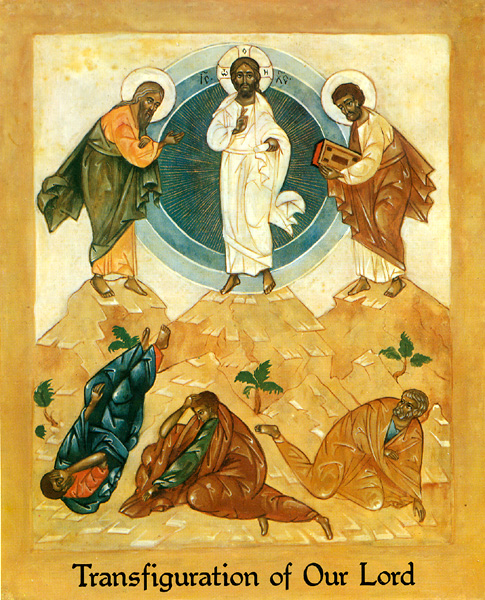
Holy Listening

https://www.oca.org/orthodoxy/the-orthodox-faith/worship/the-church-year/transfiguration

Rev. Molly F. James, PhD

DFMS Noonday Prayer via Zoom

Feast of the Transfiguration, August 6, 2020


May God’s Word be spoken. May God’s Word be heard. May that point us to the Living Word, who is Jesus Christ our Lord. Amen. 


The summer between my first and second years of seminary I did a chaplaincy training program called Clinical Pastoral Education (often abbreviated as CPE). It was a wonderful learning experience that taught me good skills for pastoral care and helped me begin to try on what it means to walk with people as a pastor. More importantly, though, it was a learning experience that taught me a lot about myself. Ultimately that is the great gift of CPE, it helps us look at all our own stuff, and our own baggage, so that when we walk into someone’s hospital room, we are able to be fully present to them wherever they are. 


For me, one of the greatest moments of insight came in one of our afternoon group sessions. There were six other people in the training program with me, and we spent many hours each week in group time, reflecting on what we were learning and discovering the various ways our personalities did and did not work well together. Anyone who has ever been in a meeting with me will be able to tell you that I am not shy about jumping in or offering my ideas. In fact, I can be too quick to jump in. Pair that with my aversion to conflict, and you have someone who is all too ready to jump in, fill awkward silences and try to fix anything. Blessedly, my classmates and supervisor did not shy away from holding a mirror up to help me recognize this about myself. They helped me to see that my desire to fill the space or my eagerness to share my ideas could even prevent others from having the time they needed to think or to share. So, one afternoon I decided to take this insight to heart, and I stayed silent for an entire group session. It was an enlightening experience. 


I listened in a whole new way. Or to put more bluntly. I actually listened. I didn’t spend my time formulating my response or thinking about what story in my own life matched with what I was hearing. It wasn’t about fixing a situation or needing to fill a silence. I was just there to listen. I learned a lot that day. It made me realize that I don’t always have to jump in, and it made me realize that sometimes the right “answer” in a given situation is just to listen. 


I have been thinking back on that learning experience, and as I read through our very familiar lessons for this feast of the Transfiguration, I was struck by the line: “This is my Son, my Chosen; listen to him!” Listen to him. That is what God was commanding the apostles to do. It is what God is commanding us to do. 


You’ll notice God does not say “Listen and Respond.” God does not say, “Sort of listen with one ear while you are formulating your own thoughts.” God just tells us to listen to Jesus. 


That is such an important reminder for all us, particularly in this time. There is so much going on in our world. There is so much information and misinformation out there. There is lots and lots of talking going on all around us. We need our wise and discerning hearts. We need each other, we need our faith to help us hear the truth, to hear what really matters, to listen for God. 


I would guess that most of us can attest to the healing and restorative power of listening. We can think of conversations where we have unloaded a really challenging experience or a terrible day in a cascade of words to a beloved friend or family member, and when we have finally stopped talking, they say, “what do you need?” And we realize that was exactly what we needed. We just needed to tell our story. We needed someone to listen. 


So, what does good listening look like? What does it feel like? How might we become better listeners? How might we listen to Jesus and each other more fully? 


For me, there are three factors that are an important part of my listening well. I offer them here, in the hopes that they might be helpful to you too. 


First is Mindset or well-being. As they say, change begins with me. If I want to be a good listener, I have to take care of myself first. I have to be comfortable in my own skin, aware of my own boundaries and able to ask for what I need. This means I need to have a good support system in place and healthy places to process my own challenges, so that I can be available to others. If I am all tied up in my own mess, I won’t be able to listen to others. This also means letting go of our own egos or our need to be right. We can only listen for God’s voice if we are humble enough to admit we probably don’t have it all figured out yet. 


Second is Trust. Real listening is about being fully present to the other person without letting our own agenda drive the conversation. Authentic listening involves vulnerability. It involves opening our hearts to create a space where the other can share what’s on theirs. Vulnerability cannot and should not happen when there is no trust. 


Third is Guidelines or Rules of the Road. Particularly in professional contexts and learning environments, I have found it tremendously helpful to have some shared principles about how we will be in community together. A colleague and I have just this morning had the first session of an affinity group that will be working its way through the Sacred Ground curriculum, which is designed to help those of us who are white do anti-racism work. We started our time with a set of discussion guidelines. These guidelines help me practice the principles of mutual respect and honesty, while not holding anything too tightly and assuming the best about others. They are a gift. 


On this feast of the Transfiguration, God is inviting us to listen, first and foremost to Jesus, and then to each other. May our listening be a gateway to deeper relationship with God and with each other.  


AMEN. 


Friday, July 31, 2020

An Ignatian Invitation to Gratitude and Reflection


Rev. Molly F. James, PhD

DFMS Noonday Prayer via Zoom

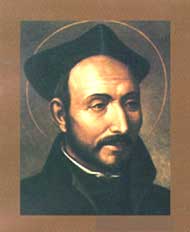
Feast of St. Ignatius, July 31, 2020


May God’s Word be spoken. May God’s Word be heard. May that point us to the living Word who is Jesus Christ our Lord. Amen. 


Connect to God.

Give Thanks. 

Review the Day. 

Face Shortcomings. 

Look to Tomorrow. 


Those are the five elements of the Ignatian Examen. It seems fitting to revisit that practice today on the feast of Ignatius. Perhaps this practice is a familiar one to you? Perhaps it is one of the center parts of your spiritual life? In which case, I hope that today will be an opportunity for you to bask in the gift of that practice. If it is new to you, then I hope it will be fruitful and inspiring to think about how this practice or elements of it might be helpful to you in your own faith life. 


Of course, St. Ignatius is known for his spiritual exercises and for founding the Jesuits. But the particular, personal nature of the Examen seemed worthwhile for us to sit with, together, today. It seems a real gift to us in this time when we are facing so many challenges, as individuals, as communities, as the world. The Examen is grounded in hope. And I would wager we could all use a little more hope these days. 


Now for some of us it might be possible to find the uninterrupted time to do the Examen in one fell swoop at the end of our days (there is even an app to help us). For others of us that might be a bit challenging. So, I want to give us collective permission to honor the spirit of it, even if we are not able to honor the letter of it. Because really, if we can just find a bit more time, a few more ways to honor these practices, our lives will be enriched.


We begin with “Connect to God.” Well, I think we got at least some of that covered. We are here, after all. Connecting to God and each other in Chapel. Perhaps there is an invitation to us to find more of what we love about Chapel in our daily lives. Maybe that just means building more prayer time into our days (it is amazing what a minute or two of deep breaths and reflection can do). Or maybe it means reading more Scripture or more spiritual writings that inspire us. The news headlines will all still be there. They don’t always need to be the first and the last thing we look at on our phones.


“Give Thanks.” Remember that mystic and theologian Meister Eckhart said that if the only prayer we ever say is “Thank you” it will be enough. Giving Thanks to God is always a good idea. At various points in my life, particularly when I have been facing a challenging time, I have done the practice of keeping a gratitude journal. Just a short list, some notes each day about things for which I feel grateful. Even on the really hard days there are things, for which we can give thanks. Keeping our focus on gratitude helps us keep our perspective too. And it feeds our souls to be reminded that blessings abound, even in the midst of struggles.


“Review the Day & Face our Shortcomings”

I put these two together, because likely the act of giving thanks has already helped us to see all the joyful spots in our day. The challenge comes in facing the things that we feel we have not done well today. Oof. As many of you know, I consider myself a recovering perfectionist. I am very skilled at finding my shortcomings. The hard part is not focusing solely on them or letting them define me. I am grateful to the patient companions on the way who work with me to keep reframing the things I label as “mistakes” or “failures” as opportunities for growth and learning. That is an essential piece of this - we need to be sure that when we “face our shortcomings” we do not make it about berating ourselves, but rather about looking back through the day to see how we might learn from it. A wonderful mentor of mine had me keep a journal while I was doing an internship. Each day I was to reflect on two questions: “What did I teach myself today?” and “What would I still like to learn?”. Those are good questions for us to reframe the challenges of the day into opportunities for personal growth.


“Look to Tomorrow.” Indeed. Our Gospel today tells us that we cannot put our hand to the plow and look back. We cannot be a past oriented people. We must be a future oriented, hope filled people. We cannot know with any certainty what tomorrow will look like. We are particularly aware of that truth in these times, and of course, if we are honest, we realize that we have actually never had any guarantees. That is why we need faith, why we need hope, why we need each other. To be a people of faith means that we trust in that which we cannot see. Jesus does not promise us certainty or long lives or easy lives. Jesus promises us an abundant life. Jesus promises to be with us until the end of the age. And so that is where we put our trust, our faith. We put our trust in that which is eternal. We can follow Ignatius’ command to look to tomorrow because we know that no matter what may come our way, we will not be alone. The truth about who God is. The truth that we are beloved children of God. The truth that God is with us always. All of those truths will still be true tomorrow. 


Saint Ignatius invites us to reflect on our days, on our lives that we might be drawn more deeply into relationship with God and brought more fully into the full stature of who God is calling us to be. I hope that you might find the elements of this Examen not a burden or another task to be completed, but rather as an invitation. An invitation to take from it what will serve you well. An invitation to learning, an invitation to growth, and an invitation to be more fully present to the abundant blessings which surround us each and every day. AMEN.


Tuesday, July 14, 2020

Solid Foundations


Pouring the foundation of my parents' home

Rev. Molly F. James, PhD

DFMS Noonday Prayer via Zoom

Argula von Grumbach, July 14, 2020


May God’s Word be spoken. May God’s Word be heard. May that point us to the living Word who is Jesus Christ our Lord. Amen. 

My mom is a teacher. Over the years she has taught math, writing and literature to kids. She spent all of my childhood teaching grown-ups how to build their own houses. She and my dad built the house in which I grew up. She loved that work and teaching, and the school liked having someone who was not a professional engineer or contractor on the faculty. It reinforced their point that anyone could learn to build a house. So my mom spent years teaching people how to heat and cool their houses; how to build their house appropriately for the climate in which it was situated; and how to build the proper foundation for their house. Over the years, especially in the summer months, I sat in on some or all of many of her lectures. I couldn’t help but think of all her lectures on foundations when I read today’s Gospel. 


I thought of her teaching her students how to calculate all the factors. What kind of ground is it? Is the house going to be on posts or is it going to have a full basement? Then my favorite part was the slide show. There were loads of photos of all the different kinds of foundations you could build, and lessons in how to pour concrete correctly. How to spread it. How not to get stuck in it. How to be sure it sets properly. Foundations are complicated!


And building a solid, strong foundation matters, just about more than anything. That is the lesson that I have carried with me from those lectures. Here is the thing. It does not actually matter whether you are building a tiny little shingled cottage or a mansion or a skyscraper. If you don’t get the foundation right, the building will not stand. It will not last. It does not matter whether the building will be a smart home where you can control the lights and the heat from your phone or an off the grid house that is made from salvaged materials. It does not matter whether the countertops will be granite or the bathrooms will be made of marble. What matters is the foundation.


The same is true for our own lives, particularly our spiritual lives. What is our foundation? How are we grounded? Our foundations do not all have to look the same. It depends on our context, our climate, and what we want to build.  But it is not about keeping up appearances. What matters is the substance - not the looks. 


So where are we finding substance and strength these days? What might need shoring up and bolstering in our lives? What might be mere window dressing that we can let go of because it does not actually impact what really matters?


For me, I am finding substance and strength in two important things, which I think are intertwined. They are connection and learning. In this world of remote work, it could be very easy (particularly since my personality tends this way) to become supremely task oriented. To make my day all about the “to do list.” But that could so easily lead to isolation. Strength is found in community, not in isolation. I am grateful for the ways in which more time at home allows more meals and activities with my family. I am grateful for the gift of technology that allows me to stay connected with friends and colleagues who are at a distance. And another one of the many reasons I am grateful for this chapel group is that  you all help me stay connected - to community and to God. You also help me keep learning. There is so much uncertainty in our lives right now. So much unknown. It can be easy to pull back and just focus on what we already know. Or easy to think that we have to have all the right answers. My communities, my connections remind me that I don’t need to figure it all out right now. The point is to keep learning, keep gaining wisdom and finding new perspectives. 


Having a strong foundation is not about being immovable or stagnant. It is about being grounded and connected, so that I can weather whatever changes come. We do not and we cannot know what the next weeks and months will hold for us. What we can know is that we can thrive in the midst of whatever if we have grounded ourselves in relationship with God and with those whose presence enriches and enlivens our journey. AMEN.    


Sunday, August 5, 2018

Learning about Joy and the Good Life

Walkway at Yale Divinity School

Rev. Molly F. James, PhD
St. Alban’s, Simsbury, CT
August 5, 2018, Proper 13B
2 Samuel 11:26-12:13a; Psalm 51:1-13; Ephesians 4:1-16; John 6:24-35


May God’s Word be spoken. May God’s Word be heard. May that point us to the living Word who is Jesus Christ our Lord. Amen.


I spent this past week with fellow clergy, scholars, and teachers at a conference at Yale Divinity School on the Future of Joy and the Good Life. Yale’s Center for Faith and Culture has received a wonderful grant from the Templeton Foundation to study Joy and the Good Life.  This conference was an opportunity for those involved in the project to share some of their learnings and also to invite more of us into that work and conversation. As you might imagine, there was lots of food for thought and a lot of excellent presentations and conversations.


Now, if you are hoping that my experience of this past week means that I have for you some magical key to Joy and the “Good Life,” I am sorry to disappoint you. It is not that simple. True Joy and a “Good Life” is not the stuff of tabloids or magazines you can read while waiting in line at the grocery store. Finding Joy or cultivating a good life is not something you do in ten easy steps or 15 minutes once a week.


They are habits. Like any virtues, like anything worthwhile in life, it takes time and effort to discover joy and to live a good life. The good news is that you already have the tools. And no doubt many of you are already using them well.


The Good Life means, in the language of Paul’s letter to the Ephesians, living “a life worthy of the calling to which you have been called, with all humility and gentleness, with patience, bearing with one another in love, making every effort to maintain the unity of the Spirit in the bond of peace.” That is the “Good Life” - the life that is worthy of our calling as followers of Jesus. It is a life lived in the Way of Love, as our Presiding Bishop describes it.


I think this is a truth that most of us know intrinsically, and sometimes it helps to make it explicit and to remind ourselves of this fact. The “Good Life,” the life we seek, the kind of life we want to be remembered for is one that is defined by character and virtue, not by the accumulation of wealth or even of accolades. Of course having nice things and being praised and appreciated for our accomplishments is wonderful, but they cannot provide us with true sustenance or help us to find meaning.


Material goods or outstanding professional achievements do not provide us with the “bread of life” that Jesus describes in our Gospel for today. Those things are just that, they are things. That are transient and tangible. They do not last. Wealth can come and go. If we stake our happiness or our identity or our self-worth on our achievements we will be sorely disappointed. Because someday we will retire. Or someday someone will do what we did, except they will do it faster, better, or more efficiently.


Joy is not fleeting. Happiness is. There is an important distinction here. A new friend I met at this conference, got me to look into the work of the Benedictine Monk, David Steindal-Rast  who writes and speaks about the importance of gratitude. He describes joy as the “happiness that does not depend on what happens.” Hear that again: Joy is the happiness that does not depend on what happens.


This is why it is a habit, a virtue that must be cultivated. It cannot be subject to our whims nor to the ups and downs of our lives. I also think it is really important to note that cultivating joy is not a Pollyana activity. It does not mean that we fool ourselves into thinking everything is wonderful, even when the evidence clearly says that it is not. Being joyful, having joy in our lives does not mean that our lives are free from suffering or free from tragedy. It means that we can always find joy, even in the midst of terrible pain and tragedy. It means holding on to our perspective, holding on to our faith, in the midst of our suffering. We can trust and believe that there is more to life than the darkness of this particular moment. We know deep in our bones that God is with us, and that not matter what is happening we are beloved children of God who will never be abandoned. The light will keep shining in our darkness. Hope is real, and we will not be overcome. Joy is finding and holding onto that hope, every day.


And that is what it means to flourish, to live the “Good Life.” One of the great insights of this conference for me was to be able to live more deeply into the fullness of what flourishing means. On the surface, it can seem strange to talk about flourishing, particularly if we are holding the life of Jesus up as our preeminent example. Think about it. Seemingly average Jewish teacher starts a career late in life (by the standards of his time), which seems to thrive briefly, but then he is deemed to be a problem for the authorities, so he is arrested and crucified. By most outside standards that narrative would not seem to describe a life of flourishing. But how could we not say that Jesus flourished? Here we are, over 2000 years later, a people who in fact believe that his life and teachings can continue transform our lives.


And so the world’s definition of flourishing does not stand. It is not about how long we live or about how much we earn or how much we accomplish in our lives. Flourishing, living the “Good Life” is about the kind of life we live. It is about the intangible aspects of life. It is about seeking out deep, nourishing, and life-sustaining relationships. It is about seeking to empower others. It is about recognizing the interconnectedness of our world and the need for community and collaboration. It is about living a life that reflects the belief that we cannot flourish if others are oppressed.


In case you were wondering, our reading for today from 2 Samuel provides a wonderful example of how not to live our lives. Right? It is the story of the prophet Nathan holding up a mirror to King David to show him how he has failed and fallen short of his own calling. David was so narrowly focused on his own selfish desires he did not care who got hurt in the process. He was even willing to kill to get what he wanted. This is not a life of joy or flourishing.


So that seems a pretty straightforward place to start. Cultivating joy and living the “Good Life” means not doing things we clearly know to be wrong, i.e adultery and murder. And yet clearly there is more to it than that. The Good Life cannot just be about abstaining from what is wrong. It is more active, more positive than that.


Perhaps one of the most valuable insights from this past week for me has been the awareness that joy does not happen in our lives by sheer force of will. We cannot just all of a sudden decide that we are going to be joyful. It really is a virtue and a habit. In some ways it could be said that joy is something that happens to us, when we are open and aware. So what is it that makes us open and aware? How might we, in the words of C.S. Lewis find ourselves “surprised by joy”?


I think there are two main things that we can do to ensure that there is plenty of joy in our lives. And note, you already have and do these things! You are doing them right now by being here in this community. I hope that like me, it is just helpful to be reminded of how incredibly valuable they are.


  1. PRACTICE GRATITUDE - This can happen in lots of ways. You might keep a list or a journal. You might just make a practice of saying “Thank You” a little more often. You might just get in the habit of making gratitude the focus of the first prayer of your day or of your dinner table conversation. And no doubt many of you may have lots of other practices you find helpful. The how is not important. What matters is that you feel grateful on a daily basis.
  2. DEEPEN RELATIONSHIPS WITH GOD AND WITH EACH OTHER - When we feel connected, rooted, and as though we belong, we flourish. We are ready to withstand whatever life can throw at us. Like a well built house we are not rattled by the storms of life. And so we need to take time for prayer, time for worship, time for conversation, time for deepening our connections.


Jesus came that we might have life. Jesus came that we might have good life. Jesus came that we might flourish. I truly believe that Jesus desires us to live well. We have what we need to live lives that are marked by joy and gratitude. Flourishing lives. Together we can live the Good Life. Thanks be to God. AMEN.