Thursday, October 15, 2020

Healing, Wholeness, and Faith


Rev. Molly F. James, PhD

DFMS Noonday Prayer

October 13, 2020 

Psalm 10; Jonah 1:1-17a; Luke 8:40-56


Hearing this Gospel story today is a powerful reminder for me that the stories of Scripture continue to speak to us, no matter how many times we have read them.  As you might imagine, these stories of healing have always had particular significance for me. In my own spiritual journey as a cancer survivor, I have struggled with what it means to be healed.  So often the healing stories in the Gospels are miraculous ones that seem to provide a complete restoration to health.  Yet that is so often not our own experience.  

Alongside the healing of Jarius’ daughter, there is another story of healing that happens while Jesus is on the way to the house.  He heals a woman who has been bleeding for 12 years.  Jesus says to her, “Daughter, your faith has made you well, go in peace and be healed of your disease.”  This is another miracle story, but there is something very profound for me in that statement, “your faith has made you well.”  For me that statement shows me that healing is about more than the absence of disease.  It is through faith that we can be restored to wholeness.  It is not about whether our scars disappear or our physical challenges go away completely.  The gift of faith enables us to be whole people no matter our physical limitations.  Our identity as children of God has much more to do with the strength of our faith than with the strength of our bodies.

For me these Gospel stories of healing ask us to reimagine our understanding of what it means to be “cured” or made well or whole. If a cure is just about the absence of disease and we do not have to walk the often challenging road of healing, then we may also miss out on the lessons that can be learned along the way.  It has been my experience that some profound moments of perspective, of deep connection to God, and even moments of joy, are found when we have experienced deep pain. 

A friend once asked me, if I had to do it all over again would I choose to have cancer?  Well this may sound strange to you, but actually the answer is yes.  Now,  of course, part of the reason I say that is because I am healthy today. And yet truly the benefits and gifts of my experience outweigh the pain and challenges. I met so many wonderful people and had opportunities I otherwise would not have had. Most of all I was given another perspective. I had to face my own mortality as a teenager, when most of my peers were convinced they were invincible. I learned firsthand how precious and fragile human life is. This perspective helps me live each day a little more fully and to be more aware of all the blessings I have. It helps me not to take things for granted, for we never know how long we have.

I also believe that in a subtle way the Gospel lesson is hinting at this broader idea of healing, when Jesus heals Jarius' daughter, he does not let the focus be on his miraculous efforts, rather he focuses on the needs of the daughter so that she may be brought back into the family life and may live life fully.  A reminder that the real object of healing is to bring us more fully into a place of living faithfully. Healing may or may not be physical, but if we can live in faith, find peace, and live fully into each day, then maybe, we all shall be healed. Although the reality of that healing may not be what we had initially hoped or desired. This story tells us that Jesus is there in our places of pain and suffering, amidst all the challenges. We are all too aware in these days and times of the realities of human suffering. 


        There is an invitation today to find peace and joy even amidst our suffering and our pain.  To remember that God is there walking the road with us.  God knows our suffering all too well. God weeps with us in our pain. God embraces us and offers us hope.  We have hope in Love, in forgiveness, and redemption. Hope in the all important truth that no matter what we are not alone in our suffering.

I also think it is important for us to see another invitation to hope and possibility in this Gospel story. It is about our interactions with others.  I am struck by how many people in the crowd around Jesus were discouraging. The crowd believed Jarius’ daughter was dead.  They did not think it was worth Jesus time or effort.  Some laughed at him when he told them not to mourn and not be discouraged, because the child was only sleeping.  Jesus did not only offer the gift of healing to the daughter or the woman who was bleeding.  He offered  it to all who are witnesses.  As I am sure you all have experienced, those of us who have been witnesses to moments of healing and transformation do not remain unchanged.  Witnessing God's transforming love at work in the world changes us.  Jesus offered the gift of wholeness to all those present with him on that day.  Yet so many there were so sure of themselves, so sure of their own ideas that they missed out on that invitation.

May we avoid that pitfall.  May we always be open to the ways that God is leading our lives and our relationships on paths of healing.  May we be open to following the journey to wholeness.  May we be open to the unexpected possibilities.  May our own need for certainty not blind us to the surprises God has in store for us.  May we continue to be transformed and healed as we witness the myriad of ways that God is at work in the world. AMEN.


Tuesday, September 29, 2020

Fear Not


Rev. Molly F. James, PhD

DFMS Noonday Prayer via Zoom

St. Michael and All Angels, September 29, 2020


May God’s Word be spoken. May God’s Word be heard. May that point us to the living Word who is Jesus Christ our Lord. Amen. 


Today is the feast of St. Michael and All Angels, and so of course we get readings about angels. I am particularly intrigued by our reading from Job. I must say this reading comes from my favorite part of Job.  I love God’s answer to Job out of the whirlwind.  Of course, it does leave one feeling rather small since God basically says “Who do YOU think you are? Where were WE when God created the world?” Ultimately I find it comforting because it is a passage that reminds us that we are NOT in charge - God is.  But I digress . . . today is about angels.  And although this is one of my favorite passages, I have not paid much attention to the angels in the passage.  Yet of course they should be there - the heavenly chorus on the sidelines shouting for joy and singing God’s praises. And that is certainly a part of the job description of being an angel - when we celebrate the Eucharist we join with Angels and Archangels in praising God - yet it is important for us to remember that being an angel is about more than singing God’s praises. They are not background figures.  In fact it is somewhat surprising that on this feast day we don’t get readings that have angels as the central characters - doing what they do best - being messengers for God. 

Our Gospel text is not as cheery as Job - we have a prophecy of the end times, and things are, literally, quite dark.  We are reminded that in fact angels can actually be quite scary figures. We often hear talk about angels as though they are so nice - always joyful like in our passage from Job - and Hollywood usually portrays them as the polar opposite of the devil. But we should remember that in Scripture passages where an angel is a messenger, the first words out of the angel’s mouth are usually “Fear not.”  The fact that they have to say that is probably a pretty good indication of how terrified the people’s faces were.

For those of you have experience being a hospital chaplain, you can probably commiserate with the angels.  So often in the hospital when someone realizes you are the chaplain, their faces get that look - the look of sheer terror.  They assume you are there to deliver bad news and that you most certainly know something they don’t.  When I worked as a chaplain, I found I often couldn’t get the words out fast enough to explain that no, I was not the angel of death, no, I did not know something they didn’t and really I was just there to be helpful and supportive.  

Actually I think all of us can relate to the angels in a way.  We are all, by virtue of our baptism, called to praise God and to share God’s message with the world. And I think in this particular time we need the message of the angels, and the message of our Scriptures today. Job reminds us that it is not all up to us. In fact, very little is up to us. We are not in charge. There is far more to the world than we can see or know. So in those moments when we feel overwhelmed trying to do all the things, then we can pause, we can think of Job. We can think of God’s admonition, “Where were you when I laid the foundations of the earth?” Not as a critique, not as more admonition of our shortcomings, but as a statement of fact meant to reassure us that this whole thing is a lot bigger than whatever we are fretting about in the current moment. If God can lay the foundations of the earth, then it is probably pretty likely that God could help us solve our current difficulty too, if only we would get off our high horse and stop thinking we had to do it all ourselves. 

We also need that message of the angels. We need to be reminded to “Fear not.” Oh my friends, it would be so easy to get caught in a cycle of fear right now. There are so many news headlines that would help us do that. But nothing will be served by filling our hearts and our heads with fear and anxiety. Like we are taught as hospital chaplains, it is our job to be the non anxious presence in the room. The fear and anxiety is all around us. No doubt we have people around us or with whom we are in regular contact who could use that message: “Fear not.” The world needs that message right now. 

So let us ground ourselves in that Truth. Let us do whatever it is that we need to do to hold on to that truth in the midst of the challenges we face. Whatever we need to be able to carry that truth and share it with others. Perhaps we need a picture of St. Michael or Gabriel or another favorite angel. Perhaps we need to keep God’s question to Job on a sticky note near our computer to be reminded that we are not responsible for the entirety of creation. Or perhaps today is the day we need to hear the message anew, so we just need to call our own angels, those people in our lives who incarnate God’s love for us and whose voices can always speak the truth so we hear it. We call them. so they can say to us, “Fear not.”

Whatever practices or tools we might need, let us hold fast to the assurance of the angels. God is here. God is with us. We need not be afraid. Not today. Not ever. 

AMEN. 


Thursday, September 24, 2020

Flipping the Tires of Life


Rev. Molly F. James, PhD
DFMS Noonday Prayer
Commemoration of Anna Alexander
September 24, 2020

May God’s Word be spoken. May God’s Word be heard. May that point us to the living Word who is Jesus Christ our Lord. Amen.

‘Come to me, all you that are weary and are carrying heavy burdens, and I will give you rest. Take my yoke upon you, and learn from me; for I am gentle and humble in heart, and you will find rest for your souls. For my yoke is easy, and my burden is light.’

Oh, what a good Scripture for today. I think this might be a good Scripture for our pandemic season. I think we are all weary and carrying heavy burdens. We are carrying heavy burdens for lots of reasons. We are living in the midst of the realities of COVID and systemic racism. We are in the midst of political division, of uncertainty about how the election will go. And then there are the personal burdens we are carrying because of the challenges we are dealing with in our home lives or in our extended family. We are all carrying them and there are days where the burdens can feel unbearably heavy.

And so we need this Scripture today. And we need the story of the life of Anna Alexander. If you don’t know about Anna, I commend her story to you. She was the first African-American woman ordained to the diaconate in The Episcopal Church. She was ordained in 1907 in the Diocese of Georgia. Despite numerous challenges, she did tremendous work to serve the poor and needy and to promote education in the communities she served. No doubt she carried many burdens. Particularly because the successor to her ordaining bishop did not provide financial support to her community and excluded African-Americans from Church governance. But she persevered. She just kept going and building community.

I bet Anna had her days of frustration. Her days of wishing things were different. She lived through droughts and the Great Depression. She knew what it was to have dreams and plans thwarted by forces beyond her control. She was faced with the choice we all are in the face of seemingly insurmountable difficulties. We can choose to give up. We can throw in the towel and say never mind. But here is the thing. If we are tempted to do that, if we feel like there is no way forward, then I think we have lost our focus, lost our center.

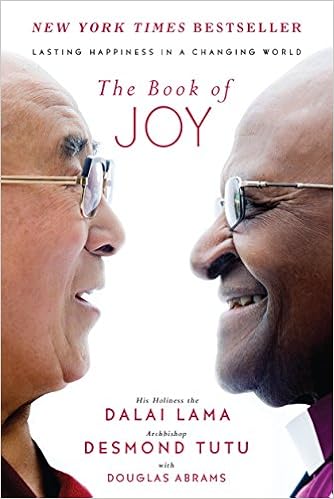
As many of you know, I have been re-reading the Book of Joy (a record of a week of conversation between Desmond Tutu and the Dalai Lama). In that book, they note that “Despair turns us inward. Hope sends us into the arms of others.” That’s the crux of it. If we feel ourselves going down the road of despair, it is because we have turned too far inward. Hope is a communal activity. We find it together. Anna found it because she did not work alone. Her ministry was not solitary. She was in community, working with and empowering others. That is why she could choose perseverance over defeat.

And that is the truth at the heart of our Gospel today. We do not journey alone. We are invited to share our burdens. With Christ, and with those who manifest God’s presence in our lives. All of a sudden things which seemed impossible no longer are, because we are not trying to do them all by ourselves. Let me offer a tangible example from my experience at CrossFit. In pre-pandemic times when we could do collaborative workouts, we would flip tires. These are not your average tires. They are enormous tractor tires or tires from heavy equipment. They weigh hundreds of pounds. Alone there would be no chance of budging it an inch. But put three of us together on the tire and suddenly we can flip the tire over and over again down the alley.

So, if you are currently staring at an enormous “tire” in your life or in some other way feeling overburdened right now, may I suggest taking inspiration from our Scriptures and from Deacon Anna. Do not despair. Do not give up. Instead, reach out. Connect more deeply with Christ. Ask for help from your companions on the way. Together we can do so much more. Hope and joy are found in the blessings of collaboration and teamwork.

These are challenging times. No doubt about it. And we can take comfort and strength from remembering that we do not journey alone. God is with us. In Spirit and in the very tangible form of colleagues, friends, and family members whose presence and wisdom bring light and love to life for us each and every day. Amen.

Monday, September 14, 2020

Holy Cross Day

Cross at a Church in the Azores


Rev. Molly F. James, PhD

DFMS Noonday Prayer, via Zoom

Holy Cross, September 14, 2020


May God’s Word be spoken. May God’s Word be heard. May that point us to the Living Word, who is Jesus Christ our Lord. Amen.


Today we celebrate the feast of the Holy Cross. It may sound strange, but this is actually one of my favorite feasts of the Church year. Now, don’t get me wrong, of course I love Christmas and Easter. Of course I find Holy Week to be tremendously meaningful. It is more that today feels like a more personal and intimate feast day. It is like Holy Week in miniature without all the logistics and details we clergy have to keep track of then. It is a day that is a real gift. It is a day to contemplate what the Cross means in our own lives. 


For me this day has real, personal significance. When I was in the midst of my own discernment process for ordination, I was asked what moment in our Lord’s life I connected with most deeply. My answer was immediate: the Cross. I was 22, and I was only a few years removed from a battle with bone cancer. It mattered a great deal to me that our Lord and Savior knows the fullness of the human experience, including the realities of pain and suffering. My intimate connection with God came through confronting my own mortality and knowing that God knew exactly what I was going through. 


I know I am not the only one for whom the realities of the crucifixion hold deep meaning. No doubt we have all had profound experiences of personal pain and suffering. And like so many of the notable Christian theologians and mystics, we have come to the realization that God’s presence can often be most deeply felt in the midst of those challenging experiences. Profound experiences of suffering have a way of narrowing our vision. The mundane distractions of daily life fade away, and we are left with what really matters: our relationship with God and with those around us. The experience of illness or profound loss can take away so much, but as St. Paul so eloquently reminds us, there is nothing in life, not even death, that can separate us from the love of God. And it is so often in those crucible moments of our lives that we see the love of God most fully and feel it most deeply in our own hearts. 


That is the truth of the Cross. The Cross shows us the depth of God’s love for us. God loves us so very deeply that God is willing to give of God’s self, even to the point of death. This is a profound reality, and it is often the pathway to a deeper relationship with God. There is, however, an important caveat to be made here. 


While I absolutely believe that suffering is an avenue to deepen our connection to God, that does not mean that suffering is a good in and of itself or that it should be sought out. Our Collect today asks that we might “take up our Cross” and follow Christ. That phrase deserves a little unpacking. And our readings help us to do that. Our readings, particularly the Epistle from Philippians and John’s Gospel remind us that love and self-giving generosity are at the heart of the Cross. They remind us too that we are called to be children of the light. God does not wish for us to experience pain or suffering. We must remember that Jesus came so that we might have LIFE, and have it abundantly. 


Unfortunately, there is a strand in our Christian tradition that has said that since suffering is a way to God, we should seek it out (note the monastic traditions of self-deprivation or even self-harm). Or perhaps even worse is the way the Church has used the glorification of suffering to promote oppression. Sadly,there is a legacy of the Church saying to those on the margins or those who are oppressed that they should accept their current reality as their “cross to bear” and to find consolation in the fact that suffering brings us closer to God. 


One of my favorite theologians is a Roman Catholic sister from Brazil named Ivone Gebara. She is a feminist theologian who is deeply critical of the Church for the ways in which it has used the Cross to perpetuate those on the margins of society, particularly women. Gebara helps us to look at the reality of suffering with an important critical lens. When we encounter suffering in our lives, our own or others, we must ask an essential question: is this suffering endemic to the human experience (that which we can expect because our bodies are mortal and natural disasters exist) or is this suffering the result of injustice? If it is endemic, then we must learn to live with it, and it is here that we can be grateful for the gift of feelings God’s presence most abundantly in the midst of suffering. If, on the other hand, the suffering we have encountered is the result of injustice then we followers of Jesus are called to fight injustice. 


There is far too much injustice in our world today, and recent events have highlighted the ways in which systemic injustice can compound the suffering of illness and disasters. The disproportionate numbers of our black and brown brothers and sisters who have been affected by and died from COVID-19, show us just how complicated things are and how much work we have to do. Illness is not a suffering that we should merely accept if we are ill because the realities of injustice mean that we have been put at a higher risk or have been denied access to adequate health care. There is suffering in life which we cannot fix, but there is so much suffering that we can alleviate by promoting a more just and equitable society. We need policies, systems and structures in our Church and our society that reflect our belief that every human being is a beloved child of God worthy of dignity and respect.  Indeed, as people of faith, we are called to take action and to speak out against injustice wherever we find it.


So I hope that this Holy Cross day will be a day of comfort and inspiration for all of us. I hope we can find comfort, in the midst of our own trials and tribulations, in the profound truth that God knows our suffering and God is present with us even in our most painful moments. And I hope that we will also be inspired, particularly those of us who are in positions of power and privilege, to fight against injustice. I hope that we will see that if we have any cross to bear in life it is the hard and holy work of realizing God’s dream of justice and life abundant for all people. 


AMEN.


Tuesday, September 8, 2020

Saying Yes to God

                                                        Mosaic from Hagia Sophia

Rev. Molly F. James, PhD

DFMS Noonday Prayer via Zoom

Nativity of Mary, September 8, 2020


May God’s Word be spoken. May God’s Word be heard. May that point us to the living Word, who is Jesus Christ, our Lord. Amen.


So today we celebrate the nativity of Mary. We honor the birth of Jesus’ mother. It is of course a great and glorious thing to honor Mary. A remarkable woman who rightfully has a profound and prominent place in our tradition. From our Scriptures, it could be easy to just think of today as a celebration of unexpected pregnancies and miraculous children. But I think that ultimately, both the story of Hannah and the story of the Angel Gabriel’s visit to Mary point to us even wider ideas and understandings. 


We are in good company when things are not going as we had hoped. That is exactly how Hannah spends much of our reading from Samuel today. In a place we have all been, and might be right now - a place of wishing things were different than they are. If we are feeling as though life is mixed up or out of order or things are not at all going the way we planned, we are not alone. Hannah had a very different life in mind for herself, but that was not how it went. Do you think Mary was planning on having a baby that year? Considering she and Joseph weren’t even married yet, it is not likely. She had not expected an Angel to appear to her and inform her that she was going to have a baby, and not just any baby, God’s Son. And she certainly wasn’t planning on giving birth in a stable miles and miles from her family.

And there is an invitation here, today, in our stories of Hannah and of Mary and the Angel Gabriel. It is an invitation to be faithful and to be open. It is an invitation to be alert to the ways God shows up unexpectedly in our lives, and to pay attention when that happens. An invitation to trust that there is more at work than we can know. An invitation to believe the Angels who show up in our lives and invite us to follow God on paths that seem far different from what we had planned. Perhaps we will be like Hannah and find a longer and more circuitous path to the realization of a long held dream and desire. Perhaps we will find ourselves like Mary to be invited to take a direction we never expected or even believed was possible, but which is more beautiful, challenging, and meaningful than we ever could have imagined. Through our Scriptures we are invited to be faithful like Hannah, and to be open like Mary. We are being offered an invitation to take a deep breath and to be present in the moment. An invitation to pay attention and to say yes when God shows up.  


We may all have our own ways of slowing down and paying more attention. And I would guess there are some similarities. I know I can’t pay attention well if my physical body doesn’t feel well. Enough sleep. Enough exercise. Enough water. Eating well (and in my case often - those who know me well will attest that if you don’t feed me regularly I get cranky.) That basket of snacks on my office table at 815 is absolutely for sharing, and I am glad it is enjoyed by others. It is also there, because I can’t usually go a whole day without snacks. So, taking care of our bodies matters. We also need to care for our minds and our souls. We need things that challenge our intellect and expand our mental horizons. We need time for reflection and prayer. We need to read things that are uplifting and inspiring. We need conversations that bring us joy. This may seem like a tall order. How are we supposed to do all those things and get our work done, our children educated, pay our bills, do all the chores around the house and so on and so on? Here’s the thing though. It is all about the order of operations. Remember middle school math? You only get the “right answer,” the whole problem only works if you do things in the right order. If you do the subtraction before the exponents the answer will be an order of magnitude off. If we do all the things to take care of ourselves first, we will be more productive at work, we will be more patient with our children, we will find more energy and creativity to deal with whatever tasks come our way. Start with the important stuff. That is how we can thrive, and it is how we can foster the kind of heart space needed to be open to God’s invitations in our lives - even the unexpected ones.

This day reminds us that  things will not always happen the way we would like. Sometimes it may feel as though things are moving far too fast or far too slow. Sometimes it will seem as though things are all mixed up. But that is okay. We are not alone. Some of the best stories started out in confusing and unexpected ways. Today’s readings are a prime example of that. And so we are invited to be like Hannah, to be like Mary, and to trust in the workings of the Holy Spirit. Even when we feel scared or uncertain. God is present. God is at work. We need to remain faithful and to be open to the Angels that show up in our lives. The ones who manifest God’s presence to us. The ones who invite us into new possibilities, to stretch beyond our comfort zone. The ones who remind us that the path will not always look the way we expect, but we can and we should trust that God is leading us. We are being led into a brighter future, one of light and life, always. It may not come on the timeline we had planned. It may not be exactly as we had imagined it. And yet it will be glorious and wonderful, because it is God’s future. 


AMEN.


Thursday, September 3, 2020

Joy through Generosity


Rev. Molly F. James, PhD

DFMS Noonday Prayer via Zoom

Commemoration of Phoebe, September 3, 2020

May God’s Word be spoken. May God’s Word be heard. May that point us to the living Word who is Jesus Christ our Lord. Amen. 

I have been re-reading the Book of Joy lately. It is a record of a week of conversation between Archbishop Desmond Tutu and His Holiness the Dalai Lama. Two remarkable spiritual leaders who are also the best of friends. A mere transcript of their conversation would be joy-filled, yet the book also includes background information, wonderful stories, and much of the latest scientific research on how and why we experience joy. 


If you are not familiar with this book, it is really good reading at any time, and especially during a pandemic. There is such wisdom and perspective in it. And some of it is just exuded through the remarkable lives of these two men. One of their convictions is that if we can find perspective, a wideness of vision, a connection and sense of solidarity in the midst of our own trials our own suffering will be decreased. These two men certainly help with that. They have known no shortage of trials in their own lives, Aparthied, Cancer, an Exile of more than 50 years. Yet in their 80s they sit and laugh together. They exude joy. Their mere presence brings joy, even before they say a word. They each have a smile that gives you a sense of sheer delight. 


Well, if they can do it, so can we. And that is indeed their point. Joy is not something that is reserved for a select few or someone who is particularly enlightened. Joy is meant for all of us. It is foundational to our very existence. And here is the key, joy is found in caring for others, in relationship, in connection. A fitting insight for this day on which we remember Phoebe the Deacon, a servant by nature and calling, one who Paul says was a benefactor to many, including himself. And whose commemoration gives us the Gospel from Luke where Jesus reminds the disciples that they, like he, are here to serve. The glory, the joy, the blessing, the fulfillment is not found in being the most powerful person in the room. It is not about garnering attention or accolades. It is found in caring acts of generosity that connect us to another human being. 


Like so much wisdom, this is something we know intrinsically. We know it whenever we have been blessed to receive the care of another. And we know how deeply meaningful it is to be able to be present in the midst of a crisis for someone we care about or how our soul is blessed by the smile of stanger responding to a simple act of kindness. 


We know this truth. And yet, we also need to be reminded of it. Because sometimes it can be hard to get out of our own heads and hearts; we can get stuck in the mire of stress or grief or sadness, longing for someone else to notice and fix it. But what the Archbishop and the Dalai Lama remind us of, what Jesus is teaching the disciples and us, is that we have the key, or at least the foundation, to our own thriving. We need only reach out and make a connection with others. 

The Dalai Lama finds solace in knowing that he and his people are not alone in experiencing suffering. He noted that when we can see our suffering as a point of connection to so many other human beings, and “when we look at the same event from a wider perspective, we will reduce the worrying and our own suffering.”


The Archbishop said, “that ultimately our greatest joy is when we seek to do good for others . . . We are wired to be caring for the other and generous to one another. We shrivel when we are not able to interact. I mean that is part of the reason why solitary confinement is such a horrendous punishment. We depend on the other in order for us to be fully who we are.”


And the remarkable thing is that there is a wonderful cascading effect in widening our perspective and seeking out more joy. As the book notes, “The more we turn toward others, the more joy we experience, and the more joy we experience, the more we can bring joy to others. The goal is not just to create joy for ourselves but, as the Archbishop poetically phrased it, “to be a reservoir of joy, an oasis of peace, a pool of serenity that can ripple out to all those around you.”


So, if we find ourselves turning inward, if we find ourselves struggling under the weight of the world, or the weight of the challenges in our own lives or those dear to us, there is a way out. We can take heart. We can have hope. Always. We are never alone in our suffering. God knows our suffering. The Archbishop and the Dalai Lama know what it is to suffer. Our experiences of suffering connect us deeply to each other. Suffering is a mark of our shared humanity. And our shared humanity, our connection to others, is also our salvation. It is the way out of the darkness of our own pain. We need only reach out. A kindness, an act of compassion, a moment of generosity will start us out on the road to our own healing. 


We need not grin and bear it. We need not muscle through. There is no glory there. The way forward is never a solitary path. It is the one where we are caring for and being cared for by the wise and generous souls whose presence brings us joy. May we daily know the blessing and gift of community. Amen.  


Thursday, August 27, 2020

When Miracles Don't Happen


Rev. Molly F. James, PhD

DFMS Noonday Prayer 

Thomas Gallaudet & Henry Syle, August 27, 2020


May God’s Word be spoken. May God’s Word be heard. May that point us to the living Word who is Jesus Christ our Lord. Amen. 

Our Diocesan Offices used to be located in a large house on Asylum Avenue in Hartford. I always thought this was an odd name for a street, as I assumed it referenced some long ago insane asylum in Hartford. The Asylum Hill neighborhood is a notable one, it contains the homes of Harriet Beecher Stowe and Mark Twain. But the Asylum in the name is not for an insane asylum, it is for the “The American Asylum at Hartford for the Education and Instruction of the Deaf & Dumb Persons” founded in the early 1800s. That school is now known as The American School for the Deaf and is located a few blocks from my house in West Hartford. It is actually quite fitting that our Diocesan Offices used to be on Asylum Ave, for the School for the Deaf and the history of the Episcopal Church in CT (and beyond) are very much linked. Today we remember and honor two priests, Thomas Gallaudet (whose father founded the School for the Deaf) and Henry Syle, who was the first deaf priest in The Episcopal Church. 

Our Church has a long history in ministering with the deaf community through education and various parish based ministries. I am finding that history and the examples of Thomas and Henry to be helpful in nuancing my reading of today’s Gospel. Of course, as one might expect today we get a story of Jesus healing a deaf man. I will admit to finding these healing stories challenging. They are wonderful and glorious, of course. But I cannot help but think of people I know who have been blind or deaf who would have loved to have such a miracle cure. They never did. 

How are we supposed to sit with that? How are we supposed to sit with any seemingly insurmountable problem for which we desperately desire a quick and simple solution? If only Jesus were here to instantly fix whatever is wrong. Don’t we wish that were true! 

This is where I think the lives of Thomas and Henry are so helpful. No doubt we (and probably they too) wish for miraculous solutions to the difficulties we face. And yet they do not always happen. So what did Thomas and Henry do? Did they sink into a deep depression and give up? No, they did what they could. And what they could was a lot. Their ministries educated and empowered people who were often at the margins of society, particularly in a time when there was no technology for hearing aids or cochlear implants. 

So I think sometimes we get to be Jesus. Sometimes we encounter challenges that we have exactly the skills to handle. I feel extraordinarily grateful that my children are still at the age where almost all their difficulties can be solved with a conversation and a lot of hugs. I know the days will come (no doubt sooner than I would like) when that will no longer work or even be a welcome solution. They will face difficulties that I cannot fix. 

On those days, and whenever any of us encounter a problem that is beyond our skill set. I hope we will remember Thomas and Henry. We are not always called to make a problem disappear. Sometimes we are called to educate and empower. Sometimes we are called to walk with people and support them in learning to live with a new reality. 

This can be a struggle for those of us who love to fix things and have neat and tidy solutions. It can feel like a failure for us to be unable to make everything better. Thomas and Henry invite us to reimagine our definition of success. They invite us to remember that healing is about wholeness and the fullness of life, not necessarily about erasing a disease or impediment. Thomas and Henry remind us that the fullness of life is possible, even in the face of personal challenges or conditions that society would label as “other.” It is possible because we are a people of faith, and because we are blessed with teachers, mentors, friends and companions on the way who will help us figure out our own version of thriving. 

God is always inviting us to be a people of hope, to find new life. May we always have the grace and courage to accept that invitation. Amen.