Showing posts with label Jesus. Show all posts

Tuesday, December 24, 2024

God in the unexpected


The Rev. Molly F. James, PhD

Christmas Eve, December 24, 2024

Isaiah 9:2-7; Titus 2:11-14; Luke 2:1-14(15-20); Psalm 96


In the name of God, Father, Son, and Holy Spirit. Amen. 


One of my favorite Bible professors in seminary frequently reminded us “Don’t confuse familiarity with understanding.” I think tonight’s Scriptures might be the easiest ones with which to do that. We know this story so well. There’s a census. Joseph and Mary travel by donkey. There’s no room at the Inn, so Mary gives birth in a stable. Angels come to the shepherds who are in awe, and go to visit the new baby. Mary treasures their words in her heart. 


It is a beautiful and familiar story. And with its familiarity we can lose sight of some of its most profound truths. We can forget the significance of how God chose to show up on this night. God did not make an appearance as a full grown man who could immediately begin his preaching and teaching ministry. God did not show up as a prince born in a palace. God did not come in any form that society would have recognized as powerful or influential. God came in the form of an infant. A helpless, innocent child who was completely dependent on those around him for everything - food, shelter, care, love, safety - everything. And God came to poor parents who were ostracized from their community for the scandal of Mary’s pregnancy. And God came precisely at the time of a census which meant Jesus couldn’t even be born at home or at an Inn. He was born in a stable. 


Any of you who have spent time on a farm know that barns are not always the cleanest of places nor do they have the freshest air. The peaceful tableau of a crèche scene or a Christmas card can sanitize out the muck, the smell, the close quarters, and the noise of the animals. 


So God came into the world in a messy way to the least likely of people. And then to whom did God announce this glorious event? The emperor in Rome? The local governor? The priests in the temple in Jerusalem? Anyone in a position of power and privilege? Nope. The angels showed up to shepherds grazing their flocks in the nearby hills. Poor laborers who had no social status to speak of. Again God showed up in an unexpected place, at an unexpected time to the least likely candidates. 


So what does all this mean of us? Other than hopefully helping us to feel a little more deeply the significance and the impact of the Christmas story - to not just nod and smile or stop listening because we know just how it goes. I actually think there is a profound lesson in this story for us, here, now, on this night in 2024. 


I learned a new word recently. It’s “Refugia.” Maybe some of you know it? It’s the natural phenomenon that occurs in the wake of a disaster where there are little pockets of safety, of refuge, where life clings on and from which new life begins. I learned it in a book entitled Refugia Faith by Debra Rienstra. She opens the book by talking about the eruption of Mt. St. Helens in 1980. At the time scientists thought it would be generations and generations before any life returned to the mountainsides. But within only a few short decades, the mountainsides were covered in grasses and flowers with trees growing and a vibrant animal life. That speedy return to health and vitality for the mountain was possible because of little pockets of “Refugia” - little nooks and crannies sheltered by rocks to tree roots or under moss that were protected from the shower of hot ash that coated everything for miles around in 1980. 


New life was possible. Transformation was possible because life clung on and sprouted in tiny and unexpected ways. Hmm. Hope and new life because of something tiny and unexpected . . .sounds a bit like our Christmas story doesn’t it? 


And that is indeed the message I hope we will carry with us from this night. Hope and new life are always possible. Always. It is just that we often have to look for it in the most unexpected places or the most unexpected ways. 


I have no doubt that there are many of you who are struggling (or who know people who are) on this night and in this season. Whether it’s the challenge of navigating a first Christmas without a beloved person. Or perhaps navigating unexpected health or financial challenges. Or maybe it is just that the needs of the world and the divisiveness of our political realm are weighing on us. Maybe we are just weary and anxious. We don’t know what the future holds. We are longing for a sense of peace and stability that seems elusive. 


No matter what it is that has made our hearts heavy in recent times, I hope we can hold on to the beautiful truth of our Christmas story. I hope that we can be on the lookout for the pockets and the signs of Refugia in our own lives. There is hope. There is light. There is possibility for us all. 


It is not likely to come neatly wrapped in a bow under the tree. It will come in messy and human ways that are unexpected. A surprising bit of good news. A call from an old friend. An extra few minutes to rest and breathe deeply. A conversation with someone whose wisdom and sense of humor always help us see our way out of our current struggles. The gift of time and connection, so that we can remember daily that we are loved, and that God has a long and glorious history of making God’s presence known in the world in the most unexpected ways. If we keep our eyes, our ears, and most importantly our hearts, open then we too can join the shepherds in awe and gratitude. Amen.  


Sunday, July 18, 2021

Choosing Rest


Rev. Molly F. James, PhD
St. John’s, Essex, CT
July 18, 2021
2 Samuel 7:1-14a; Psalm 89:20-37; Ephesians 2:11-22; Mark 6:30-34, 53-56


May God’s Word be spoken. May God’s Word be heard. May that point us to the living Word who is Jesus Christ our Lord. Amen.

[Good morning friends. I am grateful to my friend Kate for the invitation to be here. As I was preparing to come here, I realized that it has been a decade since I stood in this pulpit to bid farewell to you as your associate rector. It is indeed a joy to be here in this place that had such a meaningful role in forming me as a priest.]

Now anyone who has been on a road trip with me or been to a meeting I have hosted or just generally spent more than a few hours with me, knows that I cannot go very long without eating. I also assume this is true of everyone else, so snacks are never far away. I love to cook and love to eat good food. A leisurely meal where each bite is savored, where the conversation is meandering, meaningful, and punctuated with lots of laughter is my idea of a perfect evening. And so you can perhaps understand why I would find the line in our Gospel this morning so troubling, “they had no leisure even to eat.” No leisure to eat. What? How could this be? If I were there with Jesus, I would be applauding his intervention with the apostles. Too busy to eat? Not okay. Not at all. That is not enjoyable nor advisable for our health and well-being. We need to eat, and we need to take time to be with those we love. Those whose company fills our souls as well as delicious meals fill our stomachs.

The Apostles were keeping a frantic pace. So much coming and going. They were trying to do as much as they could to address the needs in front of them. Their effort was noble, but Jesus saw the writing on the wall. Their pace was not sustainable. They were on the road to burnout. They needed to take a break. He invites them away to a deserted place. He wants them to learn to do ministry at a pace that allows them to feed their souls as well as their bodies.

I think this reminder about pacing, and this reminder to do our life and ministry at a pace that sustains our bodies and souls is a particularly important one for us in this season. As the world reopens and we return to so many things we missed, it could be easy for us to quickly accelerate to an unsustainable pace, like that of the apostles. There is so much we want to do. Hopefully one of the gifts of this past year has been real clarity about where our priorities are and what really matters to us. Even amidst all the loss and challenges of this past year, I hope we have also come to see how much connection and community matter to us. How much it matters to be able to gather in the same physical space. Hopefully we have been reminded of the gifts of not hurrying from one place to another. The gifts of time at home. The gifts of quiet. (Although if you are a caregiver or everyone in your house was doing everything at home in the midst of this pandemic, quiet might have been a very rare commodity. I, for one, came to savor a few minutes of silence on the way to the grocery store.)

Jesus is onto something. We need time apart from work, from the hustle and bustle of daily life. We need time away. We need vacation and retreat. We need time to connect with God, time to remember whose we are, and that we belong to something much larger than ourselves. Without time to connect with God we risk losing our spiritual depth or giving into the myth that we can do it all ourselves.

Now it is easy to push back on this. There is so much work to do in the world. The world needs us - the world especially needs the abundant gifts that are present in this remarkable community of St. John’s. And for those of us with caregiving obligations the idea of a break or time off seems like a pipe dream. For those of us working in jobs that figured out how to go fully remote on a dime, we may even feel like we are working more than ever. We’ve lost (at least for a time) those walks between meetings, or that commute time on the train (I am guessing Geof would join me in missing those long commutes on Metro North without meetings), or time in airport lounges or just a daily commute in the car. When your office is mere steps from your bed or your kitchen, it is easy to have a day with meetings in all the available time. The days can feel far fuller than when we traveled miles and miles.

So what are we to do? Well, I think we have an important choice to make. Do we want to go along like the apostles? Do we want to do life and ministry at such a pace that we do not even have time to sit down and enjoy a decent meal? There are lots of societal messages that would reinforce that. In her work on wholehearted living, Brene Brown notes how American society sees exhaustion as a status symbol. If we allow ourselves to be defined by our productivity, by our achievements, and our accomplishments, then it is easy to just keep pushing, to just keep going without regard to our wellbeing.

Or do we want to accept Jesus’ invitation to rest, to renewal? Now that cannot always be accomplished by literally going away to a deserted place. If you get solitude for a walk in the woods or at the beach, wonderful. But I think it is important to remember the restorative power of just a few minutes. We do not literally have to go to a desert. We do not even have to be alone. We just need to slow down. We need to breathe deeply. We need to pay attention and be present - notice what is happening. Take a few moments to note what we are grateful for on this day, in this moment. Those simple actions can make a world of difference.

As we return to so much that we have missed, I hope that we will do so at a pace that feeds our whole selves - body, mind, and spirit. I hope we will make time - even just small windows - to do that which restores our souls. The world needs us. It needs our gifts. And we can only share them when we are whole and nourished. AMEN.

Monday, March 22, 2021

Waiting and Acting


The Boule

Rev. Molly F. James, PhD

DFMS Noonday Chapel via Zoom

Commemoration of James De Koven, March 22, 2021

Psalm 84:7-12; 2 Timothy 2:10-15; Matthew 13:31-33


May God’s Word be spoken. May God’s Word be heard. May that point us to the living Word who is Jesus Christ our Lord. Amen. 


I think you all know I love to cook, I especially love to bake. I think you also know that I like accomplishing things, and if I can do so quickly then all the better. Being an achievement oriented person whose life experience taught her at a young age that life is short, means that ideally I would like to have everything done yesterday. I am not good at sitting and contemplating. I am not good at waiting. 


So this means that making bread is a spiritual discipline for me. Especially with our favorite bread recipe, is an amazing no-knead bread recipe. It requires very little labor, just a lot of planning. It is remarkably simple, and remarkably similar to what is described in our Gospel reading today. You mix together flour, yeast, salt and water in a bowl. And you leave it be for 18 hours. After that you fold it over and form it into a ball. Leave it for another two hours. Then you bake it in a preheated dutch oven with the lid on. You remove the lid for the last 15 minutes. The result is an amazing crusty boule with a soft and chewy inside. This recipe creates the kind of hearty, delicious bread that makes you begin to imagine that it might actually be possible to live on bread alone - particularly if you have some nice olive oil and a delicious cheese to go with it. 


But you can only achieve that delicious result, if you follow the recipe. Waiting is the central and essential act of this bread recipe. It cannot be rushed. There are no shortcuts, no way of speeding it up. I have to have patience and faith. I think that is why bread is such a prominent feature in Scriptures and our faith life. Bread is a staple food, but it is not an instant food. It can fill us up and sustain us, but only if we have the patience and faith required to transform its simple ingredients into a food we can eat. 


This theme of waiting resonates with me this week. We are waiting. The world is waiting. For things to change. For enough of us to be vaccinated. To travel. To see and hug the people we love. To feel safe in a group of people again. We are waiting for transformation. 


But I think it is important to nuance the theme of waiting, while the bread recipe does require a lot of waiting, it is not without active participation. Without making the dough, and doing the baking, there would be no bread. A transformed world is not something we just passively wait for. We wear our masks. We get our shots. We love our neighbors. We speak out against horrific acts of hate and violence like those in Atlanta last week. We who are in positions of power and privilege keep learning, keep acting, keep doing our part to dismantle our culture of white supremacy. 


The change we long for is coming, and we can be a part of making it happen. Perhaps one of the lessons we can take from this pandemic is the ways in which small actions can have a huge impact, especially when we act together. If a few of us wash our hands and wear our masks, nothing would change. The more who do, the greater the effect. What else might we do? What other small sacrifices on our part would ripple out far beyond our own communities? As the world reopens and we return to old habits, may we not forget how deeply interconnected our lives are. 


And may we also have patience and faith in the midst of it all. Action is essential. Sometimes the action is urgent. If you don’t take the bread out of the oven when the timer goes off, it will burn. The realities of injustice are life and death realities in this country. 


On the other hand, if we tried to open the world too quickly, we would risk further harm. We need to be wise and discerning. Sometimes we need to act. Sometimes we need to have more patience. Patience is hard. Is this goopy, sticky dough we have in front of us ever going to turn into something delicious and beautiful? 


And yet. When we can have faith, when we can have patience. When we can trust that God is at work in ways we cannot even see or imagine, change happens. Transformation happens. We get to join God in creating something amazing, beautiful, and sustaining from the sticky mess in the mixing bowl. The waiting is worth it. The work is worth it.


As we work and as we wait, may we always remember that Jesus is indeed the Bread of Life. He is that which sustains us through the deserts and the challenging times. He is the source of wisdom and insight. He is the one whose presence gives our feasts of celebration a greater depth of joy. He is the one who inspires us to live lives that embody grace, generosity and gratitude. 


AMEN. 


Monday, March 15, 2021

Choosing Gratitude

with my grandmother on my wedding day


Rev. Molly F. James, PhD

DFMS Noonday Prayer via Zoom

Vincent de Paul, March 15, 2021

Psalm 37:19-42; Philippians 2:12-15; Luke 12:12-27


May God's word be spoken, May God's Word be heard, and May that point us to the living Word who is Jesus Christ our Lord. Amen.


A phone rang on a Sunday morning in September 1959.  It broke into the joyful chaos that is life with five children between the ages of three and fourteen.  It was a phone call she knew was coming, but that fact never does prepare one fully for the reality.  It was the phone call that told her that her husband, the love of her life, the father of her children was dead at thirty-eight.  The brain tumor that had taken his health and vitality, and had even begun to take his personality over the summer, had taken his life.   

Breaking into the silence of an empty nest, a phone rang in the summer of 1972.  She thought it might be one of her kids calling to say hi or perhaps her surgeon husband calling to say he was on his way home.  It was the phone call that told her that those swollen lymph nodes were not the lingering effects of a winter cold: they were cancer.  

A phone rang in a farmhouse kitchen on a cold January morning in 1990.  The nurse on the other end confirmed what she already knew in her heart.  Her husband of twenty-seven years had died in the night.  His body had given out. The cancer that had spread throughout his body and sent him into a coma, had taken his life.  

The portable phone on the end table next to the couch rang on a fall afternoon in 2003 and interrupted the quiet solitude of an afternoon spent knitting and reading.  It was her doctor on the line.  The biopsy results were back. She had lymphoma. 

These four phone calls all came to the same woman. And each time she hung up the phone, she had a choice.  When she lost her parents or had to endure the pain of watching her own children or grandchildren suffer, she had a choice. A choice to let that piece of news, that painful, horrible loss be the defining event of her life.  She could choose to let it be the lens through which she viewed the world.  Such an approach would not add hours to her span of life. It would diminish the quality of her life.   

Or she could choose to look around her and be grateful.  She could choose to celebrate life and to celebrate joys of her children.  Choose to be an active and involved mother who continued to play tennis and take her children to the lake in the summer.  Choose to marry again and spend the happy years of her husband's retirement living on a farm in Maine.  She could choose to be host to her grandchildren for countless summers, reading to them and teaching them about the farm and their own family history.  She could choose to be a great-grandmother who moved to an apartment in the city to be nearer to her family and to be able to watch her great-grandchildren learn to walk. 

The woman on the receiving end of these phone calls was my grandmother. For me, she has been my preeminent example of not worrying.  She lives out the conviction at the heart of Jesus' question to his disciples: “And can any of you by worrying add a single hour to your span of life?”  We know that worrying does not add hours to our life and that worrying diminishes the quality of the hours we do have. 

Of course there have been plenty of things to worry about in the course of the past year. It is important to note here what I think Jesus meant by “worry.” I don’t think he meant the kind of appropriate thoughtful caution that keeps us wearing masks and washing our hands. An invitation to “not worry” is not an invitation to be careless or reckless. An invitation to “not worry” is an invitation to reframe our current situation. It is an invitation to be mindful of our blessings, of all that we have to be thankful for, even in the midst of tragedy and loss. 

Even when we are living daily, as we have for the last year, with the profound reminder that life is precious and uncertain. Even when we cannot possibly know what tomorrow will bring.  We can find joy in the present. 

We can find hope and joy in the knowledge that we are precious children of God.  Jesus has spent much of today's Gospel reading affirming that fact. We are valued and beloved of God. God cares for us. 

In the midst of challenges, in the midst of tragedy, in a time when it would be so easy to focus on all that we have lost, as individuals, as a community, as a nation and a world. In the midst of all of that, Jesus invites us to keep our eyes and hearts open, as my grandmother did, so that we can see the love that surrounds us. It is my hope that as we move through the coming days and weeks, for we are not out of the woods yet, we will keep finding ways to ground ourselves in the truth that we are beloved. And we will keep finding ways to fill our hearts with gratitude. Because as Johannes Gaertner reminds us: “To speak gratitude is courteous and pleasant, to enact gratitude is generous and noble, but to live gratitude is to touch Heaven.”

AMEN.


Thursday, October 15, 2020

Healing, Wholeness, and Faith


Rev. Molly F. James, PhD

DFMS Noonday Prayer

October 13, 2020 

Psalm 10; Jonah 1:1-17a; Luke 8:40-56


Hearing this Gospel story today is a powerful reminder for me that the stories of Scripture continue to speak to us, no matter how many times we have read them.  As you might imagine, these stories of healing have always had particular significance for me. In my own spiritual journey as a cancer survivor, I have struggled with what it means to be healed.  So often the healing stories in the Gospels are miraculous ones that seem to provide a complete restoration to health.  Yet that is so often not our own experience.  

Alongside the healing of Jarius’ daughter, there is another story of healing that happens while Jesus is on the way to the house.  He heals a woman who has been bleeding for 12 years.  Jesus says to her, “Daughter, your faith has made you well, go in peace and be healed of your disease.”  This is another miracle story, but there is something very profound for me in that statement, “your faith has made you well.”  For me that statement shows me that healing is about more than the absence of disease.  It is through faith that we can be restored to wholeness.  It is not about whether our scars disappear or our physical challenges go away completely.  The gift of faith enables us to be whole people no matter our physical limitations.  Our identity as children of God has much more to do with the strength of our faith than with the strength of our bodies.

For me these Gospel stories of healing ask us to reimagine our understanding of what it means to be “cured” or made well or whole. If a cure is just about the absence of disease and we do not have to walk the often challenging road of healing, then we may also miss out on the lessons that can be learned along the way.  It has been my experience that some profound moments of perspective, of deep connection to God, and even moments of joy, are found when we have experienced deep pain. 

A friend once asked me, if I had to do it all over again would I choose to have cancer?  Well this may sound strange to you, but actually the answer is yes.  Now,  of course, part of the reason I say that is because I am healthy today. And yet truly the benefits and gifts of my experience outweigh the pain and challenges. I met so many wonderful people and had opportunities I otherwise would not have had. Most of all I was given another perspective. I had to face my own mortality as a teenager, when most of my peers were convinced they were invincible. I learned firsthand how precious and fragile human life is. This perspective helps me live each day a little more fully and to be more aware of all the blessings I have. It helps me not to take things for granted, for we never know how long we have.

I also believe that in a subtle way the Gospel lesson is hinting at this broader idea of healing, when Jesus heals Jarius' daughter, he does not let the focus be on his miraculous efforts, rather he focuses on the needs of the daughter so that she may be brought back into the family life and may live life fully.  A reminder that the real object of healing is to bring us more fully into a place of living faithfully. Healing may or may not be physical, but if we can live in faith, find peace, and live fully into each day, then maybe, we all shall be healed. Although the reality of that healing may not be what we had initially hoped or desired. This story tells us that Jesus is there in our places of pain and suffering, amidst all the challenges. We are all too aware in these days and times of the realities of human suffering. 


        There is an invitation today to find peace and joy even amidst our suffering and our pain.  To remember that God is there walking the road with us.  God knows our suffering all too well. God weeps with us in our pain. God embraces us and offers us hope.  We have hope in Love, in forgiveness, and redemption. Hope in the all important truth that no matter what we are not alone in our suffering.

I also think it is important for us to see another invitation to hope and possibility in this Gospel story. It is about our interactions with others.  I am struck by how many people in the crowd around Jesus were discouraging. The crowd believed Jarius’ daughter was dead.  They did not think it was worth Jesus time or effort.  Some laughed at him when he told them not to mourn and not be discouraged, because the child was only sleeping.  Jesus did not only offer the gift of healing to the daughter or the woman who was bleeding.  He offered  it to all who are witnesses.  As I am sure you all have experienced, those of us who have been witnesses to moments of healing and transformation do not remain unchanged.  Witnessing God's transforming love at work in the world changes us.  Jesus offered the gift of wholeness to all those present with him on that day.  Yet so many there were so sure of themselves, so sure of their own ideas that they missed out on that invitation.

May we avoid that pitfall.  May we always be open to the ways that God is leading our lives and our relationships on paths of healing.  May we be open to following the journey to wholeness.  May we be open to the unexpected possibilities.  May our own need for certainty not blind us to the surprises God has in store for us.  May we continue to be transformed and healed as we witness the myriad of ways that God is at work in the world. AMEN.


Monday, September 14, 2020

Holy Cross Day

Cross at a Church in the Azores


Rev. Molly F. James, PhD

DFMS Noonday Prayer, via Zoom

Holy Cross, September 14, 2020


May God’s Word be spoken. May God’s Word be heard. May that point us to the Living Word, who is Jesus Christ our Lord. Amen.


Today we celebrate the feast of the Holy Cross. It may sound strange, but this is actually one of my favorite feasts of the Church year. Now, don’t get me wrong, of course I love Christmas and Easter. Of course I find Holy Week to be tremendously meaningful. It is more that today feels like a more personal and intimate feast day. It is like Holy Week in miniature without all the logistics and details we clergy have to keep track of then. It is a day that is a real gift. It is a day to contemplate what the Cross means in our own lives. 


For me this day has real, personal significance. When I was in the midst of my own discernment process for ordination, I was asked what moment in our Lord’s life I connected with most deeply. My answer was immediate: the Cross. I was 22, and I was only a few years removed from a battle with bone cancer. It mattered a great deal to me that our Lord and Savior knows the fullness of the human experience, including the realities of pain and suffering. My intimate connection with God came through confronting my own mortality and knowing that God knew exactly what I was going through. 


I know I am not the only one for whom the realities of the crucifixion hold deep meaning. No doubt we have all had profound experiences of personal pain and suffering. And like so many of the notable Christian theologians and mystics, we have come to the realization that God’s presence can often be most deeply felt in the midst of those challenging experiences. Profound experiences of suffering have a way of narrowing our vision. The mundane distractions of daily life fade away, and we are left with what really matters: our relationship with God and with those around us. The experience of illness or profound loss can take away so much, but as St. Paul so eloquently reminds us, there is nothing in life, not even death, that can separate us from the love of God. And it is so often in those crucible moments of our lives that we see the love of God most fully and feel it most deeply in our own hearts. 


That is the truth of the Cross. The Cross shows us the depth of God’s love for us. God loves us so very deeply that God is willing to give of God’s self, even to the point of death. This is a profound reality, and it is often the pathway to a deeper relationship with God. There is, however, an important caveat to be made here. 


While I absolutely believe that suffering is an avenue to deepen our connection to God, that does not mean that suffering is a good in and of itself or that it should be sought out. Our Collect today asks that we might “take up our Cross” and follow Christ. That phrase deserves a little unpacking. And our readings help us to do that. Our readings, particularly the Epistle from Philippians and John’s Gospel remind us that love and self-giving generosity are at the heart of the Cross. They remind us too that we are called to be children of the light. God does not wish for us to experience pain or suffering. We must remember that Jesus came so that we might have LIFE, and have it abundantly. 


Unfortunately, there is a strand in our Christian tradition that has said that since suffering is a way to God, we should seek it out (note the monastic traditions of self-deprivation or even self-harm). Or perhaps even worse is the way the Church has used the glorification of suffering to promote oppression. Sadly,there is a legacy of the Church saying to those on the margins or those who are oppressed that they should accept their current reality as their “cross to bear” and to find consolation in the fact that suffering brings us closer to God. 


One of my favorite theologians is a Roman Catholic sister from Brazil named Ivone Gebara. She is a feminist theologian who is deeply critical of the Church for the ways in which it has used the Cross to perpetuate those on the margins of society, particularly women. Gebara helps us to look at the reality of suffering with an important critical lens. When we encounter suffering in our lives, our own or others, we must ask an essential question: is this suffering endemic to the human experience (that which we can expect because our bodies are mortal and natural disasters exist) or is this suffering the result of injustice? If it is endemic, then we must learn to live with it, and it is here that we can be grateful for the gift of feelings God’s presence most abundantly in the midst of suffering. If, on the other hand, the suffering we have encountered is the result of injustice then we followers of Jesus are called to fight injustice. 


There is far too much injustice in our world today, and recent events have highlighted the ways in which systemic injustice can compound the suffering of illness and disasters. The disproportionate numbers of our black and brown brothers and sisters who have been affected by and died from COVID-19, show us just how complicated things are and how much work we have to do. Illness is not a suffering that we should merely accept if we are ill because the realities of injustice mean that we have been put at a higher risk or have been denied access to adequate health care. There is suffering in life which we cannot fix, but there is so much suffering that we can alleviate by promoting a more just and equitable society. We need policies, systems and structures in our Church and our society that reflect our belief that every human being is a beloved child of God worthy of dignity and respect.  Indeed, as people of faith, we are called to take action and to speak out against injustice wherever we find it.


So I hope that this Holy Cross day will be a day of comfort and inspiration for all of us. I hope we can find comfort, in the midst of our own trials and tribulations, in the profound truth that God knows our suffering and God is present with us even in our most painful moments. And I hope that we will also be inspired, particularly those of us who are in positions of power and privilege, to fight against injustice. I hope that we will see that if we have any cross to bear in life it is the hard and holy work of realizing God’s dream of justice and life abundant for all people. 


AMEN.


Thursday, September 3, 2020

Joy through Generosity


Rev. Molly F. James, PhD

DFMS Noonday Prayer via Zoom

Commemoration of Phoebe, September 3, 2020

May God’s Word be spoken. May God’s Word be heard. May that point us to the living Word who is Jesus Christ our Lord. Amen. 

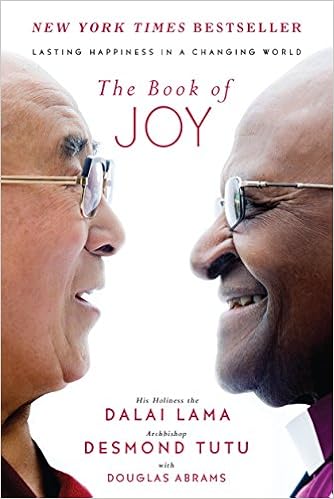
I have been re-reading the Book of Joy lately. It is a record of a week of conversation between Archbishop Desmond Tutu and His Holiness the Dalai Lama. Two remarkable spiritual leaders who are also the best of friends. A mere transcript of their conversation would be joy-filled, yet the book also includes background information, wonderful stories, and much of the latest scientific research on how and why we experience joy. 


If you are not familiar with this book, it is really good reading at any time, and especially during a pandemic. There is such wisdom and perspective in it. And some of it is just exuded through the remarkable lives of these two men. One of their convictions is that if we can find perspective, a wideness of vision, a connection and sense of solidarity in the midst of our own trials our own suffering will be decreased. These two men certainly help with that. They have known no shortage of trials in their own lives, Aparthied, Cancer, an Exile of more than 50 years. Yet in their 80s they sit and laugh together. They exude joy. Their mere presence brings joy, even before they say a word. They each have a smile that gives you a sense of sheer delight. 


Well, if they can do it, so can we. And that is indeed their point. Joy is not something that is reserved for a select few or someone who is particularly enlightened. Joy is meant for all of us. It is foundational to our very existence. And here is the key, joy is found in caring for others, in relationship, in connection. A fitting insight for this day on which we remember Phoebe the Deacon, a servant by nature and calling, one who Paul says was a benefactor to many, including himself. And whose commemoration gives us the Gospel from Luke where Jesus reminds the disciples that they, like he, are here to serve. The glory, the joy, the blessing, the fulfillment is not found in being the most powerful person in the room. It is not about garnering attention or accolades. It is found in caring acts of generosity that connect us to another human being. 


Like so much wisdom, this is something we know intrinsically. We know it whenever we have been blessed to receive the care of another. And we know how deeply meaningful it is to be able to be present in the midst of a crisis for someone we care about or how our soul is blessed by the smile of stanger responding to a simple act of kindness. 


We know this truth. And yet, we also need to be reminded of it. Because sometimes it can be hard to get out of our own heads and hearts; we can get stuck in the mire of stress or grief or sadness, longing for someone else to notice and fix it. But what the Archbishop and the Dalai Lama remind us of, what Jesus is teaching the disciples and us, is that we have the key, or at least the foundation, to our own thriving. We need only reach out and make a connection with others. 

The Dalai Lama finds solace in knowing that he and his people are not alone in experiencing suffering. He noted that when we can see our suffering as a point of connection to so many other human beings, and “when we look at the same event from a wider perspective, we will reduce the worrying and our own suffering.”


The Archbishop said, “that ultimately our greatest joy is when we seek to do good for others . . . We are wired to be caring for the other and generous to one another. We shrivel when we are not able to interact. I mean that is part of the reason why solitary confinement is such a horrendous punishment. We depend on the other in order for us to be fully who we are.”


And the remarkable thing is that there is a wonderful cascading effect in widening our perspective and seeking out more joy. As the book notes, “The more we turn toward others, the more joy we experience, and the more joy we experience, the more we can bring joy to others. The goal is not just to create joy for ourselves but, as the Archbishop poetically phrased it, “to be a reservoir of joy, an oasis of peace, a pool of serenity that can ripple out to all those around you.”


So, if we find ourselves turning inward, if we find ourselves struggling under the weight of the world, or the weight of the challenges in our own lives or those dear to us, there is a way out. We can take heart. We can have hope. Always. We are never alone in our suffering. God knows our suffering. The Archbishop and the Dalai Lama know what it is to suffer. Our experiences of suffering connect us deeply to each other. Suffering is a mark of our shared humanity. And our shared humanity, our connection to others, is also our salvation. It is the way out of the darkness of our own pain. We need only reach out. A kindness, an act of compassion, a moment of generosity will start us out on the road to our own healing. 


We need not grin and bear it. We need not muscle through. There is no glory there. The way forward is never a solitary path. It is the one where we are caring for and being cared for by the wise and generous souls whose presence brings us joy. May we daily know the blessing and gift of community. Amen.  


Thursday, July 16, 2020

Lessons from the Farmyard


Rev. Molly F. James, PhD

DFMS Noonday Prayer via Zoom

July 16, 2020

Isaiah 26:7-9, 12, 16-19; Psalm 102:12-22; Matthew 11:28-30


May God’s Word be spoken. May God’s Word be heard. May that point us to the living Word who is Jesus Christ our Lord. Amen. 

I loved reading the Little House on the Prairie books when I was a child. And I also loved the book Laura Wilder wrote about her husband’s childhood on a farm in upstate New York. I loved that book especially because so much of that farm reminded me of my grandparents’ farm where I spent lots of time as a child. The house, the barn, the fields that I pictured in my mind were those of my grandparents’. In Farmer Boy, there is a long story about Almanzo learning to drive a pair of calves. His father whittles him a miniature yoke (a much smaller version of what is used to drive full size oxen). Almanzo puts this wooden yoke on the calves and teaches them how to step in unison, to turn left and to turn right. This may sound simple, but it is a long and complicated process. It is no small thing to get two young, excited calves to listen, to learn commands and to respond to them in perfect unison. Because, of course, when they are yoked together if they don’t act in unison there will be quite a mess. 


Almanzo learns two very important lessons in the course of this process. He learns about gentleness, and he learns about patience. At the beginning of the process his father gives him a small bullwhip with the explicit instructions that it is never to be used to whip the animals, merely to make a sound next to them that will help them learn the commands. He will get much farther and get far better work out of the calves if he is gentle with them. The challenge is that being gentle also takes patience. The rewards are great, but it takes more time and effort on the front end. 


It would seem to me that Almanzo’s experience offers us some insight into our Gospel reading for today. Jesus asks us to take his yoke upon us, to learn from him, for he is gentle and humble. Ah, there it is - gentleness again. That is indeed the kind of teacher Jesus is. He is gentle and humble. He seeks to guide us - not to terrify us or force us, but to gently invite us into a way forward that will in fact be rewarding and fruitful. 


So the parallels with Jesus as gentle teacher and guide are easy, what about the calves? That’s us, after all. How are we doing on that part? I think there are two important lessons for us in that. First is in the fact there is a yoke involved. Here is the important thing. A yoke is not a solitary thing. It is for the express purpose of bringing two animals together to be a team. So, first and foremost, Jesus is telling us (as he has modeled in his own ministry, in how he sent out the disciples) that this life of faith is not a solitary activity. We do not get to go it alone. And if we try, we are going to cause a complete mess. If you don’t have experience with yoked farm animals, perhaps you once did a three legged race in gym class or for a field day? If you went off one way without coordinating with the friend whose leg was tied to yours, how did that go? Not well. Generally that ended with everyone on the ground, possibly in pain. So, the best results come through coordinated teamwork that is following the direction of the teacher. 


The second important lesson is about listening. How well do you suppose it would have gone for those calves if they had spent all their time eating grass or trying to play or just generally ignoring Almanzo? They never would have left the barnyard to do the meaningful work of hauling loads of hay or wood. They would not have seen the woods or the blooming meadows. They would not have gotten to drink cool water from the creek. In short, they would have missed out on important work and seeing the wider world. I think the same might be true for us. If we fail to quiet ourselves, fail to pay attention to God and to all the various teammates with whom we have the opportunity to work over the course of our ministry, then we will miss out. If we get too focused, as one of our confessions says, “on the devices and desires of our own hearts,” then we will miss out on opportunities to do good and holy work and we will miss out on seeing the beauty that surrounds us. 


In the days ahead, I hope that we will be attentive to the ways that Jesus is guiding us, open to the opportunities for partnership (because we can always do better work in a team!), and willing to listen and learn, so that we might be able to experience life and the splendor of creation more fully. AMEN.