Showing posts with label gratitude. Show all posts

Wednesday, December 25, 2024

Carrying Christmas with us


The Rev. Molly F. James, PhD

St. James’s, West Hartford

Christmas Day II

Isaiah 62:6-12, Titus 3:4-7, Luke 2:1-20, Psalm 97


In the name of God, Father, Son and Holy Spirit. Amen. 


I was having a conversation with a friend recently about the busyness and stress of our respective lives. We talked about how this time between Christmas and New Years when our offices are closed and our email inboxes slow to a steady trickle rather than a daily flood, feels like the eye of the storm. Kids are off from school. There’s time for games and naps or simply lounging on the couch with a good book. There’s an ease and a peacefulness in the daily schedule that seems the polar opposite of our day to day professional lives. We know we will have to return to that life and that world. To the challenges we know are coming and those that will surprise us. 


And yet, I find myself longing to figure out how to carry the joys and the peace of this time with me. It’s just the same way I feel about our liturgy this morning. So often the holidays can feel harried and stressful. Did I get the right gifts? Will the dinner turn out okay? Maybe it wasn’t a good day to try a new recipe? Will everyone get along? What if someone brings up politics or the economy or religion? Will we go home mad at each other? Wait, wait - isn’t Christmas supposed to be about joy and celebration - why do I feel so stressed out? 


And then we come here. To this peaceful sanctuary (and if there are any small children here, know that their presence and their sounds do not disturb that peace, they merely add to the joy). We get to hear and sing beautiful music. We get to hear the familiar Christmas story. We get to be fed in Word and Sacrament. If we let the liturgy wash over us, we can, even if only for a few minutes find that peace that indeed passes understanding. 


And it can be fleeting. Our to do lists. Our anxiety about time with extended family or our sadness at being without those we love today. Or the heaviness of the news headlines. Something. Anything will creep back in and our brains will start going. And before we know it, we are miles down a mental road and the peace is gone. 


How do we hold on to it? Well, I think our Gospel today might have some wisdom for us. Pay attention to the last few lines. The shepherds have come to visit Jesus, Mary, and Joseph. They are in awe - full of wonder and excitement - telling the story of the angels’ appearance to them in the hills. Sharing all the angels said about who Jesus is and why his birth is so significant. And what does Mary do? Note what it says: “Mary treasured all these words and pondered them in her heart.” Hmm. Note that it does not say that Mary entertained the shepherds making tea and serving them. Note that it does not say that she debated with them about what the angels said nor did she dismiss their experience because she already knew that truth. No, she treasured the fact that others were affirming what she already knew about the baby in her arms. And she pondered their words in her heart. 


Oh. You mean she focused on the positive? On the gifts and blessings of the moment? You mean she took a few minutes for herself to think quietly? Hmm. For those of us who like to do, who like to be busy and productive and helpful this whole idea of pausing and slowing down and thinking quietly can seem anathema. 


And I am beginning to wonder if there isn’t something to Mary’s behavior that might hold the key to carrying a little of the peace and calm of this morning into the rest of our daily lives. Because no matter what, the demands of our daily lives and the world will come back to us, perhaps even as soon as we walk out the door this morning. 


So, how might we become more like Mary. What would it look like to “ponder something in our hearts”? Notice again that Mary does not get up to do a task nor does she start in on a monologue or a long conversation. It’s just a moment. The story goes on. The shepherds leave, and anyone who has ever been around a newborn baby knows that moments of literal peace and quiet are few and fleeting. 


So, the Gospel is not asking us to completely transform our daily schedules and meditate 10 hours a day. The invitation is to follow Mary’s example. To ponder things in our hearts. To take just a moment to reflect, to be grateful, to focus on the blessings even in the midst of the chaos and flurry of daily life. 


The peace we know in this place, in these days, need not be completely fleeting. We can find it again, for today we celebrate that God has come to dwell with us, to know the fullness of the human experience. So, no matter what the world may throw at us, we need only take a moment to pause and ponder, to remember that the love of God and the peace of God are right there if only our hearts are open to receive it. Amen. 


Tuesday, December 24, 2024

God in the unexpected


The Rev. Molly F. James, PhD

Christmas Eve, December 24, 2024

Isaiah 9:2-7; Titus 2:11-14; Luke 2:1-14(15-20); Psalm 96


In the name of God, Father, Son, and Holy Spirit. Amen. 


One of my favorite Bible professors in seminary frequently reminded us “Don’t confuse familiarity with understanding.” I think tonight’s Scriptures might be the easiest ones with which to do that. We know this story so well. There’s a census. Joseph and Mary travel by donkey. There’s no room at the Inn, so Mary gives birth in a stable. Angels come to the shepherds who are in awe, and go to visit the new baby. Mary treasures their words in her heart. 


It is a beautiful and familiar story. And with its familiarity we can lose sight of some of its most profound truths. We can forget the significance of how God chose to show up on this night. God did not make an appearance as a full grown man who could immediately begin his preaching and teaching ministry. God did not show up as a prince born in a palace. God did not come in any form that society would have recognized as powerful or influential. God came in the form of an infant. A helpless, innocent child who was completely dependent on those around him for everything - food, shelter, care, love, safety - everything. And God came to poor parents who were ostracized from their community for the scandal of Mary’s pregnancy. And God came precisely at the time of a census which meant Jesus couldn’t even be born at home or at an Inn. He was born in a stable. 


Any of you who have spent time on a farm know that barns are not always the cleanest of places nor do they have the freshest air. The peaceful tableau of a crèche scene or a Christmas card can sanitize out the muck, the smell, the close quarters, and the noise of the animals. 


So God came into the world in a messy way to the least likely of people. And then to whom did God announce this glorious event? The emperor in Rome? The local governor? The priests in the temple in Jerusalem? Anyone in a position of power and privilege? Nope. The angels showed up to shepherds grazing their flocks in the nearby hills. Poor laborers who had no social status to speak of. Again God showed up in an unexpected place, at an unexpected time to the least likely candidates. 


So what does all this mean of us? Other than hopefully helping us to feel a little more deeply the significance and the impact of the Christmas story - to not just nod and smile or stop listening because we know just how it goes. I actually think there is a profound lesson in this story for us, here, now, on this night in 2024. 


I learned a new word recently. It’s “Refugia.” Maybe some of you know it? It’s the natural phenomenon that occurs in the wake of a disaster where there are little pockets of safety, of refuge, where life clings on and from which new life begins. I learned it in a book entitled Refugia Faith by Debra Rienstra. She opens the book by talking about the eruption of Mt. St. Helens in 1980. At the time scientists thought it would be generations and generations before any life returned to the mountainsides. But within only a few short decades, the mountainsides were covered in grasses and flowers with trees growing and a vibrant animal life. That speedy return to health and vitality for the mountain was possible because of little pockets of “Refugia” - little nooks and crannies sheltered by rocks to tree roots or under moss that were protected from the shower of hot ash that coated everything for miles around in 1980. 


New life was possible. Transformation was possible because life clung on and sprouted in tiny and unexpected ways. Hmm. Hope and new life because of something tiny and unexpected . . .sounds a bit like our Christmas story doesn’t it? 


And that is indeed the message I hope we will carry with us from this night. Hope and new life are always possible. Always. It is just that we often have to look for it in the most unexpected places or the most unexpected ways. 


I have no doubt that there are many of you who are struggling (or who know people who are) on this night and in this season. Whether it’s the challenge of navigating a first Christmas without a beloved person. Or perhaps navigating unexpected health or financial challenges. Or maybe it is just that the needs of the world and the divisiveness of our political realm are weighing on us. Maybe we are just weary and anxious. We don’t know what the future holds. We are longing for a sense of peace and stability that seems elusive. 


No matter what it is that has made our hearts heavy in recent times, I hope we can hold on to the beautiful truth of our Christmas story. I hope that we can be on the lookout for the pockets and the signs of Refugia in our own lives. There is hope. There is light. There is possibility for us all. 


It is not likely to come neatly wrapped in a bow under the tree. It will come in messy and human ways that are unexpected. A surprising bit of good news. A call from an old friend. An extra few minutes to rest and breathe deeply. A conversation with someone whose wisdom and sense of humor always help us see our way out of our current struggles. The gift of time and connection, so that we can remember daily that we are loved, and that God has a long and glorious history of making God’s presence known in the world in the most unexpected ways. If we keep our eyes, our ears, and most importantly our hearts, open then we too can join the shepherds in awe and gratitude. Amen.  


Monday, March 15, 2021

Choosing Gratitude

with my grandmother on my wedding day


Rev. Molly F. James, PhD

DFMS Noonday Prayer via Zoom

Vincent de Paul, March 15, 2021

Psalm 37:19-42; Philippians 2:12-15; Luke 12:12-27


May God's word be spoken, May God's Word be heard, and May that point us to the living Word who is Jesus Christ our Lord. Amen.


A phone rang on a Sunday morning in September 1959.  It broke into the joyful chaos that is life with five children between the ages of three and fourteen.  It was a phone call she knew was coming, but that fact never does prepare one fully for the reality.  It was the phone call that told her that her husband, the love of her life, the father of her children was dead at thirty-eight.  The brain tumor that had taken his health and vitality, and had even begun to take his personality over the summer, had taken his life.   

Breaking into the silence of an empty nest, a phone rang in the summer of 1972.  She thought it might be one of her kids calling to say hi or perhaps her surgeon husband calling to say he was on his way home.  It was the phone call that told her that those swollen lymph nodes were not the lingering effects of a winter cold: they were cancer.  

A phone rang in a farmhouse kitchen on a cold January morning in 1990.  The nurse on the other end confirmed what she already knew in her heart.  Her husband of twenty-seven years had died in the night.  His body had given out. The cancer that had spread throughout his body and sent him into a coma, had taken his life.  

The portable phone on the end table next to the couch rang on a fall afternoon in 2003 and interrupted the quiet solitude of an afternoon spent knitting and reading.  It was her doctor on the line.  The biopsy results were back. She had lymphoma. 

These four phone calls all came to the same woman. And each time she hung up the phone, she had a choice.  When she lost her parents or had to endure the pain of watching her own children or grandchildren suffer, she had a choice. A choice to let that piece of news, that painful, horrible loss be the defining event of her life.  She could choose to let it be the lens through which she viewed the world.  Such an approach would not add hours to her span of life. It would diminish the quality of her life.   

Or she could choose to look around her and be grateful.  She could choose to celebrate life and to celebrate joys of her children.  Choose to be an active and involved mother who continued to play tennis and take her children to the lake in the summer.  Choose to marry again and spend the happy years of her husband's retirement living on a farm in Maine.  She could choose to be host to her grandchildren for countless summers, reading to them and teaching them about the farm and their own family history.  She could choose to be a great-grandmother who moved to an apartment in the city to be nearer to her family and to be able to watch her great-grandchildren learn to walk. 

The woman on the receiving end of these phone calls was my grandmother. For me, she has been my preeminent example of not worrying.  She lives out the conviction at the heart of Jesus' question to his disciples: “And can any of you by worrying add a single hour to your span of life?”  We know that worrying does not add hours to our life and that worrying diminishes the quality of the hours we do have. 

Of course there have been plenty of things to worry about in the course of the past year. It is important to note here what I think Jesus meant by “worry.” I don’t think he meant the kind of appropriate thoughtful caution that keeps us wearing masks and washing our hands. An invitation to “not worry” is not an invitation to be careless or reckless. An invitation to “not worry” is an invitation to reframe our current situation. It is an invitation to be mindful of our blessings, of all that we have to be thankful for, even in the midst of tragedy and loss. 

Even when we are living daily, as we have for the last year, with the profound reminder that life is precious and uncertain. Even when we cannot possibly know what tomorrow will bring.  We can find joy in the present. 

We can find hope and joy in the knowledge that we are precious children of God.  Jesus has spent much of today's Gospel reading affirming that fact. We are valued and beloved of God. God cares for us. 

In the midst of challenges, in the midst of tragedy, in a time when it would be so easy to focus on all that we have lost, as individuals, as a community, as a nation and a world. In the midst of all of that, Jesus invites us to keep our eyes and hearts open, as my grandmother did, so that we can see the love that surrounds us. It is my hope that as we move through the coming days and weeks, for we are not out of the woods yet, we will keep finding ways to ground ourselves in the truth that we are beloved. And we will keep finding ways to fill our hearts with gratitude. Because as Johannes Gaertner reminds us: “To speak gratitude is courteous and pleasant, to enact gratitude is generous and noble, but to live gratitude is to touch Heaven.”

AMEN.


Friday, July 31, 2020

An Ignatian Invitation to Gratitude and Reflection


Rev. Molly F. James, PhD

DFMS Noonday Prayer via Zoom

Feast of St. Ignatius, July 31, 2020


May God’s Word be spoken. May God’s Word be heard. May that point us to the living Word who is Jesus Christ our Lord. Amen. 


Connect to God.

Give Thanks. 

Review the Day. 

Face Shortcomings. 

Look to Tomorrow. 


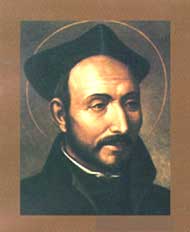
Those are the five elements of the Ignatian Examen. It seems fitting to revisit that practice today on the feast of Ignatius. Perhaps this practice is a familiar one to you? Perhaps it is one of the center parts of your spiritual life? In which case, I hope that today will be an opportunity for you to bask in the gift of that practice. If it is new to you, then I hope it will be fruitful and inspiring to think about how this practice or elements of it might be helpful to you in your own faith life. 


Of course, St. Ignatius is known for his spiritual exercises and for founding the Jesuits. But the particular, personal nature of the Examen seemed worthwhile for us to sit with, together, today. It seems a real gift to us in this time when we are facing so many challenges, as individuals, as communities, as the world. The Examen is grounded in hope. And I would wager we could all use a little more hope these days. 


Now for some of us it might be possible to find the uninterrupted time to do the Examen in one fell swoop at the end of our days (there is even an app to help us). For others of us that might be a bit challenging. So, I want to give us collective permission to honor the spirit of it, even if we are not able to honor the letter of it. Because really, if we can just find a bit more time, a few more ways to honor these practices, our lives will be enriched.


We begin with “Connect to God.” Well, I think we got at least some of that covered. We are here, after all. Connecting to God and each other in Chapel. Perhaps there is an invitation to us to find more of what we love about Chapel in our daily lives. Maybe that just means building more prayer time into our days (it is amazing what a minute or two of deep breaths and reflection can do). Or maybe it means reading more Scripture or more spiritual writings that inspire us. The news headlines will all still be there. They don’t always need to be the first and the last thing we look at on our phones.


“Give Thanks.” Remember that mystic and theologian Meister Eckhart said that if the only prayer we ever say is “Thank you” it will be enough. Giving Thanks to God is always a good idea. At various points in my life, particularly when I have been facing a challenging time, I have done the practice of keeping a gratitude journal. Just a short list, some notes each day about things for which I feel grateful. Even on the really hard days there are things, for which we can give thanks. Keeping our focus on gratitude helps us keep our perspective too. And it feeds our souls to be reminded that blessings abound, even in the midst of struggles.


“Review the Day & Face our Shortcomings”

I put these two together, because likely the act of giving thanks has already helped us to see all the joyful spots in our day. The challenge comes in facing the things that we feel we have not done well today. Oof. As many of you know, I consider myself a recovering perfectionist. I am very skilled at finding my shortcomings. The hard part is not focusing solely on them or letting them define me. I am grateful to the patient companions on the way who work with me to keep reframing the things I label as “mistakes” or “failures” as opportunities for growth and learning. That is an essential piece of this - we need to be sure that when we “face our shortcomings” we do not make it about berating ourselves, but rather about looking back through the day to see how we might learn from it. A wonderful mentor of mine had me keep a journal while I was doing an internship. Each day I was to reflect on two questions: “What did I teach myself today?” and “What would I still like to learn?”. Those are good questions for us to reframe the challenges of the day into opportunities for personal growth.


“Look to Tomorrow.” Indeed. Our Gospel today tells us that we cannot put our hand to the plow and look back. We cannot be a past oriented people. We must be a future oriented, hope filled people. We cannot know with any certainty what tomorrow will look like. We are particularly aware of that truth in these times, and of course, if we are honest, we realize that we have actually never had any guarantees. That is why we need faith, why we need hope, why we need each other. To be a people of faith means that we trust in that which we cannot see. Jesus does not promise us certainty or long lives or easy lives. Jesus promises us an abundant life. Jesus promises to be with us until the end of the age. And so that is where we put our trust, our faith. We put our trust in that which is eternal. We can follow Ignatius’ command to look to tomorrow because we know that no matter what may come our way, we will not be alone. The truth about who God is. The truth that we are beloved children of God. The truth that God is with us always. All of those truths will still be true tomorrow. 


Saint Ignatius invites us to reflect on our days, on our lives that we might be drawn more deeply into relationship with God and brought more fully into the full stature of who God is calling us to be. I hope that you might find the elements of this Examen not a burden or another task to be completed, but rather as an invitation. An invitation to take from it what will serve you well. An invitation to learning, an invitation to growth, and an invitation to be more fully present to the abundant blessings which surround us each and every day. AMEN.


Tuesday, April 28, 2020

Good and Eternal

Embed from Getty Images

Rev. Molly F. James, PhD
DFMS Noonday Prayer via Zoom
April 27, 2020
Psalm 36 & 39; Col. 1:1-14; Matt. 3:7-12

May God’s Word be spoken. May God’s Word be heard. May that point us to the living Word who is Jesus Christ our Lord. Amen.

Many of you know that I have a hard time with these passages on Judgment. And I feel like saying, “God, life is hard enough right now. I don’t need these kinds of passages. There are days when producing any fruit - whether it be the laundry, the groceries, the schoolwork or my own work - is hard enough. Now you are telling me it has to be “good” fruit or else? Nope. Can’t take it.”

That is always my first instinct. To read this passage as some kind of impossible standard God is holding up for us to attain. Somehow we have to be perfect or the consequences will be dire. Then I take a deep breath, and I look again. And I hear the voices of wise and wonderful people in my life. I hear them gently asking me to look at the text again and to wonder whether the image of a wrathful, vengeful God holding me to an impossibly high standard is really what this text is saying or does it fit with the God I know and love.

Um, no, it doesn’t. It doesn’t fit with what I know of God. And I also think about the resources I have valued when I have grappled with these texts previously. One of my favorite resources that really helped to transform my thinking about these judgment texts is a collection of essays written by Eugene Kennedy in the wake of 9/11. Kennedy writes of those who died on 9-11 (and I think this could apply equally to many large scale and individual losses in our lives and our world): “Their voices, taken from phone calls and emails and the recollections of friends, blend now into one message, one voice like a canyon echo coming back to us out of the ruins: ‘I love you,’ said in a thousand ways is the true harvest of these good people’s lives. The good grain so overflowed that it covered over the patches of human stubble in their lives . . . They defined themselves and what life and faith are all about in the commitment to the relationships in their lives.” When we look at all those people from all sorts of walks a life - a real cross section of humanity - who perished on 9/11 or in any other context, we should see the good - the overwhelming good in them, for as Kennedy goes on to say, that is what ultimately matters to God. Kennedy writes, “What is good and bad in us grows together. On judgment day, God harvests only what is good in us, for that is what is eternal, and ignores the weeds that belong to time.”

Right. There is where our focus should be. On what is good and eternal. It is so easy in these times (or any time when we feel stretched thin or overwhelmed or fearful) for those voices to be dominant in our minds and hearts. It is so easy to focus on what is wrong, on what is missing, on what is lost. But as wise people know, that is not a life-giving place to be. Endlessly focusing on what is missing will leave us disheartened, and we will miss out on the abundance that is right in front of us.

Of course, in these times we are aware of what is missing. We cannot be with our friends. We cannot gather as the faithful people of God in person. We cannot just hop in our car or on the subway and go about what used to be a regular routine. Those are the losses of our daily lives. We are also grappling with the more significant grief of losing people we know or to whom we are connected in some way. The losses of this pandemic are not merely numbers on a screen. They have human faces and lives that tell stories just like those who died on 9/11. The losses are significant and real in these days.

And while we can and must acknowledge the magnitude of our grief, we cannot live in that place. We cannot stay there. We must not allow our vision to be solely focused on loss. There are many, many blessings in our lives for which we can be grateful even in this time. Technology to stay connected. Not just having jobs, but having the opportunity to do inspiring and meaningful work. The gifts of collegiality and friendship. As our General Thanksgiving says, “the loving care which surrounds us on every side.” Health, enough to eat, the beauty of the natural world. The list goes on and on.

Mystic and theologian Meister Eckhart is known for saying that if our only prayer is “Thank you” that will be enough. Indeed. In the midst of all the challenges we are facing, in the midst of all the fear and uncertainty, may we keep finding the words and the ways to express our gratitude. May our eyes and hearts continue to be open to see the tremendous beauty of our world and the resiliency of the human spirit. AMEN.

Sunday, August 5, 2018

Learning about Joy and the Good Life

Walkway at Yale Divinity School

Rev. Molly F. James, PhD
St. Alban’s, Simsbury, CT
August 5, 2018, Proper 13B
2 Samuel 11:26-12:13a; Psalm 51:1-13; Ephesians 4:1-16; John 6:24-35


May God’s Word be spoken. May God’s Word be heard. May that point us to the living Word who is Jesus Christ our Lord. Amen.


I spent this past week with fellow clergy, scholars, and teachers at a conference at Yale Divinity School on the Future of Joy and the Good Life. Yale’s Center for Faith and Culture has received a wonderful grant from the Templeton Foundation to study Joy and the Good Life.  This conference was an opportunity for those involved in the project to share some of their learnings and also to invite more of us into that work and conversation. As you might imagine, there was lots of food for thought and a lot of excellent presentations and conversations.


Now, if you are hoping that my experience of this past week means that I have for you some magical key to Joy and the “Good Life,” I am sorry to disappoint you. It is not that simple. True Joy and a “Good Life” is not the stuff of tabloids or magazines you can read while waiting in line at the grocery store. Finding Joy or cultivating a good life is not something you do in ten easy steps or 15 minutes once a week.


They are habits. Like any virtues, like anything worthwhile in life, it takes time and effort to discover joy and to live a good life. The good news is that you already have the tools. And no doubt many of you are already using them well.


The Good Life means, in the language of Paul’s letter to the Ephesians, living “a life worthy of the calling to which you have been called, with all humility and gentleness, with patience, bearing with one another in love, making every effort to maintain the unity of the Spirit in the bond of peace.” That is the “Good Life” - the life that is worthy of our calling as followers of Jesus. It is a life lived in the Way of Love, as our Presiding Bishop describes it.


I think this is a truth that most of us know intrinsically, and sometimes it helps to make it explicit and to remind ourselves of this fact. The “Good Life,” the life we seek, the kind of life we want to be remembered for is one that is defined by character and virtue, not by the accumulation of wealth or even of accolades. Of course having nice things and being praised and appreciated for our accomplishments is wonderful, but they cannot provide us with true sustenance or help us to find meaning.


Material goods or outstanding professional achievements do not provide us with the “bread of life” that Jesus describes in our Gospel for today. Those things are just that, they are things. That are transient and tangible. They do not last. Wealth can come and go. If we stake our happiness or our identity or our self-worth on our achievements we will be sorely disappointed. Because someday we will retire. Or someday someone will do what we did, except they will do it faster, better, or more efficiently.


Joy is not fleeting. Happiness is. There is an important distinction here. A new friend I met at this conference, got me to look into the work of the Benedictine Monk, David Steindal-Rast  who writes and speaks about the importance of gratitude. He describes joy as the “happiness that does not depend on what happens.” Hear that again: Joy is the happiness that does not depend on what happens.


This is why it is a habit, a virtue that must be cultivated. It cannot be subject to our whims nor to the ups and downs of our lives. I also think it is really important to note that cultivating joy is not a Pollyana activity. It does not mean that we fool ourselves into thinking everything is wonderful, even when the evidence clearly says that it is not. Being joyful, having joy in our lives does not mean that our lives are free from suffering or free from tragedy. It means that we can always find joy, even in the midst of terrible pain and tragedy. It means holding on to our perspective, holding on to our faith, in the midst of our suffering. We can trust and believe that there is more to life than the darkness of this particular moment. We know deep in our bones that God is with us, and that not matter what is happening we are beloved children of God who will never be abandoned. The light will keep shining in our darkness. Hope is real, and we will not be overcome. Joy is finding and holding onto that hope, every day.


And that is what it means to flourish, to live the “Good Life.” One of the great insights of this conference for me was to be able to live more deeply into the fullness of what flourishing means. On the surface, it can seem strange to talk about flourishing, particularly if we are holding the life of Jesus up as our preeminent example. Think about it. Seemingly average Jewish teacher starts a career late in life (by the standards of his time), which seems to thrive briefly, but then he is deemed to be a problem for the authorities, so he is arrested and crucified. By most outside standards that narrative would not seem to describe a life of flourishing. But how could we not say that Jesus flourished? Here we are, over 2000 years later, a people who in fact believe that his life and teachings can continue transform our lives.


And so the world’s definition of flourishing does not stand. It is not about how long we live or about how much we earn or how much we accomplish in our lives. Flourishing, living the “Good Life” is about the kind of life we live. It is about the intangible aspects of life. It is about seeking out deep, nourishing, and life-sustaining relationships. It is about seeking to empower others. It is about recognizing the interconnectedness of our world and the need for community and collaboration. It is about living a life that reflects the belief that we cannot flourish if others are oppressed.


In case you were wondering, our reading for today from 2 Samuel provides a wonderful example of how not to live our lives. Right? It is the story of the prophet Nathan holding up a mirror to King David to show him how he has failed and fallen short of his own calling. David was so narrowly focused on his own selfish desires he did not care who got hurt in the process. He was even willing to kill to get what he wanted. This is not a life of joy or flourishing.


So that seems a pretty straightforward place to start. Cultivating joy and living the “Good Life” means not doing things we clearly know to be wrong, i.e adultery and murder. And yet clearly there is more to it than that. The Good Life cannot just be about abstaining from what is wrong. It is more active, more positive than that.


Perhaps one of the most valuable insights from this past week for me has been the awareness that joy does not happen in our lives by sheer force of will. We cannot just all of a sudden decide that we are going to be joyful. It really is a virtue and a habit. In some ways it could be said that joy is something that happens to us, when we are open and aware. So what is it that makes us open and aware? How might we, in the words of C.S. Lewis find ourselves “surprised by joy”?


I think there are two main things that we can do to ensure that there is plenty of joy in our lives. And note, you already have and do these things! You are doing them right now by being here in this community. I hope that like me, it is just helpful to be reminded of how incredibly valuable they are.


  1. PRACTICE GRATITUDE - This can happen in lots of ways. You might keep a list or a journal. You might just make a practice of saying “Thank You” a little more often. You might just get in the habit of making gratitude the focus of the first prayer of your day or of your dinner table conversation. And no doubt many of you may have lots of other practices you find helpful. The how is not important. What matters is that you feel grateful on a daily basis.
  2. DEEPEN RELATIONSHIPS WITH GOD AND WITH EACH OTHER - When we feel connected, rooted, and as though we belong, we flourish. We are ready to withstand whatever life can throw at us. Like a well built house we are not rattled by the storms of life. And so we need to take time for prayer, time for worship, time for conversation, time for deepening our connections.


Jesus came that we might have life. Jesus came that we might have good life. Jesus came that we might flourish. I truly believe that Jesus desires us to live well. We have what we need to live lives that are marked by joy and gratitude. Flourishing lives. Together we can live the Good Life. Thanks be to God. AMEN.