Showing posts with label transformation. Show all posts

Tuesday, March 2, 2021

Holding the big picture


Rev. Molly F. James, PhD

DFMS Noonday Prayer via Zoom

March 2, 2021

Chad of Lichfield


May God’s Word be spoken. May God’s Word be heard. May that point us to the living Word who is Jesus Christ our Lord. Amen. 


Our Saint for today is best known for not being the Archbishop of York, or at least that is how is biographical statement begins. Of course, if that were his only claim to fame, it would be a wonder we even know anything about him. I mean in the grand sweep of Church history, there are millions upon millions of us who are “not the Archbishop of York.” The difference for Chad was that he actually had all the qualifications and was elected to serve. But in the face of disputes and controversy he chose to withdraw. He had the grace and humility to know when to step down and to not make it about him. He opted to affirm the unity of the Church over his own self interest or promotion. 


Chad’s course of action is admirable. He saw the bigger picture and did not want the ministry of the Gospel to get subsumed in political controversy. Now, history has decidedly taught us that we should not always follow in Chad’s footsteps. There are many moments in our history when someone could have stopped pushing, stopped agitating, stopped seeking justice in the interest of the “unity of the Church.” No doubt people asked or at least wished that Absalom Jones or Florence Li Tim Oi or the Philadelphia 11 or Barbara Harris would step aside in the interests of unity. Martin Luther King, Jr. had to write the Letter from a Birmingham Jail because white clergy (including our own) asked him to wait. 


There are times when we should be like Chad. And there are times when we need to be like Barbara and Martin. 


But I think it is interesting to note that there is a unifying principle behind the actions of both. It is not about them. All of those faithful servants lived out our Gospel for today, they did not seek their own personal glory first. They saw the bigger picture. They saw their part to play. They saw how their actions whether on the world stage or in a quiet moment could be used to further God’s kingdom. 


Most of us are not likely to have our names remembered centuries later, like Chad or Absalom, but I doubt either of them were even thinking about that when they made their decisions. As our psalm states, one day in the courts of God is better than a thousand in our own room. It is not about us. It is about God. 


Now it could be easy to take the lessons from today as criticism (trust me, I am expert at hearing criticism even when that is not the intention). As admonitions to make us feel small. As admonitions about us being self-centered or egotistical. A particular challenge when our worlds seem to have shrunk to our own living spaces, and we can feel disconnected from community. We could go down the critical route, but I don’t think that is the intention, nor do I think it is helpful. 


Actually, I think there is a real opportunity here for us to find freedom, inspiration and an unburdening. There is an invitation, in the life story of Chad, in our readings, to open wide our hearts and our perspective. It is about remembering that God, the world, the arc of history, are all so much bigger than we might think at this particular moment. That vastness is not about making us feel small in a negative sense, it is about inviting us to remember that we are a part of something much bigger. We all have a role to play. Who we are, what we do, and how we live our lives matters. We might get to see our impact. We might not. But it would be a pretty small view of God to think that our life and ministry in our little corner of the kingdom did not play a vital role in the wider story. 


So, I hope that today you will hear an invitation to let go. An invitation to remember that it is much more about being faithful to God and who God is calling you to be than it is about a particular accolade or outcome. Remember that you are beloved. Who you are matters. What you do matters. Keep your perspective wide. God is at work in the world. Each day there are countless examples of God’s restoring, reconciling love at work in the world, if we keep our eyes and our ears open. We are called to join in that work. Sometimes we do that by stepping aside to let someone else move ahead. Sometimes that means standing firmly planted and speaking our truth until it is heard in the halls of power. Sometimes that means working quietly out of the limelight, trusting that God uses all of us to transform the world. Amen.



Sunday, June 28, 2020

Sacrifice and Transformation


Rev. Molly F. James, PhD

St. Alban’s, Simsbury

Proper 8, June 28, 2020


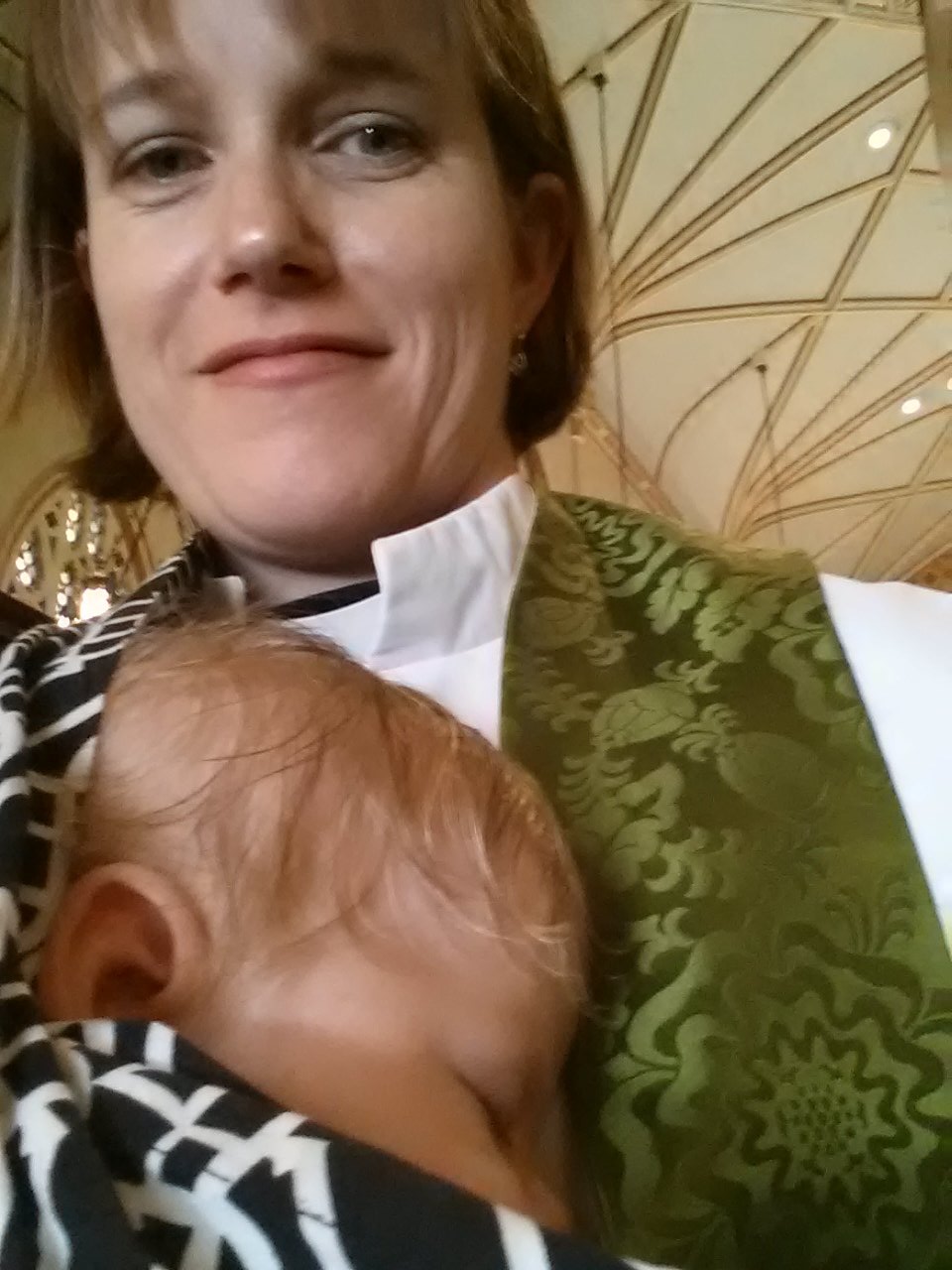
The last time I preached on this text from Genesis, I was wearing Halsted. Yes, I do mean wearing. He was three months old and it was my first Sunday back in the pulpit after maternity leave. It sure made me grapple with this  text in new ways. 


I have always found this to be a challenging text, but to read it, study it while holding our infant son was a whole new level. How could God possibly ask Abraham to sacrifice his son? That does not sound like the God I know and love. The God who desires our faithfulness. Who desires for us to do justice, love mercy and walk humbly. 


Then I remember that this text was written at a time when human sacrifice was a common practice. It was written to show a different way. It was written to stop that practice. It was written to show the world a different way forward. To say that Abraham and his descendants understood the sanctity of life, that it is indeed precious.


The text was designed to convict people of a new way of being. It told a shocking story that was meant to change behavior. It did. The Israelites did not practice human sacrifice. 


Well, my friends, it would seem that we need to be convicted again by this text in our own day. Here's the thing. This text can terrify me as the mother of a son. It can strike the fear in my heart that all parents know, the fear that an accident or an illness would mean that I outlive Katherine or Halsted. But that can be a distant fear for me. The statistics say that it is overwhelmingly likely Katherine and Halsted will live to be a hundred. Because we are white. 


The conversations I need to have with my children as they grow up, as they are more and more out in the world on their own are about how to be aware of their own privilege. They are about helping them notice injustice to speak up about it and to use the privilege they were born into to transform unjust systems. I do not have to have a conversation with Halsted about how to behave when he meets a police officer. I do not have to worry that Katherine might not be safe answering her door or going to ask for help after a car accident. I do not have to fear what might happen to them if they went jogging around our neighborhood. The list of conversations I do not need to have goes on and on for them and for me. 


But the parents of Freddie Gray or Breonna Taylor or Ahmed Arbery or Eric Garner or Michael Brown or Trayvon Martin or any other people of color who have been victims of violence never had such a list. This story, our story, today’s story of the near sacrifice of Isaac would likely affect them in an entirely different way. I imagine they would feel anger and indignation. If this story is meant to stop us from allowing innocent people to be unjustly harmed or killed why aren’t we Christians living according to its teachings? Can’t we see the ways our structures of white supremacy and white privilege have required a terrible and unjust sacrifice of black and brown bodies? 


The Genesis story of Isaac has a happy ending because there was an intervention. An intervention was made to change the ending.  My friends, we have the power to change the ending of the story we are currently living. We are the people with the power, the resources, and the privilege to be a part of changing the system, changing the story. We can do it through our own education and learning - the change starts with the transformation of our own hearts and minds - by engaging with friends and colleagues who can hold a mirror up and help us see all the ways we have been taught and caught racist ideas (often without our even realizing it). We can learn more about the history of the organizations of which we are a member. We can do it by asking who is not at the table and how we can ensure that the meeting tables we sit at - the places where decisions are made for our local communities or for a global organization - are more fully representative of the world in which we live. We can be a part of the change with the voices we choose to amplify on social media. We can be a part of the change with how we spend our money and how we vote in local and national elections. 


Every parent deserves to have the reasonable expectation that their children will outlive them. Together we have a role in making this happen, in making God’s dream for our world into a reality. We have an opportunity to be a part of transforming our world. May today be the day in which we commit even more fully to doing this work, remembering that this work is a marathon, not a sprint. It is work we will need to do for the rest of our lives. And it is good and holy work that will transform us too. Amen. 


Friday, May 22, 2020

Swords into Plowshares


Rev. Molly F. James, PhD
DFMS Noonday Prayer via Zoom
Helena of Constantinople, May 22, 2020

May God’s Word be spoken. May God’s Word be heard. May that point us to the living Word who is Jesus Christ our Lord. Amen.
Today we remember Constantine’s mother, Helena whose leadership fixed the spot of the Church of the Holy Sepulchre in Jerusalem. As the story goes, a woman was healed by touching a cross that had been buried at a possible building site. Helena declared that to be the True Cross, and so that is where the Church was built. It is a day for honoring the Cross as the symbol of our faith, and it is a day when the Prophet Micah reminds us that God desires to turn swords into plowshares.

So, I would like to tell you the story of a cross I have that brings these two themes together. This cross is made from the firing pins of an AK-47. It was a gift to me from a friend and mentor. It comes from the Diocese of Lebombo in Mozambique. A parish I served and my diocese as a whole have had a longstanding companion relationship with Lebombo. Through that relationship I learned the remarkable story of what happened to the guns at the end of their civil war. Their bishop started a program that quite literally turned swords into plowshares. People were invited to trade in their guns for farming equipment and tools of industry. And the people did. Over 800,000 guns were turned in. Those guns were then turned into artwork, such as the cross I have. One of our bishops has a sculpture of a saxophone player that is made entirely of gun parts.

Because of the sheer size and weight of the cross, it is not one for everyday wear. I have worn it on multiple occasions as a testimony to a different way forward, to our Gospel call to seek peace and to transform tragedy and violence into beauty and new life. My diocese (Connecticut) has done a lot of work and witness against gun violence. My bishop is a founding member of Bishops United Against Gun Violence. We have marched and advocated for changes in policy at a local and a federal level. I have worn this cross at marches in Hartford and DC. I often wore it with a photo of one of the children killed at Sandy Hook elementary school in 2012. [See inside cover of our CT Stations of the Cross for 2013.]

As some of you may know, I had the opportunity to assist at his funeral in 2012. It was a difficult, heartbreaking day, of course. And yet, there were also moments of beauty and hope. The truth of Easter was spoken and felt, even though many of us felt like we were still living out Good Friday and Holy Saturday. One of the images from that day that will stay with me is the moment we walked out of the Church at the end of the service, singing “Joyful, Joyful, we adore thee.” Surrounding the lawn in front of the Church was a line of Boy Scouts in their shirtsleeves (in December!) standing at attention with their flags. They had been there for the entire service creating a human fence to ensure that if the rumors of Westboro Baptist coming to picket were true no one would not be able to get near the Church. That image has stayed with me as an icon of community care and support. Even in the midst of tragedy, the fundamental goodness and resiliency of the human spirit shines through.

Over and over again in our history and in our lives, God’s healing, redeeming love is at work transforming swords into plowshares. Transforming pain and tragedy into hope and new life. In these days when the realities of pain and suffering in our world are ever present, we can easily lose sight of all the signs of hope and new life that are present all around us. I hope that each of you have something like my cross in your workspace. Some small, tangible reminder of a time or a place or a way you have witnessed God’s love at work in the world. Keep those items nearby, and keep your eyes and your hearts open to discover more. They are there. Everyday. I promise.

Amen.


Wednesday, May 13, 2020

Loaves and Fishes, Scarcity and Abundance

Embed from Getty Images

Rev. Molly F. James, PhD
DFMS Noonday Prayer via Zoom
Frances Perkins, May 13, 2020

May God's word be spoken, May God's Word be heard, and May that point us to the living Word who is Jesus Christ our Lord. Amen.

Today's Gospel tells the story of the feeding of the five thousand. One of Jesus' many miracles in the New Testament story. It is a seemingly fantastic story – a story of how five loaves and two fish managed to feed more than five thousand. To our modern ears this may sound like a tall tale. We might try to explain it away by saying that there couldn't possibly have been that many people or assuming the author was just exaggerating for effect. Or we might say that everyone only got a crumb. We could come up with any number of ways to “explain” this story. But if we do that, we are missing out on the miracle and the message in the story. The miracle in the story is not about how many pieces of bread there were. The miracle is that everyone was fed. The miracle is that God created abundance in the midst of scarcity.

Jesus blessed the bread and the fishes. He invited God's blessing in and he invited all those present to share with another. Those actions transformed a time of scarcity into one of abundance.

That is a message that resonates in these days. An appropriate lesson as we honor Frances Perkins, FDR’s long serving Secretary of Labor, who helped implement so many programs like Social Security that help to ensure that no one is without a safety net. That endeavor to ensure that everyone in our society has the resources to meet their basic needs.

Most of us are fortunate enough that we probably cannot relate to the scarcity of food that the Gospel lesson describes. We have not looked into our kitchen cupboards or our refrigerators to find them empty. And even if we did, even in the midst of a pandemic, we are still able to get plenty of food. While we may not know material scarcity, that does not mean we don't understand the reality of scarcity. In fact our material prosperity can sometimes form a stark contrast with the scarcity that does exist in our lives.

Let me tell you the story of a woman I know. We'll call her Jane. Jane has every material and economic advantage. She lives in a big beautiful house. She has servants to cook and clean. Someone to drive her around. A nanny to watch over her children. She is a brilliant woman, well educated and intellectually curious. She does not need to work, and in her community it is expected that a woman of her social standing would not work. Rather she is expected to be a hostess, have hobbies and volunteer. To many it would seem that Jane had the perfect life. Where would we find scarcity in such a life? The scarcity is not in material comforts, it is a scarcity of depth and meaning. Jane wants more from life, a sense that she has made a meaningful contribution to the world. There is a hole in Jane's life, in Jane's heart, that she did not know how to fill. The pain is overwhelming, and so she does what many do. She finds ways to dull the pain. She finds it in alcohol and pain medication. But this temporary remedy only causes more scarcity as it causes Jane to withdraw from society, from her friends and even from her family. Thankfully that is not the end of the story. With the help of those who care about her, Jane gets into recovery. She stops drinking, and she stops taking medication. She transforms her life and her relationships. With help, scarcity turned into abundance.

Jane discovers that by being willing to turn over her problems, to give her scarcity up to God, she is able to invite God's blessing in and to allow healing to begin. The spiritual journey of recovery fills that hole in Jane's heart in a way that alcohol never could. Jane finds love and meaning. She finds that as she opens up to allow others to help her, not only is she strengthened by their care and support, she in turn is strengthened by the opportunity to care for others. She feels great pride in being able to help others on the journey of recovery – to share how God can turn scarcity into abundance. Jane's joy and pride does not only come from being able to help others discover the deep joy and satisfaction she now knew, it also comes from her relationship with her family. The gift of recovery means that she is now able to be fully present and engaged. Her relationships are deepened. Love abounds.

Although our own stories may be very different from Jane's, there is perhaps a universal element in the experience of scarcity and the desire to escape from it. Given the choice, we would all choose abundance over scarcity. We would choose the blessings of love and meaning, of material comfort and opportunities for education. And so when any of those things are lacking, when there are holes in our lives, we seek to fill them. We seek to escape from the reality of scarcity. Yet so often, like Jane, we seek a temporary or easy “solution” to our scarcity. We try to find a band-aid, a way to dull the pain. Maybe we fall victim to addiction as she did. Maybe we just ignore the problem, hoping it will go away. Maybe we throw ourselves into our work hoping that will provide the sense of joy that is missing in our lives. Maybe we buy more things. Maybe we do any number of unhelpful behaviors. But hopefully we have the strength and the courage to acknowledge wherever there is a spiritual scarcity in our lives, and to open ourselves up to the possibility that there might be another way forward. Like Christ did with the loaves and the fishes, we can hold our scarcity up to heaven and ask God's blessing upon it. We can ask that with grace and love, our scarcity may be transformed into abundance.


AMEN.