Showing posts with label racism. Show all posts

Thursday, July 2, 2020

Rethinking Independence Day


NYC street

Rev. Molly F. James

DFMS Noonday Prayer via Zoom

July 2, 2020 (Propers for Independence Day)


May God’s Word be spoken. May God’s Word be heard. And may that point us to the living Word who is Jesus Christ our Lord. Amen.


If any of you are friends with Byron Rushing on Facebook or are members of the big Episcopal groups on Facebook, you know that he makes an annual reminder during this week of the year that we ought to think carefully about how we pray on Independence Day. If you look at the Collect for today, it talks about the founders winning freedom for “us.”


It says, “Lord God Almighty, in whose Name the founders of this country won liberty for themselves and for us, and lit the torch of freedom for nations then unborn: Grant that we and all the people of this land may have grace to maintain our liberties in righteousness and peace; through Jesus Christ our Lord, who lives and reigns with you and the Holy Spirit, one God, for ever and ever.  Amen.”


Byron rightly reminds us that the Collect seems to just gloss over and skip the fact that when the founders won liberty, there was a huge portion of the population who were still in bondage. The Collect neglects to mention the fact that at the same time those “founders” won their freedom from England, they also decided that every slave in America only counted as ⅗ of a person. That fraction ought to horrify us. There is no way to spin that to make it okay. No way to say, “Well, what they meant was . . .” Think back to your basic math lessons or when you use a measuring cup in cooking. There is no way that ⅗ is equal to one whole. No way whatsoever. 


But actually keeping our focus on condemning our founders for their inadequate actions by our standards is not helpful. It is not helpful, because we cannot go back and rewrite history. And even more so, it is not helpful because it makes it easy for us to focus on the failings of the past, rather than the problems of the present. If we focus on the past, we might even try to pretend that the realities of freedom and liberty have been won, and there is no work for us to do now.


Well, my friends, if any of us who are white had fooled ourselves into thinking that the realities of liberty and freedom that we know so well were indeed universal among American citizens, I don’t know how we could still think that. The events of recent weeks have shown us that the “progress” of the Civil Rights era or the fact that a black man has held the highest office in the land do not mean that our work is done. Not at all. The truth has been laid bare that we have so far to go. We can see how we have failed, and we can see how much work we have ahead of us. 


So what do we do with this reality as we remember Independence Day this year? It is worth noting that Independence Day is not just a secular, national holiday. It is also a Church holiday. 

This is because the founding of this nation and the founding of the Episcopal Church are inextricably linked. As the American Colonies fought and declared independence from Britain, so too did our Church. In fact, many of the democratic principles that govern our own national government - the principle of checks and balances, the principle of elected leadership, the principle that says the average person gets to have a say in how they are governed - are all principles that our also present in the Constitution and rules that govern the Episcopal Church.  Just the way that no one gets to be a Senator or President without a lot of people thinking its a good idea - neither does someone get to be a bishop in the Episcopal Church without a lot of people thinking it is a good idea!  The democratic ideals held sacred by the founders were also enshrined in the governance of the Episcopal Church. 

I wonder if we might find some hope in those principles and ideals. While we who represent the power and privilege of institutions and structures that have perpetuated the realities of white privilege have to repent of the past and chart a new course for the present and the future, that course does not mean condemning all that has come before us. The principles that guide the governance of our Church (and our nation) are holy and good ones. The problem is not with the principles themselves, it is that we have failed to ensure that they are universally applied.


There is a lesson for us in all of this.  Not only are we to hold on to the love of freedom and liberty that lies at the core of this nation and our Church.  We are to hold on to the call - in our history and in our faith - to never weary of doing what is right.  We do not shy away from speaking the Truth or from speaking up and amplifying the voices of those who have spent far too long on the margins of our Church and our society. If we encounter resistance, we do not give up.  We shake the dust off our feet, and we move on.  We keep on trying.  We keep on speaking up until the message is heard. 


Those immortal words about the God given rights of life, liberty and the pursuit of happiness were penned 244 years ago, and we know that there are still many places in our Church, in our communities, in our country, and in our world, where the light of liberty does not shine.  Far too many voices have gone unheard by those in power.  We cannot keep silent, and we cannot grow weary.  We are asked to do what is right.  We are asked to stand up for what we believe in - even in the face of any adversity.  We are asked to speak up when we see injustice. We are asked to notice who is not at the table where important decisions are made and how we might change that reality.  This may mean taking political action to work for a cause that is dear to your heart and our faith.  It may mean big and loud actions.  But it may also mean the simple act of not being afraid to speak up when someone makes a comment that is insulting to another person or group.  Being a voice for freedom, for liberty, for justice doesn’t necessarily have to mean speaking to a national audience.  There is great value in remembering and reminding others that we Christians are called to seek and serve Christ in all persons.  The principle of equality that is a part of this nation is also at the heart of our faith. 

So as we celebrate Independence Day, may we honor the principles we have inherited, and commit ourselves to using the gifts we have been given to work toward ensuring that the ideals of freedom and liberty are not limited to the few, but universally applied to all people. May we use our voice and whatever power we have to build a future that realizes God’s dream, God’s kingdom for all.  AMEN. 


Sunday, June 28, 2020

Sacrifice and Transformation


Rev. Molly F. James, PhD

St. Alban’s, Simsbury

Proper 8, June 28, 2020


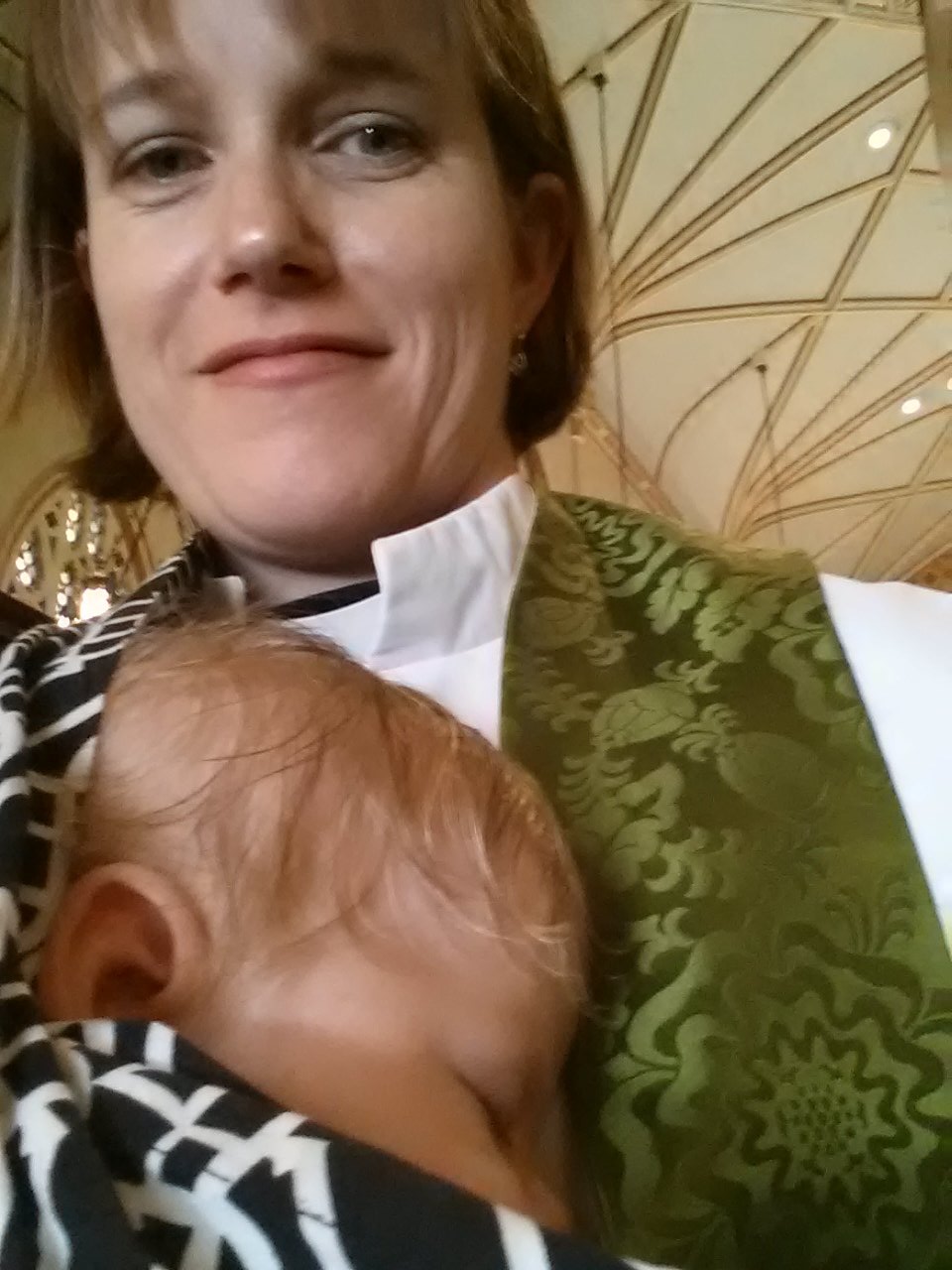
The last time I preached on this text from Genesis, I was wearing Halsted. Yes, I do mean wearing. He was three months old and it was my first Sunday back in the pulpit after maternity leave. It sure made me grapple with this  text in new ways. 


I have always found this to be a challenging text, but to read it, study it while holding our infant son was a whole new level. How could God possibly ask Abraham to sacrifice his son? That does not sound like the God I know and love. The God who desires our faithfulness. Who desires for us to do justice, love mercy and walk humbly. 


Then I remember that this text was written at a time when human sacrifice was a common practice. It was written to show a different way. It was written to stop that practice. It was written to show the world a different way forward. To say that Abraham and his descendants understood the sanctity of life, that it is indeed precious.


The text was designed to convict people of a new way of being. It told a shocking story that was meant to change behavior. It did. The Israelites did not practice human sacrifice. 


Well, my friends, it would seem that we need to be convicted again by this text in our own day. Here's the thing. This text can terrify me as the mother of a son. It can strike the fear in my heart that all parents know, the fear that an accident or an illness would mean that I outlive Katherine or Halsted. But that can be a distant fear for me. The statistics say that it is overwhelmingly likely Katherine and Halsted will live to be a hundred. Because we are white. 


The conversations I need to have with my children as they grow up, as they are more and more out in the world on their own are about how to be aware of their own privilege. They are about helping them notice injustice to speak up about it and to use the privilege they were born into to transform unjust systems. I do not have to have a conversation with Halsted about how to behave when he meets a police officer. I do not have to worry that Katherine might not be safe answering her door or going to ask for help after a car accident. I do not have to fear what might happen to them if they went jogging around our neighborhood. The list of conversations I do not need to have goes on and on for them and for me. 


But the parents of Freddie Gray or Breonna Taylor or Ahmed Arbery or Eric Garner or Michael Brown or Trayvon Martin or any other people of color who have been victims of violence never had such a list. This story, our story, today’s story of the near sacrifice of Isaac would likely affect them in an entirely different way. I imagine they would feel anger and indignation. If this story is meant to stop us from allowing innocent people to be unjustly harmed or killed why aren’t we Christians living according to its teachings? Can’t we see the ways our structures of white supremacy and white privilege have required a terrible and unjust sacrifice of black and brown bodies? 


The Genesis story of Isaac has a happy ending because there was an intervention. An intervention was made to change the ending.  My friends, we have the power to change the ending of the story we are currently living. We are the people with the power, the resources, and the privilege to be a part of changing the system, changing the story. We can do it through our own education and learning - the change starts with the transformation of our own hearts and minds - by engaging with friends and colleagues who can hold a mirror up and help us see all the ways we have been taught and caught racist ideas (often without our even realizing it). We can learn more about the history of the organizations of which we are a member. We can do it by asking who is not at the table and how we can ensure that the meeting tables we sit at - the places where decisions are made for our local communities or for a global organization - are more fully representative of the world in which we live. We can be a part of the change with the voices we choose to amplify on social media. We can be a part of the change with how we spend our money and how we vote in local and national elections. 


Every parent deserves to have the reasonable expectation that their children will outlive them. Together we have a role in making this happen, in making God’s dream for our world into a reality. We have an opportunity to be a part of transforming our world. May today be the day in which we commit even more fully to doing this work, remembering that this work is a marathon, not a sprint. It is work we will need to do for the rest of our lives. And it is good and holy work that will transform us too. Amen. 


Wednesday, June 24, 2020

Cultivating What Lasts

Bogart in 2020

Rev. Molly F. James, PhD

DFMS Noonday Prayer via Zoom

Nativity of John the Baptist


May God’s Word be spoken. May God’s Word be heard. May that point us to the living Word who is Jesus Christ our Lord. Amen. 


"The grass withers, the flower fades; but the word of our God will stand for ever." So says the good news of Isaiah today. The prophecy we celebrate on this nativity of John the Baptist. It has gotten me thinking about what fades and withers and what lasts. 


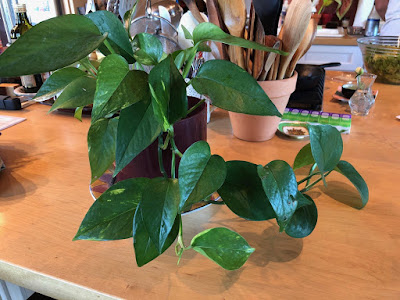
Our freshman year in college my roommate bought a plant. She named it Bogart. She cared for it all through college. After graduation, it was decided that Bogart was not going to make the long car trip to Miami, so he went to live with my wonderfully green thumbed mother. That was in 2002. Bogart is still thriving at my parents house, eighteen years later. It is a reminder to me that things (like grass, flowers, and plants) may wither, and it is also possible to care for and cultivate something to make it last. 


So, my friends, as we are in the midst of these tumultuous times, our Scripture for today invites us to think about what we should let wither and what should last - in our lives, in our Church, and in our society. In recent weeks, we have come to realize more fully just how many things  must wither and die for God’s kingdom, God’s dream for this world to be realized. The realities of systemic racism and white supremacy need to die. The complicity of people in positions of power in the structures and the sin of racism, needs to die. This means we have hard work to do. This withering will not happen by us sitting and waiting. This requires action. It requires us taking a hard look at our systems and structures and figuring out how to do things differently. No doubt there will be challenges and loss in that work. It will be painful at times, and yet it is work that is essential to realize a future where we are all free and thriving. 


There are structures that will need to die in order for us to move forward. There will also need to be withering in our hearts and minds. Building a new future requires us to be doing our own internal work with colleagues and friends with whom we can be honest and vulnerable. We need people who can hold a mirror up and help us to realize all the racism we have been taught and caught without even realizing it. We need to be looking at the world with an analytical lens. We need to be asking ourselves in all facets of our lives, personal and professional, what we can be doing differently. 


The fact that so much in our world is changing right now means that we have an opportunity. A remarkable opportunity. An opportunity to pause and reflect - to decide what we are going to carry forward. What from the old way of living and doing things are we going to keep and what can wither? From here on out, how can we cultivate habits that are life giving? 


Which are the facets of our lives that need water, need more sunlight, need a little bit of fertilizer? Which are the ones that no longer serve us, that are in fact, pulling away nutrients from where they are needed most? 


What might it look like for us to look at our lives with that question in our hearts: Is this of God? Is it something I want to last? If so, then cultivate away. If not, then cut it off or at least stop feeding it valuable nutrients. 


What might it look like for us to cultivate the kingdom, to cultivate God’s dream in our hearts and our communities? It think it might look a lot like this chapel group. I think it looks like taking time for prayer and reflection. I think it looks like prioritizing relationship and community as an equally important “task” in our workday. I think it looks like cultivating the habits of curiosity and kindness, so that they are our first reactions rather than judgment or fear. I think it looks like choosing to follow the Way of Love, to seek joy, to seek that which is life giving and to be willing to stand up and speak the truth when we experience or witness actions that are not life-giving for ourselves or for our siblings in Christ. 


May today be a day that we focus on cultivating the things that endure. Amen.  


Friday, June 5, 2020

Perspective, and the holy work of Dismantling White Supremacy


Rev. Molly F. James, PhD

DFMS Noonday Prayer via Zoom

Boniface, June 5, 2020


May God’s Word be spoken. May God’s Word be heard. May that point us to the living Word who is Jesus Christ our Lord. Amen. 

“Not to us, O Lord, not to us, but to your Name give glory; *because of your love and because of your faithfulness.” So begins our psalm today. 


If you asked me for a list of my favorite psalms, I could name a few (139, 23, 46 to start), and today’s, 115, would not have been on my list. Until now. I think that verse may become a new favorite. It is a rather succinct summary, and it is often the reminder I need. One of the things I cherish about worship - about gathering in community, about hearing our Scriptures, about reciting together prayers that have been said for centuries by our ancestors in the faith - is that it is an experience which gets me out of my own head. It gently nudges me to remember that God and the world are so much bigger than whatever it is I am struggling with in this moment. 


However it might be that I am stuck in my own pain or my own privilege, worship reminds me that it is not all about me. That is what we do when we are at our best as people of faith. We bear one another’s burdens. We hold the faith for each other when our doubt and our fear seem to overwhelm us. And - this is a very important “and” - we hold each other to account for our behavior and how we are living out our lives as followers of Jesus. We speak the truth to each other in Love. Our faith is not just meant to be a comfort in affliction. Our faith also calls us to live lives worthy of Christ. Our faith calls us to be our best selves.


This is a time when those of us who identify as white have some accounting to do. We have to reconcile with the realities of a white supremacy culture in America. We have to reconcile with the fact that we have benefited for centuries from systems and structures that privilege us. We have to reconcile the fact that we have been complicit in perpetuating injustice. We have failed our black and brown siblings. We have failed to live as we have been called. We have work to do. It is the hard and holy work of transforming unjust structures and systems. It is work that may feel costly to us, and it is also invaluable and absolutely necessary. We will lose our privilege, as we should. And we will be given the opportunity to actually fully, truly live into who we are meant to be - as the Church, as beloved children of God. 


As we begin this work, we can see that structures of a white supremacy culture are far removed from God’s dream for the world. We can see that the path forward is one of love and faithfulness. Imagine that. Imagine a world where our lens is not that of competition and scarcity, but one that is firmly grounded in God’s abundance. 


That’s the thing. White supremacy culture tricks us into thinking that there is never enough. That we have to fight each other for resources. That I can win or you can win, but we cannot both win. It tricks us into thinking it is all about achievement and perfection. It tricks us into hoarding and seeking after glory. But that is not God’s dream. It is not the world that the Scriptures or Jesus’ teachings call us to create. 


We are called to build something beautiful together. We are called to join with God in the transformation of our world. We are called to join in the work of reconciliation and healing. We are called to bring about wholeness for all God’s people. 


We can only do that good and holy work of healing creation, healing each other, together. English Missionary, Max Warren, said, “It takes the whole world to know the whole gospel.” Indeed. We need all our wisdom and experience. We can only know the fullness of God, the fullness of Jesus, the fullness of the gospel when we hear a variety of perspectives. The way forward is not found in my understanding or my answers, nor is it found solely in your answers. The way forward is found when we engage deeply, learn from each other and create something together. 


My friends, God is calling us to bring the fullness of who we are, the fullness of our experience to our work. For that to be possible we have to be willing to listen and to honor that we do not all see or experience the world in the same way. And that is okay. The diversity we bring together only adds richness to our understanding. May God give us the gifts we need to be able to create the holy space that allows each of us to bring the fullness of ourselves. May we all have the tools and the grace we need to be about the work of reconciliation and transformation each and everyday.  

AMEN. 


Monday, June 1, 2020

Visitation of Mary - Clothe yourselves in Love


Rev. Molly F. James, PhD

DFMS Noonday Prayer

Visitation of Mary, June 1, 2020

May God’s Word be spoken. May God’s Word be heard. May that point us to the living Word who is Jesus Christ our Lord. Amen. 

“Above all, clothe yourselves with love.” Indeed. I don’t know about you all, but I needed that word today. I needed our whole passage from Colossians. I came to our Scriptures today carrying the anxiety, the fear, the deep grief of this time, which has only been intensified by the recent events. The truth of racism, that systemic sin which infects our society, has been brought to the fore by the terrible disparities of infection and death rates from COVID. And by the horrific recent deaths of innocent people of color in Georgia, Kentucky, and Minnesota. 


It is enough to overwhelm or unmoor us. It is enough to make us lose our footing. And so I am all the more grateful for our Scripture readings today, from Colossians and from Luke. We need to be reminded that we are called to peace, to love, to “compassion, kindness, humility, meekness, and patience.” That is what God desires for us. That is how God desires for us to be with one another. Now I think it is important to note that “meekness” and “patience” do not mean that we sit idly by in the face of injustice or sin. They do not mean that we just wait for someone else to fix the situation. They do not mean that we ignore the realities in front of us. Colossians goes on to remind us that we are to: “teach and admonish one another in all wisdom.” 


Indeed. We followers of Jesus are called to a high standard for how we live out our lives. Our passage from Luke today provides us the beginning of the Magnificat. That beautiful song of Mary that elucidates God’s dream for the world. A dream that is about filling the hungry and bringing down the powerful. A dream that is about scattering the proud and lifting up the lowly. Mary’s hymn is all about undoing the status quo. All about equality and justice. It is just as relevant to us in these days as it was 2000 years ago. God’s dream does not involve power and wealth being concentrated in the hands of the few at the expense of the many. 


Our Scriptures today paint a beautiful picture of the world as it could be - where love binds all things, where compassion and wisdom are our guideposts. And when we hold that picture up against the realities of our world, especially evident in these past days and weeks, the contrast is jarring. There is a call to action in that contrast. A call that is particularly meant for people like me. People whose skin color, class, and heritage mean that my life has been full of privilege in a myriad of ways. It is a call that asks me to learn, to listen, to pray, and to act. A call that asks me to always be challenging myself, what can I do today to bring about the transformation of the world? 


The violence and suffering of these times, and recent days especially, can be overwhelming. The work in front of us can seem insurmountable. And so we also need the reminder of Colossians to be thankful. To give thanks to God in all that we say and do. This is also reminder to be alert and attentive to the ways in which God is at work in the world. To all the ways that we are reminded that not only is transformation possible, it is happening in our world. 


We need to be reminded of the ways that the transformation of our own hearts, the small acts of kindness, the moments of humility and generosity, moments of care and compassion that we say, that we do, that we witness each day matter. Transformation of ourselves and our relationships is the beginning of transforming our structures and our systems. 


There is work ahead of us. Challenging and holy work. It will be hard. And yet the good news is that we do not do it alone. We are in this together. We have each other and the Holy Spirit is with us. May that truth grant us the courage to keep going, to incarnate the compassion and wisdom of God in all that we say and do. Amen.