Showing posts with label history. Show all posts

Tuesday, March 2, 2021

Holding the big picture


Rev. Molly F. James, PhD

DFMS Noonday Prayer via Zoom

March 2, 2021

Chad of Lichfield


May God’s Word be spoken. May God’s Word be heard. May that point us to the living Word who is Jesus Christ our Lord. Amen. 


Our Saint for today is best known for not being the Archbishop of York, or at least that is how is biographical statement begins. Of course, if that were his only claim to fame, it would be a wonder we even know anything about him. I mean in the grand sweep of Church history, there are millions upon millions of us who are “not the Archbishop of York.” The difference for Chad was that he actually had all the qualifications and was elected to serve. But in the face of disputes and controversy he chose to withdraw. He had the grace and humility to know when to step down and to not make it about him. He opted to affirm the unity of the Church over his own self interest or promotion. 


Chad’s course of action is admirable. He saw the bigger picture and did not want the ministry of the Gospel to get subsumed in political controversy. Now, history has decidedly taught us that we should not always follow in Chad’s footsteps. There are many moments in our history when someone could have stopped pushing, stopped agitating, stopped seeking justice in the interest of the “unity of the Church.” No doubt people asked or at least wished that Absalom Jones or Florence Li Tim Oi or the Philadelphia 11 or Barbara Harris would step aside in the interests of unity. Martin Luther King, Jr. had to write the Letter from a Birmingham Jail because white clergy (including our own) asked him to wait. 


There are times when we should be like Chad. And there are times when we need to be like Barbara and Martin. 


But I think it is interesting to note that there is a unifying principle behind the actions of both. It is not about them. All of those faithful servants lived out our Gospel for today, they did not seek their own personal glory first. They saw the bigger picture. They saw their part to play. They saw how their actions whether on the world stage or in a quiet moment could be used to further God’s kingdom. 


Most of us are not likely to have our names remembered centuries later, like Chad or Absalom, but I doubt either of them were even thinking about that when they made their decisions. As our psalm states, one day in the courts of God is better than a thousand in our own room. It is not about us. It is about God. 


Now it could be easy to take the lessons from today as criticism (trust me, I am expert at hearing criticism even when that is not the intention). As admonitions to make us feel small. As admonitions about us being self-centered or egotistical. A particular challenge when our worlds seem to have shrunk to our own living spaces, and we can feel disconnected from community. We could go down the critical route, but I don’t think that is the intention, nor do I think it is helpful. 


Actually, I think there is a real opportunity here for us to find freedom, inspiration and an unburdening. There is an invitation, in the life story of Chad, in our readings, to open wide our hearts and our perspective. It is about remembering that God, the world, the arc of history, are all so much bigger than we might think at this particular moment. That vastness is not about making us feel small in a negative sense, it is about inviting us to remember that we are a part of something much bigger. We all have a role to play. Who we are, what we do, and how we live our lives matters. We might get to see our impact. We might not. But it would be a pretty small view of God to think that our life and ministry in our little corner of the kingdom did not play a vital role in the wider story. 


So, I hope that today you will hear an invitation to let go. An invitation to remember that it is much more about being faithful to God and who God is calling you to be than it is about a particular accolade or outcome. Remember that you are beloved. Who you are matters. What you do matters. Keep your perspective wide. God is at work in the world. Each day there are countless examples of God’s restoring, reconciling love at work in the world, if we keep our eyes and our ears open. We are called to join in that work. Sometimes we do that by stepping aside to let someone else move ahead. Sometimes that means standing firmly planted and speaking our truth until it is heard in the halls of power. Sometimes that means working quietly out of the limelight, trusting that God uses all of us to transform the world. Amen.



Friday, November 13, 2020

Lessons about tradition and companionship from Seabury


Rev. Molly F. James, PhD

DFMS Noonday Prayer via Zoom

Commemoration of Samuel Seabury

May God’s Word be spoken. May God’s Word be heard. May that point us to the living Word who is Jesus Christ our Lord. Amen. 

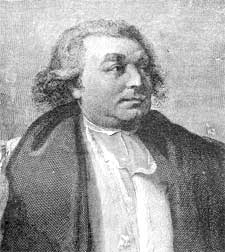
As I think most of you know, I am a priest in the Diocese of Connecticut.  While I was ordained by the Diocese of Maine, I have lived in Connecticut for all of my ordained ministry. This means Samuel Seabury is an almost mythical figure. His portrait has a prominent spot in our diocesan offices, artifacts from his life and ministry abound. Our diocesan archives has his mitre, and I think some of his hair! His desk is the altar at Berkeley Divinity School. I think his chalice has been used at the consecration of all his successors. And so on . . .


We could focus on the life of Seabury and his significance in the history of our Church, but there are lots of texts that have already done that far more thoroughly than I could do in a homily. Rather I would like to focus on what his consecration as the first American bishop might mean for us now, as the staff and volunteers of the DFMS and as individual people of faith. 


I think there are two profound and important lessons that his consecration can offer us. The first is that being connected to and in relationship with our tradition matters. Think about it. At the end of the Revolutionary War, our Church could have done the same thing the new national government did. It could have severed all ties with United Kingdom. It could have struck out on its own and said it was going to do its own thing. That might have been easier. No transatlantic travel involved. Leaders could have just written their own Prayer Book with whatever they wanted in it. Even when Seabury got to England and discovered that he couldn’t be ordained a bishop there without swearing an oath to the crown, he could have decided to just get on a boat and go home. He did not. He went to Scotland. He sought out another branch of the Church that had been ordained in historic succession, where he would not be required to swear an oath to the crown. 


Seabury sought to stay in line with, in relationship with, the tradition he loved. He did not want to sever all the ties with the past. Our history matters. There is so much wisdom to be carried forward. We cannot do that if we ignore or toss out all that we have inherited. And Seabury’s venture to Scotland even ended up enriching our tradition. Our American Prayer Book is one that draws on the linguistic riches of both the English and the Scottish books. 


Staying connected to tradition is as important for us as it was for Seabury and his compatriots. One of the many things I love about our Prayer Book is that it contains prayers and promises   that have been prayed by the faithful for centuries. This gift grounds me and widens my perspective. Especially in these challenging times, it reminds me that I am not the only one who has faced hard times. Our ancestors in the faith have struggled. And they also found comfort and sustenance to carry on in the midst of it all. They have found inspiration and perspective. 


in these beloved, familiar words. We can all be reminded that there is more to life than whatever is troubling us in this particular moment. 


Which brings us to the second lesson from Seabury’s consecration, a reminder that we cannot go it alone. Seabury could not become a bishop without three other bishops participating in his ordination service, a requirement we still hold to today. Again, Seabury could have gone off on his own. The men (yes, all men) who elected him could have decided to establish a new church with singular leadership. They did not. They honored our connection to tradition. They chose a path that says even the most senior leadership in our Church is not a solo activity. In this time when we are all working in our own spaces, quite literally separated from our neighbors and our colleagues, it is all the more important for us to remember that we are a part of a team. We cannot, and we should not go it alone. Isolation can be lonely and troubling for our souls. It is also likely to make us less generative, less creative, less adaptive - all the things we need to be in the midst of our current challenges. 


So on this day let us give thanks for the thread, the connection that traces back from us to Seabury, all the way back to the birth of our Church. May we give thanks for a polity (a Church structure) that does not let us do it all on our own. In whatever challenges we are facing today and in the days ahead, may we not forget all spiritual riches which we have inherited. Remember that we are not alone. We stand in a long line of faithful who have overcome great challenges, and we are blessed, deeply blessed to walk our journey with colleagues and friends who enrich us daily. AMEN.