Showing posts with label companions. Show all posts

Friday, May 14, 2021

Reflections on the Transfiguration and being present


Rev. Molly F. James

DFMS Noonday Chapel

May 14, 2021

Psalm 92; Ezek. 1:28-3:3; Luke 9:28-36


May God’s Word be spoken. May God’s Word be heard. May that point us to the living Word who is Jesus Christ our Lord. Amen. 


Today we get the Gospel for the Feast of the Transfiguration. It is a familiar story - a feast we celebrate multiple times a year. It is officially in August, but then we always get this story on the last Sunday of the Epiphany.  And here it is in the daily office in May. Clearly this is an important text for us. And whenever I get a familiar text, I am reminded of my seminary professor’s wisdom: “Don’t confuse familiarity with understanding.” 


So, I am trying to look at this text anew, to see what it might be saying to us in this context, in this time. I will admit that I am having a great deal of trouble empathizing with Peter. “Lord, it is good for us to be here . . .” Here? No, Lord, not here. Not here where we are exhausted. Not here where we are tired of spending so much time between the same four walls. Not here where we are pretty sure this is our third or maybe it’s our seventh Zoom call of the day. Not here where we are afraid. Not here where the headlines are too full of violence and heartbreak. Not here where the problems of society seem too much to bear, too much to tackle. Not here, please Lord. 


We want to be over there. Somewhere in the future where we are traveling freely. Worshiping in person. Celebrating the sacraments. Hugging our family and friends. Where we feel safe and filled with joy. 


We have had enough with “here” - with exhaustion and anxiety. 


That is a good reason to keep reading in the passage. And to remember that Peter does not win that argument. They don’t build houses and just stay. They keep going. And there is our comfort. It will not always be like this. Already more things are possible than was true in previous months. Things are opening up. The beauty of the springtime helps us to remember the reality of change and new life. There are signs of hope all around us. 


So we can indeed have hope. We may not be instantly transported to that future where things will be better, but we are moving in that direction. 


As we make this journey from here to there, I hope we can be mindful of two important lessons from our text today. First, a reminder that we do not journey alone. Jesus did not go up that mountain alone. He did not come down it alone. He did not turn toward Jerusalem alone. The disciples were with him. 


We do not travel alone either. Even in those moments when we may feel isolated in our own challenges and struggles, we need not be. We are beloved children of God and there is a community of people who care about us. Who walk with us. Who will gladly drop what they are doing to be a listening ear or whatever we might need. Sometimes though, in order to receive that wonderful care, we need to ask for it. We have to be willing to share our struggles. I find this a challenge sometimes. I seem to have inherited far too much of my Purtian ancestors’ ability to keep a stiff upper lip and an external veneer that says everything is fine, even if it is not. Hopefully you all are better at asking for help and reaching out when you need it. 


Second, our text invites us to be present. Note that the voice from the clouds tells the disciples to Listen to Jesus. It does not say ignore. Go about your business. Nevermind us over here. It tells them to Listen. And that is a good reminder to those of us who might like to hurry things up or are wishing we could magically transport ourselves to another time and place. We can hold on to the knowledge that things will not always be the way they are, so we can trust that change will come. That means that we do not need to fear being present. Being present does not mean we are stuck. It means paying attention. It means being open to the ways that God is showing up in the world and in our lives. It means being on the lookout for the signs of hope, the glimpses of beauty, all that points us to the essential truths at the heart of our faith. That we are beloved. That there is always light. That there is always hope. That Easter is real. That love always has the last word. Always. Amen. 


Friday, November 13, 2020

Lessons about tradition and companionship from Seabury


Rev. Molly F. James, PhD

DFMS Noonday Prayer via Zoom

Commemoration of Samuel Seabury

May God’s Word be spoken. May God’s Word be heard. May that point us to the living Word who is Jesus Christ our Lord. Amen. 

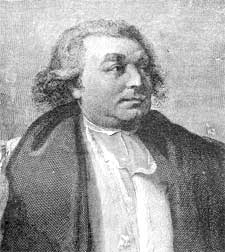
As I think most of you know, I am a priest in the Diocese of Connecticut.  While I was ordained by the Diocese of Maine, I have lived in Connecticut for all of my ordained ministry. This means Samuel Seabury is an almost mythical figure. His portrait has a prominent spot in our diocesan offices, artifacts from his life and ministry abound. Our diocesan archives has his mitre, and I think some of his hair! His desk is the altar at Berkeley Divinity School. I think his chalice has been used at the consecration of all his successors. And so on . . .


We could focus on the life of Seabury and his significance in the history of our Church, but there are lots of texts that have already done that far more thoroughly than I could do in a homily. Rather I would like to focus on what his consecration as the first American bishop might mean for us now, as the staff and volunteers of the DFMS and as individual people of faith. 


I think there are two profound and important lessons that his consecration can offer us. The first is that being connected to and in relationship with our tradition matters. Think about it. At the end of the Revolutionary War, our Church could have done the same thing the new national government did. It could have severed all ties with United Kingdom. It could have struck out on its own and said it was going to do its own thing. That might have been easier. No transatlantic travel involved. Leaders could have just written their own Prayer Book with whatever they wanted in it. Even when Seabury got to England and discovered that he couldn’t be ordained a bishop there without swearing an oath to the crown, he could have decided to just get on a boat and go home. He did not. He went to Scotland. He sought out another branch of the Church that had been ordained in historic succession, where he would not be required to swear an oath to the crown. 


Seabury sought to stay in line with, in relationship with, the tradition he loved. He did not want to sever all the ties with the past. Our history matters. There is so much wisdom to be carried forward. We cannot do that if we ignore or toss out all that we have inherited. And Seabury’s venture to Scotland even ended up enriching our tradition. Our American Prayer Book is one that draws on the linguistic riches of both the English and the Scottish books. 


Staying connected to tradition is as important for us as it was for Seabury and his compatriots. One of the many things I love about our Prayer Book is that it contains prayers and promises   that have been prayed by the faithful for centuries. This gift grounds me and widens my perspective. Especially in these challenging times, it reminds me that I am not the only one who has faced hard times. Our ancestors in the faith have struggled. And they also found comfort and sustenance to carry on in the midst of it all. They have found inspiration and perspective. 


in these beloved, familiar words. We can all be reminded that there is more to life than whatever is troubling us in this particular moment. 


Which brings us to the second lesson from Seabury’s consecration, a reminder that we cannot go it alone. Seabury could not become a bishop without three other bishops participating in his ordination service, a requirement we still hold to today. Again, Seabury could have gone off on his own. The men (yes, all men) who elected him could have decided to establish a new church with singular leadership. They did not. They honored our connection to tradition. They chose a path that says even the most senior leadership in our Church is not a solo activity. In this time when we are all working in our own spaces, quite literally separated from our neighbors and our colleagues, it is all the more important for us to remember that we are a part of a team. We cannot, and we should not go it alone. Isolation can be lonely and troubling for our souls. It is also likely to make us less generative, less creative, less adaptive - all the things we need to be in the midst of our current challenges. 


So on this day let us give thanks for the thread, the connection that traces back from us to Seabury, all the way back to the birth of our Church. May we give thanks for a polity (a Church structure) that does not let us do it all on our own. In whatever challenges we are facing today and in the days ahead, may we not forget all spiritual riches which we have inherited. Remember that we are not alone. We stand in a long line of faithful who have overcome great challenges, and we are blessed, deeply blessed to walk our journey with colleagues and friends who enrich us daily. AMEN.


Tuesday, April 21, 2020

Rest for our Souls

Half Moon Bay in CA


Rev. Molly F. James, PhD
DFMS Noonday Prayer via Zoom
Feast of Anselm of Canterbury

May God’s Word be spoken. May God’s Word be heard. May that point us to the living Word, who is Jesus Christ our Lord. Amen.
‘Come to me, all you that are weary and are carrying heavy burdens, and I will give you rest. Take my yoke upon you, and learn from me; for I am gentle and humble in heart, and you will find rest for your souls.’

I hope our Gospel text resonated for you today. “You will find rest for your souls.” Indeed. I would guess we are all in need of that. I will say that when I pulled up this text for today, I breathed a little deeper. My shoulders dropped a bit. I thought, “Thank you, God. I needed that text today. I needed that reminder. I need to know again that profound truth that we do not bear our burdens alone. Thanks be to God.”

I think there are two important truths for us to hold onto out of today’s readings. First, is that generous reminder in Jesus’ invitation to us that we do not journey alone. I am certainly one who can easily fall into the trap of thinking that I have to do something myself. Sometimes it is because I have high standards, and I don’t think anyone else will meet them. Or sometimes it is because I don’t want to be a burden to someone else. Or sometimes it is because I get stuck thinking that efficiency or results are more important than process. Never mind that I can work myself to exhaustion trying to balance all the spinning plates or complete all the tasks on my own.

Of course, Jesus’ invitation is for us to remember that he walks with us. I also think he is reminding us that the way to do ministry, the way to do life best is in collaboration. “Take my yoke upon you, and learn from me.” Indeed. What can we learn from Jesus? Well, he did not operate alone. He called his disciples to join him. He sent them out two by two, not solo. We are not meant to be solitary heroes. We are meant to be a team. We need each other.

Over and over again, my life experience has shown me that often the best solution to any given challenge is not my idea or my colleague’s idea. It is the version we hammer out together building on each other’s insights and wisdom. Jesus was on to an important truth about how we are meant to do our ministry when he sent the disciples out two by two. Collaboration is a far more life-giving way to minister.

Second, I think the important truth for us is about “rest.” That word shows up twice in just two lines of Scripture. Rest is so important. I don’t know about you all, but I am tired. I am weary. I could use that “rest for my soul” of which Jesus speaks. And as I talked about yesterday as well, in this time it can be truly challenging to do the normal practices that usually work for restoring our souls. We may need to rail and vent about that for a bit. I hope all of us have people in our lives with whom we can have truly honest conversations. Where we can say whatever is on our mind. They will listen with generosity and compassion, because they love us. Then, also because they love us, they will gently remind us that now that we have vented out all our anger and frustration, it might be possible for us to transform the situation. They kindly invite us to be our best selves moving forward, and they keep us from getting stuck in a place of anger and resentment.

So, if you are feeling frustrated, reach out to one of those friends or family members who serves that role for us. Vent. And then move forward.

There is a holy invitation in this time to expand our repertoire of soul restoring practices. An invitation to find new ways to rest, even in the midst of stress, anxiety, and very busy schedules. Those other practices will have their time again. They are not being replaced, only supplemented. Perhaps supplemented by a few minutes of quiet prayer. Or more exercise. Or drinking more water. Or rearranging our work setup to provide a different view or more comfortable way to sit or stand. Perhaps we will take up a new indoor hobby we had always been meaning to try. Whatever it may be, may we find new practices that are life giving and sustaining in this time. May we find small things that give rest for our souls.

May we also find solace and strength in God’s abiding love in our lives. May we give thanks for the companions on the way whose presence sustains us. AMEN.