Showing posts with label compassion. Show all posts

Wednesday, June 23, 2021

Good and Bad Fruit


Rev. Molly F. James, PhD

DFMS Noonday Prayer via Zoom

June 23, 2021

Genesis 15:1-12,17-18; Psalm 47; Matthew 7:15-20

May God’s Word be spoken. May God’s Word be heard. May that point us to the living Word who is Jesus Christ our Lord. Amen. 

“Every tree that does not bear good fruit is cut down and thrown into the fire.” Really? We have to go here? All this judgment and condemnation. Where is the reassurance, the comfort, the inspiration we are all seeking in the midst of these uncertain and challenging times. Things seem “back to normal” in so many ways, and yet if we pause and reflect, even for a moment, we know that there is not really any “going back.”  The world, and we, will never be the same again. This past year has been a crucible, an experience of challenges and struggle, an experience that has reshaped our understanding of the world and of ourselves. We may feel comfortable eating in restaurants and getting on airplanes, but we are fooling ourselves if we think we have just picked up where we left off in March of 202o.

So, as we try to navigate our way into this new, maybe we can say “post,” Pandemic way of being, I find it hard to hear this text. Hard to think of God judging us so harshly. Wasn’t one of the central lessons of the past year how much it matters to be compassionate? We are all in this together. Everything will be better if we can show each other more grace and care. How do we square those important lessons with texts that seem to divide the world into good fruit and bad fruit?

As I think I have shared with you all before, when I encounter one of the judgment texts, I return to insights gained from psychologist Eugene Kennedy who wrote a book of reflections after 9/11 entitled, Meditations at the Center of the World. In it he talks about some of the various judgement passages in Scripture - how we often get this theme of bad fruit or chaff being thrown into the fire. Instead of seeing it as dividing the world into good and bad people, Kennedy invites us to see and have compassion for the complexity of ourselves and other people.

We are fruit, mostly good and with a few bad spots. Or perhaps better yet we are the barrel of apples. So much good, and also the occasional bad apple.  We are the whole stalk - the wheat and the chaff. None of us is all good or all bad. Life is just not that simple. 

What Kennedy also reminds us of is that what is good in us is real, it is what is eternal. It is what lasts. God’s “judgment” of us is not wholesale. It is about helping us come to see ourselves fully and to let go, to throw into the fire that which does not give life. That which impedes our ability to grow in relationship with God and with each other. That is what should be cast into outer darkness. That is the fruit, the chaff that should be burned. 

Hopefully one of the gifts that has come our way in the midst of this pandemic has been a sense of clarity about ourselves and the world. A sense of clarity about what really matters to us. Where are our priorities? What are the things that we put down that we don’t actually need to pick back up again? What are the things that we can let go of? We picked up plenty of new anxieties and challenges in the last year, and hopefully we also discovered more clarity about what brings us joy and where we want to invest our precious time and energy. 

So, my friends, I hope that you will see in today’s Gospel an invitation rather than a condemnation. An opportunity to pause and reflect as the world reopens and we do more and more things. There is new life possible out of all the pain and loss of this past year. We are an Easter people. That truth stands at the heart of our faith. May you find this time of transition to be fruitful and life-giving. May it offer you an opportunity to grow, in all the various roles you inhabit. Most importantly may it offer you the opportunity to say yes to a path that affirms your identity as a beautiful and beloved child of God. Amen.


Monday, November 16, 2020

Pearls and Treasure

Field in Maine


Rev. Molly F. James, PhD

DFMS Noonday Prayer via Zoom

Commemoration of Margaret of Scotland


May God’s Word be spoken. May God’s Word be heard. May that point us to the living Word who is Jesus Christ our Lord. Amen. 


One of the gifts in the midst of all of the challenges of this pandemic is that I get to hear my friends preach. Even if we both have Sunday morning duties or even if we are hundreds of miles apart, the wonders of online worship means we can be present to each others’ ministry in ways that were not previously possible. I had the opportunity to hear a friend preach on this parable of the treasure and the pearl when  came up in our lectionary this summer. I have long thought of myself, of humanity as the buyer in this story. A good Protestant work ethic, a type A, slightly workaholic personality who is highly driven means that I saw this story as reinforcing the idea that we are supposed to sacrifice. We are the ones who are supposed to give all we have, all we can for the building up of the kingdom. 


My friend offered a different interpretation. One that turned my understanding on its head. He invited me to consider the possibility that rather than being the buyer, what if I am the treasure? What if I am the pearl? Oh. That is a very different thing. 


If I am the treasure. If we, each and everyone of us, are the pearl of great price then this is not a parable about how hard we should work or how much we should sacrifice. It is a parable about how beloved we are of God. It is about the joy God finds in us. Oh. That is very different indeed. 


I don’t know about you all, but I needed the reminder of that all important truth this week. The days are full. There is much important and meaningful work to be done. Some of it is easier to do remotely, but much of it is missing the intangible benefits of conversation and collegiality that come from being in the same place as friends and co-workers. The virus is surging again, and many think cases will not peak until January. There are wonderful hopeful signs in terms of treatments and a vaccine, but it is clear that we still have a long road ahead of us. There are divisions in our country, and we have much important and meaningful healing and reconciliation to do. So many bridges need building. Anyone else exhausted yet? 


That is why I needed that reminder. That all important beautiful reminder that we - each and everyone of us - is beloved of God. We bring God joy. Our “worth” is that of treasure and the most magnificent of pearls. Our worth is beyond measure. We do not earn that worth. We are beloved. We bring God joy just by being. Just by who we are. God loves us because we belong to God, because we are of God. 


What a gift. What a blessing. Let us rest a moment in that truth. Let it sink into your heart, into your bones.


I don’t think this interpretation is giving us permission to just stop and do nothing. All the other truths of our faith still apply. We are followers of Jesus. We are called to bear God’s reconciling, redeeming Love to the world. We are called to do good works and care for people’s needs like Margaret of Scotland who we remember today. 


This interpretation of the parable just invites us to start differently. It invites us to be gentle with ourselves and with all those we meet. Perhaps this parable can help us in the moments when we find ourselves getting aggravated or annoyed with those with whom we disagree. What if instead of focusing on everything that is frustrating us, we remember that this person is also a pearl of great price, that they too are beloved of God? What if we try to see them as God does and to see what about that person brings God joy? Of course this does not mean we compromise our own morals or principles, it just means that we have compassion for people. 


The world needs more compassion. And it can begin with us. We can do our part each and every day by having more compassion for ourselves and for each other. We can see the world with God’s eyes. With eyes that seek out beauty, joy, and goodness wherever it can be found. AMEN. 


Friday, March 27, 2020

Bearing with one another in love

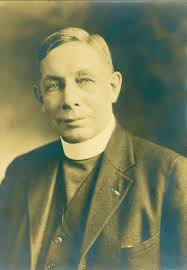
Bishop Charles Henry Brent


Rev. Molly F. James, PhD
DFMS Noonday Prayer on Zoom
March 27, 2020
Commemoration of Bishop Charles Henry Brent


May God’s Word be spoken. May God’s Word be heard. May that point us to the living Word who is Jesus Christ our Lord. Amen. 


Oh my friends, somehow God and the lectionary committee know just what we need to hear. Just what we need and the world needs. “Jesus went about all the cities and villages, teaching in their synagogues, and proclaiming the good news of the kingdom, and curing every disease and every sickness. When he saw the crowds, he had compassion for them . . .” I needed a story of healing and compassion today. I needed to be reminded that Jesus is here with us. That our God is a God of grace, a God of healing, and compassion.

Now I think first it is worth addressing the bit about healing. I think we can often think of healing as complete erasure of disease, as though it never happened. Now we already know that is not possible in these circumstances. Not everyone is going to make a miraculous recovery. In these circumstances, I find it helpful to remember that the resurrected Christ still had his wounds. We are not going to come through this crisis unscathed, as individuals or as communities. We are going to be wounded. And yet, even in the midst of all the suffering and the challenges, God’s healing love is at work in our hearts and in the world. We can trust in God’s abiding presence. We can trust that new life and new possibilities will come. We can trust that hope and transformation are real. We can be on the lookout for signs of grace and compassion each and every day. They are there, if we look.

And we can also be a sign of grace and compassion for each other. We are called to be a people of compassion. Here we are at the end of another week. For many of us this has been a week of adjustment. This working, parenting, living, doing everything at home thing has shifted from something temporary that we figured we might do for a few weeks to something we are going to likely be doing for months. I don’t know about you all, but I am tired. There is a heaviness in my heart and my soul. We are a people grieving so many losses. We are grieving deaths of people near and dear. We are grieving for the ever rising death toll around the world. We are grieving the loss of freedom. We are grieving the loss of how we used to live our daily lives. We are grieving the inability to be in the same room and touch people who mean the world to us, which makes us grieve the fact that we cannot do our grieving together. We are also grieving the loss of dreams, of hopes, of plans for our future. We are grieving so much. We know that when this is all over the world is going to look so very different.

We are grieving so much, in so many ways. First and foremost we need to have compassion for ourselves. Let us be gentle with ourselves in these days. We will not be able to do everything we want to do, and we will not be able to do it to the standard we normally set for ourselves. That is okay. Today is a day for us to allow good enough to be good enough.

It is also a day to have compassion with our family and our friends. My husband, our two kids and our dog are all in our house together all the time now. We love each other a great deal. We have space. We have plenty of food. We can go out for walks. And we are not used to being all together all the time while also trying to do work and school and worrying about the state of the world. Getting on each other’s nerves is inevitable in this time. So we need to be compassionate with each other as well.

And we all need to be compassionate with each other in this time. It is important to remember that “compassion” literally means “feeling with.” We need to feel and understand the myriad of new challenges we are all facing at this moment. We need to remember that we are in this together, and we have so many examples to follow among the ancestors of our faith. Bishop Brent, who we remember today, is certainly one. He became Bishop of Western New York, after a long tenure as the Missionary Bishop of the Philippines, in 1918. Just in time to lead that diocese through the Spanish Flu Pandemic. In the Philippines Brent had been active in combating the scourge of opium addiction, from that holy work and from a prayer he wrote, we get a sense of what kind of a leader Brent was. He was one of compassion and care. His prayer is one of the prayers for Mission that we pray in Morning Prayer. Brent wrote:

“Lord Jesus Christ, you stretched out your arms of love on the hard wood of the cross that everyone might come within the reach of your saving embrace: So clothe us in your Spirit that we, reaching forth our hands in love, may bring those who do not know you to the knowledge and love of you; for the honor of your Name. Amen.”

Indeed we are called to reach forth our hands in love. Or as our passage for today from Ephesians says, we are called to “lead a life worthy of the calling to which you have been called, with all humility and gentleness, with patience, bearing with one another in love.” My friends, we are indeed called to bear with one another in love. There is much to bear today, and there will be more tomorrow. Let us hold fast to our conviction that the way through this is to reach forth our hands in love, to have compassion for ourselves and for each other. We can get through this, together. AMEN.


Thursday, March 12, 2020

Gregory the Great

Embed from Getty Images

Rev. Molly F. James, PhD
Chapel of our Lord, Episcopal Church Center 


May God’s Word be spoken. May God’s Word be heard. May that point us to the living Word who is Jesus Christ our Lord. Amen.


I smiled when I got the rota for March. I get to preach on the feast day of Gregory the Great. A gift indeed. He was one of the thinkers I wrote about in my doctoral dissertation. I spent a number of years living with his life story and many of his writings. He is like an old friend, and so it is an honor to get to share some of my favorite insights and challenges of this great saint of our tradition with you today. And typical Holy Spirit, I also believe there is much of value to be found in Gregory’s life and writings for this particular time and place.

Gregory came from a prominent Roman family, and he eschewed that privileged life for a quiet monastic one. In that Gregory is an exemplar of faith, he knew that living a life of deep faith and devotion was more important the material wealth or political power. Although Gregory took his desire to live out his faith a bit far. He loved ascetical practices and followed them so strongly and faithfully that he ended up making himself ill for most of his life. In this, Gregory is an example of what not to do. It is possible to have too much of a good thing. Practicing piety is important. Being deeply faithful is important, but it does not need to be taken to the extreme of self-harm. In fact, that ends up being counter productive. Gregory accomplished much in his life, but he could have done even more if he had not been ill so much of the time.

Speaking of what not to do, Gregory offers us another model on that front in his commentary on the book of Job. Gregory spends a good deal of time focused on the behavior of Job’s friends. You know the ones? The ones who come to see Job when he is suffering and who sit around talking about how Job must have done something to deserve this. It is like they are trying to solve a logic or a thought puzzle. They are doing a clinical analysis of how this situation came to be, and they seem to have forgotten about the emotions and real suffering of their friend who is right in front of them. Job’s friends are exactly how we should NOT behave in the midst of suffering.

In the midst of the fears and realities of a global pandemic, this is a good reminder for us. There are plenty of narratives going around that play on fear or stereotypes or prejudice. Viruses do not obey the lines of division we human beings like to draw for ourselves. Diseases and the broader experience of suffering are universal experiences. While the realities of classism, sexism, racism, and all the other isms can mean that we experience suffering to varying degrees, no one is immune from it.

So, if we find ourselves thinking like Job’s friends or we find ourselves starting down the mental road of enumerating why we are superior to someone else (even if we are only doing so in our own head), we ought to pause and reassess. The Gospel for today is a helpful reminder. We are called to be servants. We are called to be humble. We are called to be kind. We are called to be generous. In case we were wondering, it is not about us. It is about giving of ourselves for the greater good. It is about following in the way of Jesus, offering ourselves, our gifts, our love to God and to the world so that everyone might be enriched by it.

So in this time of increasing fear, when it can be so tempting to give into narratives that promote division and separation, let us seek to be a force for love and compassion in our communities and the world. It will do our own hearts good, and it will do the world good. AMEN.