Showing posts with label pandemic. Show all posts

Sunday, January 9, 2022

Reflections on Baptism, Judgment, and Hope


Rev. Molly F. James, PhD

Grace, Hartford, CT

Baptism of our Lord, January 9, 2022

Psalm 29; Isaiah 43:1-7; Acts 8:14-17; Luke 3:15-17, 21-22


May God’s Word be spoken. May God’s Word be heard, and may that point us to the Living Word who is Jesus Christ our Lord. Amen. 


“Do not fear, for I have redeemed you; I have called you by name, you are mine. When you pass through the waters, I will be with you; and through the rivers, they shall not overwhelm you; when you walk through fire you shall not be burned, and the flame shall not consume you.” These lines from our first reading from Isaiah are heartening and comforting in the midst of all the challenges we are facing - in our own lives, in our community, and in the world. Rising case numbers - practically everyone we know is ill, quarantining because of an exposure or recovering from COVID. There are real worries about whether essential services will continue to be available in the days ahead with so many people out sick. And then there are all the systemic issues that we were already facing as a world before this current surge - climate change, poverty, injustice, systemic racism . . . the list goes on. 


I would really like to just stop right there in that passage and hold on to those affirmations. The rivers will not overwhelm us. The flames will not consume us. I need those truths because there are moments, and there are days when it feels overwhelming. How can we possibly deal with one more thing, one more challenge, when we are already exhausted from the last two years?


I was doing okay, until I got to the Gospel. At first I am thinking, Feast Baptism of our Lord, that’s good. Always good to be reminded of our baptism. Always good to be reminded that just like Jesus, we are beloved of God. Goes well with our passage from Isaiah, an affirmation of God’s love and care for us. And then we get this line: “He will baptize you with the Holy Spirit and fire. His winnowing fork is in his hand, to clear his threshing floor and to gather the wheat into his granary; but the chaff he will burn with unquenchable fire.” And I want to start arguing with God with the author of Luke, with our Lectionary Committee, with whoever might listen.


Wait a minute! What is this bit about unquenchable fire and judgment in the midst of a happy story about Jesus baptism? Lines about fire and judgment make me nervous. As many of you know, I consider myself a recovering perfectionist. I take my mistakes, my errors, my sins very seriously - a bit too seriously most of the time. I don’t find passages like this helpful because they feed my perfectionist tendencies . . . after reading a passage like this my perfectionist self can say “See! It does matter how you behave! Watch out, you better be the wheat or else!” NOT HELPFUL! I am quite capable of giving myself a good guilt trip without adding on the fear of judgment and fire and punishment. 


I have often struggled with the theme of judgment and punishment in our Scriptures. Especially since the passages seem to show up right alongside times of joy and hope. Advent is quite a mix of joyful expectation and stories of judgment. It is tempting to just focus on the comforting parts, like those lines from Isiah, but the questions of judgment and punishment are right there in the Gospel, and I believe in facing my fears, so I can’t just let them slide by. 


Shortly after 9/11 I read a book of essays by Eugene Kennedy that helped me think about these passages of judgment differently. As you likely remember there was lots of talk of judgment in the days and weeks following 9/11 - who was to blame? who was now burning in hell for their sins? But Kennedy says that we have got it all wrong if we think that the wheat or the fruitful trees are one set of people and the chaff or the unfruitful trees are another. 


Kennedy writes of those who died on 9-11: “Their voices, taken from phone calls and emails and the recollections of friends, blend now into one message, one voice like a canyon echo coming back to us out of the ruins: ‘I love you,’ said in a thousand ways the true harvest of these good people’s lives. The good grain so overflowed that it covered over the patches of human stubble in their lives . . . They defined themselves and what life and faith are all about in the commitment to the relationships in their lives.”  When we look at all those people from all sorts of walks of life - a real cross section of humanity - who perished on that day, we should see the good - the overwhelming good in them, for as Kennedy goes on to say, that is what ultimately matters to God.  Kennedy writes, “What is good and bad in us grows together. On judgment day, God harvests only what is good in us, for that is what is eternal, and ignores the weeds that belong to time.” 


Reading these words lifts a weight from my shoulders. They comfort me because they remind me that God can see the big picture - and God pays much more attention to who we are and how we live a life of love - than to the times we messed up. They also give me a much more hopeful picture of Judgment Day. I have always struggled with the idea that God sends people to hell as a punishment. The image Kennedy offers fits more with the understanding of judgment that I have developed over the years, with thanks to theologians like Julian of Norwich, C.S. Lewis, and Rowan Williams. While there may be a moment of reckoning, a moment of cleansing when we come face to face with God at the end of our lives, we need not fear it. God is not some arbitrary judge. God is the God we know and love. God is loving and merciful - ALWAYS. Hell is not eternal damnation for our sins; hell is a choice we make. God is always reaching out to us, always offering mercy. Always willing to remind us that we are beloved - just as we are. We are beloved because we belong to God. And God has given us free will, so we have the option to accept that mercy or to reject it. If we choose to turn our back on God, then we will know hell, for hell is the only place where God is not. 


In the end, there actually is solace and hope for us in all our readings today. We can trust that the fire will not consume us, nor will the river overwhelm us. Rather they will merely take away that which does not serve us. That which does not serve God. That which is not eternal. We can indeed trust in the truths of our faith. The beautiful truth we celebrate this day is that we are beloved of God. God is with us. Always. May moments of struggle or challenge or tragedy never blind us to all the good there is in the world, and in each of us. May we always remember that the good, the light, the beauty will last, for our faith affirms again and again that nothing in this world is stronger than the love of God. 


AMEN.


Wednesday, September 15, 2021

Grief and Hope

My Dad and me


Rev. Molly F. James

DFMS Noonday Prayer 

September 15, 2021

Psalm 116:5-9; Sirach 38:9-17; 2 Corinthians 1:3-11; Matthew 24:1-8

May God’s Word be spoken. May God’s Word be heard. May that point us to the living Word who is Jesus Christ our Lord. Amen. 


“My child, let your tears fall for the dead,

   and as one in great pain begin the lament.

Lay out the body with due ceremony,

   and do not neglect the burial.

Let your weeping be bitter and your wailing fervent;

   make your mourning worthy of the departed,

for one day, or two, to avoid criticism;

   then be comforted for your grief.”


Oof. This passage hit a little close to home this week. Saturday was the 20th anniversary of 9/11. As many of you know, my cousin Ben died when the towers fell. Like so many thousands of others, our family has a face, a name, a personal connection that gives that day an additional solemnity and heaviness. And then my dad had a consult with his palliative care physician. The physician has a wonderful bedside manner. He is kind and compassionate. He listens. He offers his wisdom and expertise. He laid out the various options and gently offered what he thought the best course would be. That course was clear to all of us, including my dad. It is time for him to enter hospice care. His limited ability to swallow has meant that his body is already showing the effects of not eating. It may be weeks or even months, but it will not be long. Whether he falls or has pneumonia or his body simply continues to give out, his medical team will now only provide comfort care. 


My dad has had Parkinson’s for many years now. We knew this day was coming. We thought it might have come multiple times before when he has had a particularly bad fall or choking incident. There is, of course, lots of grief in this new reality for my family, as there has been all along the journey of this disease as we have noted each task or activity my dad could no longer do as he had. The reality of recent weeks has been such a sharp contrast from what was. 


My dad was an avid athlete. He was one of those people who possessed true kinesthetic intelligence. He could do any sport reasonably well. He could play a round of golf or join a pick up soccer or hockey game and hold his own even if it had been years since the last time he played. He taught me to ski and play tennis with unending patience. When I was little he would even ski holding me up between his legs on the steep slopes that my older brother loved. Almost without fail, he would win our local tennis tournament every year, but our good friend who was in charge of the prizes always gave the trophy to my grandmother for teaching my dad how to play. 


He has a ridiculously high metabolism - and combined with his love of being active that meant he could always eat well and lots of it. And he loves to eat. Always happy to finish anything we left behind. Overjoyed to sit with a plate of delicious food and people he loved. And he loves people. He is curious about the world. Always desiring to learn more. If he sat next to a stranger on an airplane, he would be able to tell us their life story when we picked him up from the airport. He took time to listen and to care. He always took the “Counselor” in “Attorney and Counselor at Law” part of his job very seriously. 


While these days a smoothie or a milkshake are all he can manage for food, he has not lost that joie de vivre or ability to connect with people. He made fast friends in the assisted living community where he has lived this past year. In no time at all, he knew everyone’s name, and he is beloved there. 


While our mourning is and will be deep, there is already comfort to be found in how my dad lived his life. His own father died of a brain tumor at the age of 38. This meant that my dad has spent his whole adult life knowing that life is fragile, precious, and uncertain. It was a meaningful truth he modeled for me even before my own life experience confirmed it. He has lived with grace and purpose. He has considered every day he got to have, especially the decades he got to live past age 38, as a gift. Always finding joy. Rejoicing and marveling in the splendor of creation. Reveling in the gift of time spent in conversation with those he loved. He has lived a full life and certainly shown us that what matters is the quality of our time, not the quantity. 


And I have no doubt each of us have our own stories of what we are grieving this day, this week, this year. The realities and challenges of this past year and a half do mean that we have much to grieve. It is okay for our weeping to be bitter and our wailing fervent. We can and should make our mourning worthy of the departed. And given the magnitude of our individual and collective grief, it will likely be more than a day or two of mourning. That’s okay. Contrary to the verses I quoted above, I don’t think we will or should be criticized for how we live with our grief. It is also true that we can find comfort in the midst of our grief. In lives lived fully and well. In each other. In community. In the truths of our faith - the reality of resurrection. Easter is real. Hope is real. Love is ALWAYS stronger than death. Thanks be to God. AMEN. 


Thursday, September 9, 2021

Caring for our well being


Rev. Molly F. James, PhD

DFMS Noonday Prayer via Zoom

September 9, 2021

Martyrs of Memphis

Psalm 116:1–8; 2 Corinthians 1:3-5; John 12:24-28


May God’s Word be spoken. May God’s Word be heard. May that point us to the living Word who is Jesus Christ our Lord. Amen. 


Today we remember Constance and her companions. We remember those who stayed in Memphis to care for those who were ill in the midst of a yellow fever epidemic in 1878. It is a week for remembering and honoring those who are called to places of tragedy and disaster. On Saturday we will honor the 20th Anniversary of 9/11 and all the lives lost that day. It seems particularly meaningful and important to honor all those first responders who walked into the building that day. All those who sought to help. All those who willingly put their lives at risk to help others. 


And of course there are thousands and thousands of first responders and health care workers who do this everyday. Thankfully the advent of PPE and advances in medical technology have meant that nurses and doctors can care for people with infectious disease and have a very low risk of infection. Don’t we wish we could send some PPE and an infectious disease handbook back in time to Constance and her companions. 


So in addition to the value of medical advances and PPE, what else might we learn from Constance and her companions? I think we can certainly be inspired by their sense of call and dedication. It is indeed noble and holy to see a need and respond, to give what we can to help others. There is that oft cited quote from Frederick Buechner about how our vocation is found where our passion meets the needs of the world. 


And yet, I do not believe we are called to mimic or follow in their footsteps of martyrdom, despite the Gospel’s talk of losing one’s life. While it is certainly true that there are things worth dying for, I do not believe we need to seek them out or continually put ourselves at that level of risk. Thankfully, I think most of us are not in daily situations with anywhere near the level of risk that Constance and her companions faced.


Of course, I do not think that makes us immune from the more metaphorical sort of martyrdom or the slow martyrdom that can come from pushing ourselves too hard for too long. There are real risks to our health and well being in not getting enough sleep, enough water and good food, enough exercise, in not taking care of our bodies and our souls. 


I think we all know the surge of adrenaline that gets us through a crisis. When it matters. When the need is urgent. When we are inspired, we can do more than we thought possible. That is a wonderful gift of evolution and biology. But that is not a reality or a pace that is sustainable for the long term. We need to pace ourselves. 


We have a long road ahead of us. We are not going to be able to put COVID behind us as quickly as we might have hoped. And the realities of systemic injustice in our society and our world are not going to go away overnight either. The world needs us. It needs our gifts and skills. It needs our passion. It needs our faith. It needs the truth of the Incarnation and the truth of the Resurrection. It needs to know that God is with us. It needs to know that Love always has the last word. 


But we are not going to serve anyone if we work to the point of exhaustion. Or if we become so overwhelmed by the headlines or the magnitude of what lies ahead of us. Side note, that if you feel overwhelmed, Nadia Bolz-Weber had a great blog post recently about why we feel overwhelmed: https://thecorners.substack.com/p/if-you-cant-take-in-anymore-theres


So my friends, let us take inspiration from our faith, from the reminder that our consolation is in Christ, it is not contingent on anything in this world. The truths of our faith stand no matter what the headlines say. We can carry those truths with us as we go about the work to which we are called. And as we go about our work in the days ahead may we honor Constance and her companions by seeking to care for our well being. May we strive to find time each day to do something that strengthens our faith, that reconnects us to God and to each other. And may doing so keep us grounded and filled with hope. AMEN. 


Sunday, July 18, 2021

Choosing Rest


Rev. Molly F. James, PhD
St. John’s, Essex, CT
July 18, 2021
2 Samuel 7:1-14a; Psalm 89:20-37; Ephesians 2:11-22; Mark 6:30-34, 53-56


May God’s Word be spoken. May God’s Word be heard. May that point us to the living Word who is Jesus Christ our Lord. Amen.

[Good morning friends. I am grateful to my friend Kate for the invitation to be here. As I was preparing to come here, I realized that it has been a decade since I stood in this pulpit to bid farewell to you as your associate rector. It is indeed a joy to be here in this place that had such a meaningful role in forming me as a priest.]

Now anyone who has been on a road trip with me or been to a meeting I have hosted or just generally spent more than a few hours with me, knows that I cannot go very long without eating. I also assume this is true of everyone else, so snacks are never far away. I love to cook and love to eat good food. A leisurely meal where each bite is savored, where the conversation is meandering, meaningful, and punctuated with lots of laughter is my idea of a perfect evening. And so you can perhaps understand why I would find the line in our Gospel this morning so troubling, “they had no leisure even to eat.” No leisure to eat. What? How could this be? If I were there with Jesus, I would be applauding his intervention with the apostles. Too busy to eat? Not okay. Not at all. That is not enjoyable nor advisable for our health and well-being. We need to eat, and we need to take time to be with those we love. Those whose company fills our souls as well as delicious meals fill our stomachs.

The Apostles were keeping a frantic pace. So much coming and going. They were trying to do as much as they could to address the needs in front of them. Their effort was noble, but Jesus saw the writing on the wall. Their pace was not sustainable. They were on the road to burnout. They needed to take a break. He invites them away to a deserted place. He wants them to learn to do ministry at a pace that allows them to feed their souls as well as their bodies.

I think this reminder about pacing, and this reminder to do our life and ministry at a pace that sustains our bodies and souls is a particularly important one for us in this season. As the world reopens and we return to so many things we missed, it could be easy for us to quickly accelerate to an unsustainable pace, like that of the apostles. There is so much we want to do. Hopefully one of the gifts of this past year has been real clarity about where our priorities are and what really matters to us. Even amidst all the loss and challenges of this past year, I hope we have also come to see how much connection and community matter to us. How much it matters to be able to gather in the same physical space. Hopefully we have been reminded of the gifts of not hurrying from one place to another. The gifts of time at home. The gifts of quiet. (Although if you are a caregiver or everyone in your house was doing everything at home in the midst of this pandemic, quiet might have been a very rare commodity. I, for one, came to savor a few minutes of silence on the way to the grocery store.)

Jesus is onto something. We need time apart from work, from the hustle and bustle of daily life. We need time away. We need vacation and retreat. We need time to connect with God, time to remember whose we are, and that we belong to something much larger than ourselves. Without time to connect with God we risk losing our spiritual depth or giving into the myth that we can do it all ourselves.

Now it is easy to push back on this. There is so much work to do in the world. The world needs us - the world especially needs the abundant gifts that are present in this remarkable community of St. John’s. And for those of us with caregiving obligations the idea of a break or time off seems like a pipe dream. For those of us working in jobs that figured out how to go fully remote on a dime, we may even feel like we are working more than ever. We’ve lost (at least for a time) those walks between meetings, or that commute time on the train (I am guessing Geof would join me in missing those long commutes on Metro North without meetings), or time in airport lounges or just a daily commute in the car. When your office is mere steps from your bed or your kitchen, it is easy to have a day with meetings in all the available time. The days can feel far fuller than when we traveled miles and miles.

So what are we to do? Well, I think we have an important choice to make. Do we want to go along like the apostles? Do we want to do life and ministry at such a pace that we do not even have time to sit down and enjoy a decent meal? There are lots of societal messages that would reinforce that. In her work on wholehearted living, Brene Brown notes how American society sees exhaustion as a status symbol. If we allow ourselves to be defined by our productivity, by our achievements, and our accomplishments, then it is easy to just keep pushing, to just keep going without regard to our wellbeing.

Or do we want to accept Jesus’ invitation to rest, to renewal? Now that cannot always be accomplished by literally going away to a deserted place. If you get solitude for a walk in the woods or at the beach, wonderful. But I think it is important to remember the restorative power of just a few minutes. We do not literally have to go to a desert. We do not even have to be alone. We just need to slow down. We need to breathe deeply. We need to pay attention and be present - notice what is happening. Take a few moments to note what we are grateful for on this day, in this moment. Those simple actions can make a world of difference.

As we return to so much that we have missed, I hope that we will do so at a pace that feeds our whole selves - body, mind, and spirit. I hope we will make time - even just small windows - to do that which restores our souls. The world needs us. It needs our gifts. And we can only share them when we are whole and nourished. AMEN.

Friday, May 14, 2021

Reflections on the Transfiguration and being present


Rev. Molly F. James

DFMS Noonday Chapel

May 14, 2021

Psalm 92; Ezek. 1:28-3:3; Luke 9:28-36


May God’s Word be spoken. May God’s Word be heard. May that point us to the living Word who is Jesus Christ our Lord. Amen. 


Today we get the Gospel for the Feast of the Transfiguration. It is a familiar story - a feast we celebrate multiple times a year. It is officially in August, but then we always get this story on the last Sunday of the Epiphany.  And here it is in the daily office in May. Clearly this is an important text for us. And whenever I get a familiar text, I am reminded of my seminary professor’s wisdom: “Don’t confuse familiarity with understanding.” 


So, I am trying to look at this text anew, to see what it might be saying to us in this context, in this time. I will admit that I am having a great deal of trouble empathizing with Peter. “Lord, it is good for us to be here . . .” Here? No, Lord, not here. Not here where we are exhausted. Not here where we are tired of spending so much time between the same four walls. Not here where we are pretty sure this is our third or maybe it’s our seventh Zoom call of the day. Not here where we are afraid. Not here where the headlines are too full of violence and heartbreak. Not here where the problems of society seem too much to bear, too much to tackle. Not here, please Lord. 


We want to be over there. Somewhere in the future where we are traveling freely. Worshiping in person. Celebrating the sacraments. Hugging our family and friends. Where we feel safe and filled with joy. 


We have had enough with “here” - with exhaustion and anxiety. 


That is a good reason to keep reading in the passage. And to remember that Peter does not win that argument. They don’t build houses and just stay. They keep going. And there is our comfort. It will not always be like this. Already more things are possible than was true in previous months. Things are opening up. The beauty of the springtime helps us to remember the reality of change and new life. There are signs of hope all around us. 


So we can indeed have hope. We may not be instantly transported to that future where things will be better, but we are moving in that direction. 


As we make this journey from here to there, I hope we can be mindful of two important lessons from our text today. First, a reminder that we do not journey alone. Jesus did not go up that mountain alone. He did not come down it alone. He did not turn toward Jerusalem alone. The disciples were with him. 


We do not travel alone either. Even in those moments when we may feel isolated in our own challenges and struggles, we need not be. We are beloved children of God and there is a community of people who care about us. Who walk with us. Who will gladly drop what they are doing to be a listening ear or whatever we might need. Sometimes though, in order to receive that wonderful care, we need to ask for it. We have to be willing to share our struggles. I find this a challenge sometimes. I seem to have inherited far too much of my Purtian ancestors’ ability to keep a stiff upper lip and an external veneer that says everything is fine, even if it is not. Hopefully you all are better at asking for help and reaching out when you need it. 


Second, our text invites us to be present. Note that the voice from the clouds tells the disciples to Listen to Jesus. It does not say ignore. Go about your business. Nevermind us over here. It tells them to Listen. And that is a good reminder to those of us who might like to hurry things up or are wishing we could magically transport ourselves to another time and place. We can hold on to the knowledge that things will not always be the way they are, so we can trust that change will come. That means that we do not need to fear being present. Being present does not mean we are stuck. It means paying attention. It means being open to the ways that God is showing up in the world and in our lives. It means being on the lookout for the signs of hope, the glimpses of beauty, all that points us to the essential truths at the heart of our faith. That we are beloved. That there is always light. That there is always hope. That Easter is real. That love always has the last word. Always. Amen. 


Wednesday, May 12, 2021

Anxiety, Lilies, and staying connected


Rev. Molly F. James, PhD

DFMS Noonday Prayer via Zoom

May 12, 2021

Psalm 119:97-120; Baruch 3:24-37; Luke 12:22-31


May God’s Word be spoken. May God’s Word be heard. May that point us to the living Word who is Jesus Christ our Lord. Amen.


“And can any of you by worrying add a single hour to your span of life?” Oh my. I struggle with this passage and this line in particular. In fact, it is enough to inspire worrying about worrying. Jesus is right. Worrying doesn’t DO anything. But it is not as simple as just deciding not to worry. It does not seem to just be a switch I can turn off.

And there is so much anxiety just floating in the air right now. What are the most recent guidelines? What can I do now that I am vaccinated? What will life be like this summer? When can we travel to see family? What is it going to be like when we go back to the office? How do we keep from being on pins and needles, waiting for the other shoe to drop, waiting for things to shutdown again because of another surge? How do we know that we will be safe? How do we keep our loved ones safe?

Like all of you, I am no stranger to fear and anxiety. My most profound experience of them was in the months following the end of my chemotherapy treatments. Once I had finished them and was sent back to my “normal” life, I felt adrift. I did not know what normal was anymore. I was out of survival mode, and I finally had the emotional and mental space to begin to process the magnitude of what I had just been through. I began to really grapple with the reality of my own mortality. And I was scared. The recurring question was, “If cancer, this terrible thing I never thought could happen, did, what was there to protect me from all the other terrible things in the world?” I wanted someone to promise me that I would have a long, full life with no more tragedies in it.

Of course, no one could give me that promise. There are no guarantees about how long we have. Whether we are in the middle of a pandemic or not. It is just that the realities of the pandemic have brought all of us face to face with mortality more often than we might like.

So what do we do? It would be easy to get ourselves all stirred up or feel like we are in knots in the midst of everything. And no doubt there are times that we do. But we are not powerless. The anxiety does not have to be the dominant narrative in our lives.

We can remember the rest of the passage - remember the flowers and the birds. Remember all the ways God is present in the world and in our lives. God is with us. We are never alone. And we can seek out the resources that help us to be grounded and connected. While it can be tempting to withdraw and isolate ourselves when we feel anxious, connection is the key. Relationship is the key. We need each other. We need conversation. We need support and care. We need the people whose wisdom widens our perspective, who remind us of all the sources of hope that surround us. What are the lilies in our lives? Where is the beauty that takes our breath away? We need the people who help us laugh at ourselves, at life, at the world. We need the people whose presence brings a smile to our face. We need people whose very being helps us remember that no matter what happens today, we are a beloved child of God.

It is true that we cannot add hours to our life by worrying. We can add quality to our lives by taking care of ourselves. By seeking out all the resources that help us to care for our whole selves. By seeking out the relationships that restore our souls. By ensuring we have enough time with the people who make us laugh, keep us humble, and inspire us to be more faithful followers of Jesus. Amen.


Sunday, May 9, 2021

Complete Joy


Rev. Molly F. James, Ph.D.

St. Matthew’s, Wilton, CT

May 9, 2020

Acts 10:44-48; Psalm 98; 1 John 5:1-6; John 15:9-17

May God’s Word be spoken. May God’s Word be heard. May that point us to the living Word who is Jesus Christ our Lord. Amen. 

I was always that kid who needed to do their homework first before they could go out to play. And I like to work ahead. Always wanted to be sure I had an assignment done early and handed in on time. Procrastinating made me nervous. I wanted to have all my tasks completed, and then I could have fun. This strategy worked well until about middle school. Once there started being long term projects, where there was always something I could be working on, it became much more difficult. Once I hit college and grad school, where part of the learning was about discerning priorities - I was assigned more work than could be accomplished and needed to sort out what was essential - it really became impossible to try to finish work before I could play. This was a struggle. I really wanted to be able to have a completed to do list I could put down, relish my sense of accomplishment (yes, I am an achievement oriented Enneagram 3 for those of you are into that), and then celebrate with time outside with friends, a good book, a movie, a special meal, etc. 

I thought I could keep those things nicely separated. Work and tasks over here. Fun and celebrations over here. And I thought real fun and joy were only possible when I finished my work. “I have said these things to you so that my joy may be in you, and that your joy may be complete.” That your joy may be “complete.” I know that complete joy. It’s what would be possible if only I could have that magical fully completed to do list. It would be what is possible when all the tasks are done, and I have nothing left to worry about. 

That’s not how life goes. We do not live in some mythical universe where all the tasks can actually be accomplished. There will always be more to do, more that could be done. 

That realization, that truth could have been the source of great stress and anxiety (and some days it still is!). Instead I am learning (slowly), thanks to wonderful people in my life who are kind and patient teachers who care deeply about my well being, that joy is not contingent. 

Joy is not something I earn when I finish my tasks. It is not my reward. It is not dependent on my productivity. It just shows up. It shows up with the beauty of springtime blossoms. It shows up with the embrace of a loved one we have not hugged in far too long. It shows up in the laughter of children. In the first bite of a delicious meal. It shows up in the sound of a voice or a smile. A surprise phone call or text - just to say someone is thinking of us. A favorite piece of music. A card in the mail. A few extra minutes to put our feet up and breathe deeply. 

Except, how can we talk about joy being “complete” in this time? How do we talk about joy when our news headlines are so full of suffering? How do we talk about joy when we are all grieving all that has been lost in the past year? How do we talk about joy when we are this tired, or maybe weary or exhausted would be more accurate? How can we talk about joy when even some of the most joyous moments of our lives are tinged with sadness - for that loved one who is not there to celebrate with us, for the what ifs of the path not taken, for knowing it won’t be like this again? 

Here’s the thing though. If joy is not contingent on my completion of tasks, then it is also not contingent on how much energy we have or what the news headlines say or whether we have been able to fully compartmentalize our grief. The joy is not contingent on anything. And joy being “complete” is not about the absence of grief. Like so many things in our faith lives, when we would like clear lines and tidy boxes, God is inviting us into abundance. 

I think Eugene Peterson’s Message translation is helpful here. In this passage, he does not call joy “complete,” rather he calls it “fully mature.” Yes. Fully mature. Like a delicious cheese that allows for complexity and depth, for a fullness of texture and flavor. It’s okay for it to be complicated. Life is complicated. Our experiences, our feelings, do not fit in tidy little boxes. It is not as though we do grief on Mondays, so we can have joy on Tuesdays. 

Life is messy. Life is wonderful. God is inviting us into the fullness of it all. The joy is a gift - one that will just show up in our lives, if we are paying attention. It is not contingent on anything. And the thing is, if we can open our hearts to the joy, if we can let it in to sit alongside the grief we feel, something remarkable will happen. Our joy will deepen because our grief reminds us how precious, beautiful, and fragile life is. We can pay attention more fully to the joy because we know the realities of loss. And the grief will lessen because the joy has come - we have again been reminded that Easter is real - pain and suffering never have the last word. Love is stronger than death. Today and always. Amen. 


Sunday, May 2, 2021

Pruning to bear good fruit


Rev. Molly F. James, PhD

St. Alban’s, Simsbury, CT  

May 2, 2021, Fifth Easter

Acts 8:26-40; 1 John 4:7-21; John 15:1-8; Psalm 22:24-30


May God’s Word be spoken. May God’s Word be heard. May that point us to the living Word, who is Jesus Christ our Lord. Amen. 


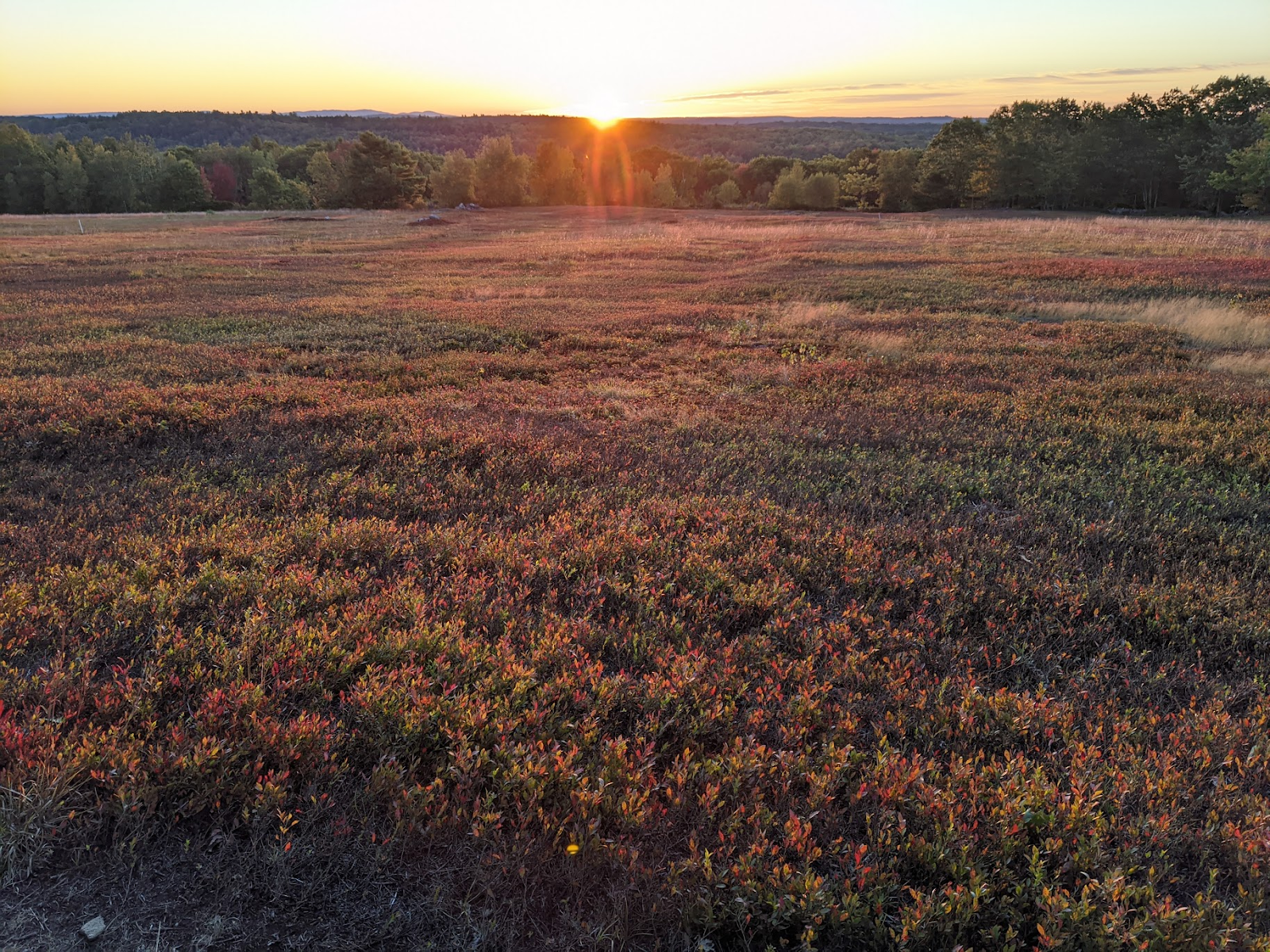
The house in which I grew up sat amidst an ancient apple orchard.  And behind the house, next to the vegetable garden there were two grape vines.  And then across the hayfield and the break in the trees, you come to nine acres of (Maine wild) blueberries.  The delicious, sweet, small ones that grow on carpet of small vines, only inches above the rocky soil.  Given that I spent my childhood surrounded by all these vines and branches, you can imagine my mind went straight there when I read the Gospel lesson for today.  Jesus said, "I am the true vine, and my Father is the vinegrower.  He removes every branch in me that bears no fruit.  Every branch that bears fruit he prunes to make it bear more fruit.”  Ahh, the pruning. 

I remember one early spring when my Dad went out with his pruning shears to cut the grape vines back.  He peacefully went about his work, and when he was finished, we were in a bit of shock and concerned that he might have done irreparable harm to the vine.  There seemed to be hardly anything left of it.  We were convinced that might be the end of our grapes.  But no.  The vine grew in, lusher than ever, and was weighed down with fruit by the end of the summer. Pruning truly does bear more fruit. 

And then there are the blueberry plants. They are pruned by mowing and burning.  After they are harvested the whole field is mowed and then, when weather permits, it is burned. Then it lies fallow for a year, growing back the vine, setting buds, but producing no blossoms and no fruit.  Then the following year, it produces more of the delicious fruit.  If the field is not mowed and burned, the plants would produce more and more leaves, and fewer and fewer berries.  Mowing and burning are actually key to a bountiful harvest of beautiful berries. 

One can see why Jesus chose these images from the natural world to make his point - they are so fitting, and so true!  

The trouble is, most of us don’t like to think of pruning.  And we particularly don’t like to think of God going around with pruning shears sniping away at bits of our lives.  We might not mind so much if God would like to do some pruning in some OTHER people’s lives - as a matter of fact I would bet that most of us have days when we would like to tell God exactly who and what needs pruning!

But we know that is not what Jesus is inviting us to consider.  Jesus is inviting us trust in the possibility that good, bountiful fruit will come, even when we are in the times where it looks like the vines have been pared back far too much. I would guess that most of us feel like there has been far more pruning in the past year than anyone of us would have liked or have desired. So many things have been taken away. In many ways our lives have been stripped bare. 

This is hard and painful. There is grieving to do. Much grieving to do. Over lives and opportunities lost. Over the loss of what we thought we could count on, of what we might even say we took for granted. I hope that you are finding time and space to grieve. That you are gentle with yourself when you find yourself overwhelmed with emotion or wanting to cry at unexpected times. This has been a hard year. 

And I hope that we do not miss the opportunity, the invitation that is there in the midst of these challenges. There is an invitation to clarity. An invitation to reorient our priorities. An invitation to be thoughtful and considerate about what fruit we would like to bear going forward. 

What might it mean, what might it look like for us to live lives that are more fulfilling, more meaningful. How might we be more deeply connected to God and each other? How might our actions be a part of realizing God’s dream, of contributing to the transformation of the world? The world needs transformation. The tragedies of this past year have laid bare realities of systemic injustice and oppression that too many of us have been able to ignore for far too long.

I think it is important to remember that pruning is natural.  Sometimes it just happens.  Lightening storms happen.  Wild animals do their share of damage. Pruning happens. It can look and feel like a real loss.  It can even be a pruning that threatens the survival of the whole plant.  But what does nature show us again and again?  It can also come back stronger.  It can overcome adversity and bear beautiful, nutritious fruit. 

So, what can we take away from this? This has been a year of pruning. Some of it the kind of pruning that clears away the detritus that has kept us from seeing the realities of injustice in our society. Other pruning has been loss on a scale few of us could even imagine. The losses have been harsh and painful, and they seem to make NO SENSE.  There is real pain and grief. And there is also an invitation to clarity. An invitation to remember that our roots run deep.  We are grounded in the love of God, and no matter what, we can trust that we are being given the strength to bear good fruit.  If we allow God to work through us, our bare branches and fragile stems can be transformed into a gift that helps feed the world.

AMEN. 


Wednesday, April 28, 2021

Choosing Grace and Mercy


Rev. Molly F. James, PhD

DFMS Noonday Prayer via Zoom

April 28, 2021

Psalm 53; Col. 1:24-2:7; Luke 6:27-38


May God’s Word be spoken. May God’s Word be heard. May that point us to the living Word who is Jesus Christ our Lord. Amen. 


I think many of you know that when I was on chemotherapy as a teenager, I was granted a wish by the Make-A-Wish foundation. That wish involved traveling to NYC to see Broadway shows. Two shows in particular - The Phantom of the Opera and Les Miserables. I am not sure it is an accident that a teenager who was struggling with questions of meaning, life, mortality and how to have hope in the midst of struggle wanted to see these two shows. In fact their soundtracks had brought me comfort in the midst of many a difficult day. The tape of Les Miserables was what I brought with me every time I had to have an MRI. The sheer vigor and force of its music able to drown out the tapping of the machine. 


It wasn’t just the music that drew me in these shows. It was the story. One of the elements of the story of Les Miserables that has stayed with me is the interaction between Jean Valjean and the bishop. Just in case you are not familiar with it, here’s a brief synopsis. Valjean had escaped from prison and the bishop was kind enough to offer him food and lodging for the night. In the middle of the night, he steals the bishop’s silver and runs off. He is caught. He tells the police that the bishop gave it to him. They bring him back and confront the bishop with this story. The bishop says that he did give it to him, and makes Valjean promise that he will use the proceeds of the silver to become a better man. He does, and of course the rest of the story tells of all the fruits of that moment of grace and generosity. 


I couldn’t help but think of that story with our passage from Luke today. Turn the other cheek. Give your shirt also. Show mercy. To everyone - not just those you like or agree with today. Embody the self-giving love and generosity of Jesus. Choose grace and compassion over personal gain. After all, it isn’t really about us. 


Now, we are not likely to have an escaped convict in our houses try to steal whatever is most valuable to us, so we cannot draw a direct parallel to Valjean and the bishop. But we can see the principle in it. We can see the choice to choose hope and possibility over vengeance and self-righteousness. 


Of course it could be argued that the bishop is being too lenient and giving Valjean a free pass. He broke the law. He stole. He needs to be held accountable. That is all true. And I think it can be argued that the bishop is holding him accountable. There will not be a day in Valjean’s life when he does not remember that he is alive and free and has all that he has because of that bishop’s mercy. The bishop offered a second chance, an opportunity for redemption, an opportunity to be defined by what he could be rather than what he had done. 


There is an invitation here for us to do that same. To respond with grace and compassion. I do think it is worth noting here that I do not believe that either Jesus nor the bishop are inviting us to be complicit in oppression. We are not being asked to surrender our dignity or self-worth. We are being invited to turn the world’s power dynamics on their head by responding with grace rather than aggression. We are being invited to be, and to inspire others to be, our best selves.


This is hard work. It is holy work. I struggle with it. And I know I can best do it when I am connected to and grounded in my relationship with God. So, I hope that we will take this invitation to be more deeply connected and to choose grace and mercy first. Amen. 


Wednesday, April 21, 2021

Carrying (and Sharing) our Burdens


Rev. Molly F. James, PhD

DFMS Noonday Prayer via Zoom

Anselm of Canterbury, April 21, 2021


May God’s Word be spoken. May God’s Word be heard. May that point us to the living Word who is Jesus Christ our Lord. Amen. 


“‘Come to me, all you that are weary and are carrying heavy burdens, and I will give you rest.” 

Anyone else breathing a little more deeply after hearing those lines from Matthew? I am weary. We are all carrying heavy burdens. Sometimes I think more than we even realize. I was reflecting a bit on this past year, and the image came to mind of walking with a heavy backpack. I certainly feel like I am. And in some ways I feel like I have only begun to realize what it is that I am carrying. So much grief over all that we have lost in the last year - lost lives, lost opportunities. The fear and anxiety of rising case numbers. Another mass shooting in a grocery store. What will the aftermath be of the guilty verdict in the Chauvin case? And the knowledge that no matter what happens in the days ahead we still have so much work ahead of us to undo the systemic realities of oppression in our nation and our society. 


And while we may share many of these burdens, we each have our own. Burdens particular to our circumstances, our family or community. Burdens we carry because of race, gender, sexual orientation, or another category society has placed upon us. Those burdens may weigh on us in different ways at different times. Even though I think Atticus and Scout Finch in To Kill a Mockingbird were on to something, we cannot fully know what it is like to walk a mile in someone else’s shoes. We cannot fully know each other’s burdens. 


But here’s what we can know. We ALL have them. We are ALL carrying them. No matter how peaceful someone may seem on the outside. No matter how “all figured out” or “put together” they may seem, the burdens are there. So there is our first invitation of the day, an invitation to compassion, for ourselves and for others. We don’t need to beat ourselves up about the burdens. We don’t need to get trapped in a cycle of comparison about who has more or whose are heavier. Let’s just stipulate that everyone’s got them, and we are all weary.


So, I think oh good, thank you Jesus, we are going to get to rest. But then we keep reading in Matthew, and out comes my argumentative self. What? Jesus, you just promised rest, but now you are talking about yokes, and learning, and more burdens. Did you miss the part about how we are weary? And by weary, we mean bone tired, exhausted, sacred, anxious, worried, and all the rest of it. 


Then I pause. I breathe. I think. Would the Jesus I know really say, “Oh I see you are carrying a lot of burdens there. Here let me give you some more stuff to carry.” No. That doesn’t actually sound like Jesus. Could I imagine Jesus saying, “Oh, I see you are carrying a lot of burdens. How about we take that backpack off and look through them together and see what we can put down?” That I could imagine. 


So, my friends, there is our second invitation. An invitation to learning, an invitation to lay some burdens down or to ask for help carrying whatever it is that has to stay in the backpack. 


I hope that for many of us there has been a gift buried in all the challenges of the past year; it is the gift that comes with being confronted with the fragility of life. The gift of having our priorities clarified. The gift of being able to see and know with certainty what really matters in life. We can indeed lay some burdens down. We can let go of those things that no longer serve us. We can let go of those things that have been barriers to connection, barriers to a deeper relationship with God and with each other. If this year has shown us nothing else, it has shown us the primacy of community, of connection, of belonging. 


So, in this week, in this Easter season, I invite you to take some time in your prayers to unpack whatever it is you are carrying. To see if you might lay some of it down. And then to ask for help, from Jesus, from those who are beloved to you, to pick up whatever it is that you need to keep carrying. We may not be able to fully understand the particularities of each other’s burdens, but we can certainly bear them. We can carry them together. And I trust, my friends, that as we move forward together sharing the load and leaving some behind, we will no longer be quite so weary. We will be energized with hope and possibility for the future. Amen.